


Key cautions
- Do not ingest this oil or use it in place of care for an infected or poorly healing wound.
- Skin products can cause irritation or allergy; stop if a reaction occurs.
What’s inside
Fatty acids and a resinous fraction contribute to composition. Primary research shows geographically structured chemical variation among South Pacific samples.
Uses in brief

- Traditional external oil
- Cosmetic ingredient
History, folklore and reported uses
History, folklore and traditional uses
University of Hawaiʻi identifies the plant under many Pacific names, including dilo in Fiji and tamanu in parts of Polynesia. Local names and histories should remain attributed; one island’s product need not be chemically identical to another’s.
Traditional, historical and reported uses
- Traditional external oil
Traditional accountWhy this label?
Sources document this named food or material use; no therapeutic outcome is claimed.
The university tree profile records Pacific medicinal oil use. This is a historical/traditional association only, without endorsement of raw application or wound treatment.
- Cosmetic ingredient
Food or household practiceWhy this label?
Sources document this named food or material use; no therapeutic outcome is claimed.
South Pacific chemical research discusses Calophyllum seed oil as a cosmetic ingredient. Formulated skin products are a separate use from eating the seed or treating an infected wound.
2 narrowly supported uses; no clinical efficacy or universal preparation is inferred.
Historical-use additions reviewed 2026-10-09
Regional reading paths
These sourced notes describe cultivation, trade, food traditions or material history. A regional connection does not claim exclusive origin.
Australia & Oceania
native/cultivated; Fiji, Samoa, French Polynesia and Micronesia
Traditional topical oil and cosmetic ingredient.
Identity & detailed reference
Identity
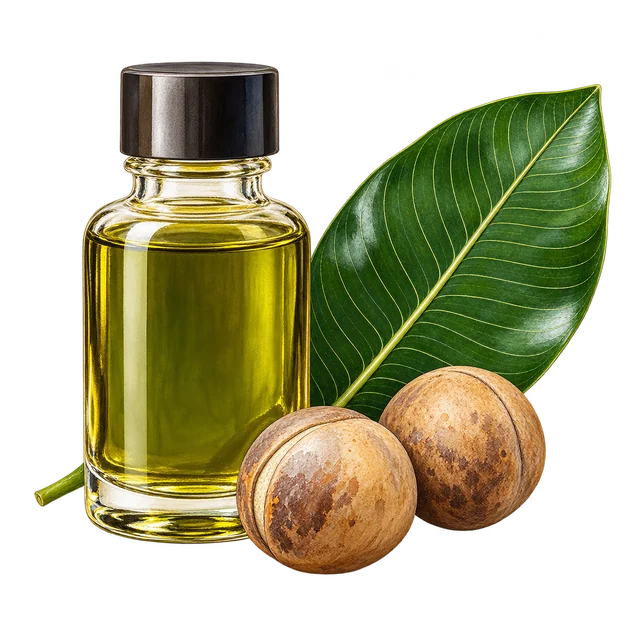
Calophyllum inophyllum seed oil, known regionally as tamanu or dilo; a fixed oil, not an essential oil or ordinary cooking oil.
Ingredient details, preparation and research
Source plant or material
Calophyllum inophyllum seed oil, known regionally as tamanu or dilo; a fixed oil, not an essential oil or ordinary cooking oil.
Plant family / material: Calophyllaceae
Forms and route
Pressed seed oil and finished cosmetic formulations.
Vitamins and minerals
No edible serving or nutrient claim is assigned. Fatty-acid analysis of a topical oil is not a recommendation to consume it.
Absorption and preparation
Laboratory skin-cell responses are not measurements of safe or beneficial use in a person. Cosmetic contact does not establish systemic treatment.
Practical preparation
Use a reputable finished topical product as labeled. Do not prepare a home wound treatment, put raw oil into the eye, or consume seed oil because it is plant-derived.
Traditional and reported uses
- The university tree profile records Pacific medicinal oil use. This is a historical/traditional association only, without endorsement of raw application or wound treatment.
- South Pacific chemical research discusses Calophyllum seed oil as a cosmetic ingredient. Formulated skin products are a separate use from eating the seed or treating an infected wound.
Contraindications and cautions
- Do not ingest this oil or use it in place of care for an infected or poorly healing wound.
- Skin products can cause irritation or allergy; stop if a reaction occurs.
Primary laboratory evidence
Researchers tested several ethnomedical oils in cell and antibacterial experiments. The design addresses biological activity of defined samples, not clinical efficacy or a safe household dosage. No treatment claim is carried over here.
Origin affects chemistry
A study pairing oil/resin chemistry with plant DNA from Pacific archipelagos found diversity patterns. A seller’s common-name label alone therefore does not establish a standardized active composition.
Evidence limits
This is a food/material reference, not evidence of disease treatment. Geographic and customary-use records do not establish a medicinal dose. Nutrient quantities are omitted unless a matching food form and serving have been verified.
Entry sources
- University of Hawaiʻi CTAHR: Calophyllum inophyllum
- Léguillier et al.: Five Calophyllum oils, cellular and antibacterial experiments
- Primary study: South Pacific Calophyllum oil chemodiversity
Reference entry 495 · Recorded content review: 2026-10-09 · Review scope and dates