


Key cautions
- Do not use leaves, stems or unidentified Solanum fruits as substitutes for this ripe fruit.
- Fruit acidity can irritate a sensitive mouth or stomach; personal tolerance and the complete dish matter.
What’s inside
Organic acids, carbohydrates, carotenoids and phenolic compounds; pigment profiles differ by fruit fraction and cultivar.
Uses in brief

- Cooked savory sauce
- Fruit beverages
History, folklore and reported uses
History, folklore and traditional uses
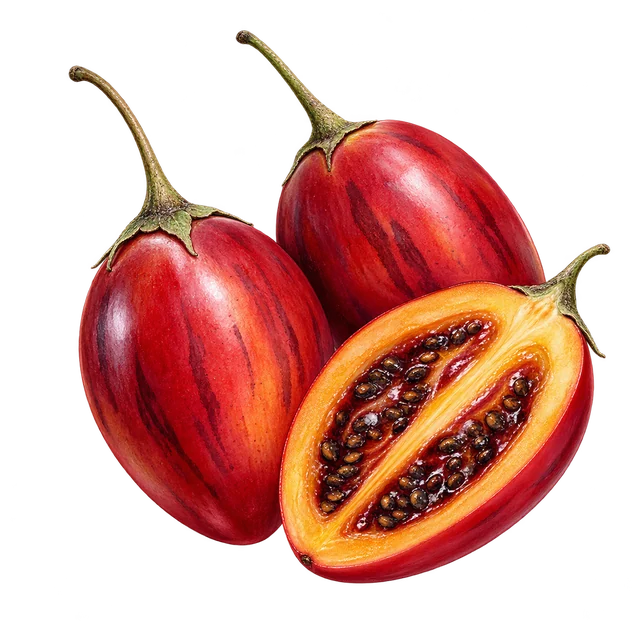
Tree tomato is part of Andean fruit agriculture, including Peru and Ecuador. Its English name highlights appearance, while its botanical identity and tree habit distinguish it from the common culinary tomato.
Traditional, historical and reported uses
- Cooked savory sauce
Food or household practiceWhy this label?
Source documents this specific material, culinary use or attributed practice; no clinical efficacy is inferred.
FAO/ANPE records roasted tree tomato for llatán sauce. This anchors a savory role distinct from a sweetened fruit drink.
- Fruit beverages
Food or household practiceWhy this label?
Source documents this specific material, culinary use or attributed practice; no clinical efficacy is inferred.
The Andean crop guide documents fruit uses, including beverages. A strained or sweetened drink has a different fiber and sugar profile from whole edible flesh.
2 bounded uses; regional records do not establish treatment effects.
Historical-use additions reviewed 2026-10-09
Regional reading paths
These sourced notes describe cultivation, trade, food traditions or material history. A regional connection does not claim exclusive origin.
South America
native and cultivated; Peru, Ecuador
Fruit for sauces and beverages.
Identity & detailed reference
Identity
Solanum betaceum; the edible ripe fruit of Solanum betaceum, also known as Cyphomandra betacea; not the ordinary tomato plant.
Ingredient details, preparation and research
Also known as: Solanum betaceum
Source plant or material
Solanum betaceum
Plant family / material: Solanaceae
Forms and route
Fresh flesh, prepared pulp, cooked sauces and beverages; peel use depends on the recipe.
Vitamins and minerals
Skin, pulp and seed jelly do not have identical composition. No universal nutrient value or health ranking is assigned to all tree tomatoes.
Absorption and preparation
Food matrix and preparation matter, but chromatography and antioxidant assays do not measure clinical absorption or establish a treatment benefit.
Practical preparation
Choose ripe food-grade fruit, wash before cutting and prepare according to the recipe. Remove bitter peel where appropriate and refrigerate prepared pulp or sauces.
Traditional and reported uses
- Cooked savory sauce
- Fruit beverages
Contraindications and cautions
- Do not use leaves, stems or unidentified Solanum fruits as substitutes for this ripe fruit.
- Fruit acidity can irritate a sensitive mouth or stomach; personal tolerance and the complete dish matter.
Accessions and altitudes differ
Primary studies compare multiple accessions and ecotypes grown at different altitudes. Such variation prevents a single pigment or vitamin measurement from representing every retail tamarillo.
Evidence limits
This is a food-form review, not a treatment recommendation. Composition and laboratory findings apply to the material actually studied; no medicinal dose, universal nutrient ranking or preservation guarantee is inferred.
Entry sources
- FAO and ANPE: Guía de campo de los cultivos andinos
- Tree-tomato ecotypes and growing altitude
- Chemical diversity of tree-tomato accessions
Reference entry 465 · Recorded content review: 2026-10-09 · Review scope and dates