


Key cautions
- Use identified food-grade fruit, not an ornamental or wild lookalike.
- Keep prepared foods under the storage conditions specified by the maker; a traditional ingredient does not make an unvalidated preserve shelf-stable.
What’s inside
Tart aromatic fruit contains organic acids and ordinary fruit solids; citrus-like flavour does not make it Citrus limon.
Uses in brief

- Tart fruit flavouring
- Processed food ingredient
History, folklore and reported uses
History, folklore and traditional uses
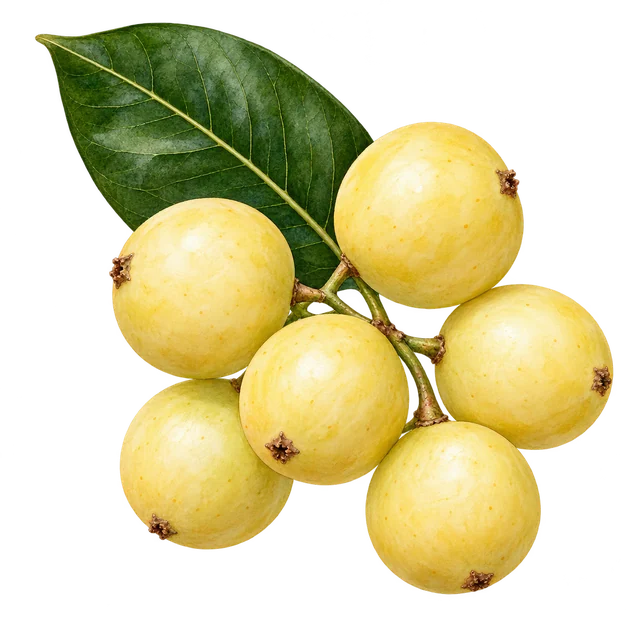
Lemon aspen is a Queensland rainforest native included in Australian native-food research. Its common name describes a culinary impression, while the botanical name is necessary for accurate sourcing and comparison.
Traditional, historical and reported uses
- Tart fruit flavouring
Food or household practiceWhy this label?
Sources document this named food or material use; no therapeutic outcome is claimed.
Lemon aspen is a native-food ingredient used for its acidic, aromatic fruit character. It can supply a different flavour from ordinary citrus.
- Processed food ingredient
Food or household practiceWhy this label?
Sources document this named food or material use; no therapeutic outcome is claimed.
AgriFutures includes the crop in its food-industry synthesis series, supporting prepared pulp and fruit-product development rather than a medicinal use.
2 narrowly supported uses; no clinical efficacy or universal preparation is inferred.
Historical-use additions reviewed 2026-10-09
Regional reading paths
These sourced notes describe cultivation, trade, food traditions or material history. A regional connection does not claim exclusive origin.
Australia & Oceania
native; Australia, Queensland
Tart native fruit ingredient.
Identity & detailed reference
Identity
Acronychia acidula; lemon-aspen fruit, not a lemon cultivar or an aspen-tree product.
Ingredient details, preparation and research
Source plant or material
Acronychia acidula; lemon-aspen fruit, not a lemon cultivar or an aspen-tree product.
Plant family / material: Rutaceae
Forms and route
Fresh/frozen culinary fruit, pulp and prepared food ingredients.
Vitamins and minerals
A small flavouring portion is not automatically a fruit serving. No composition value is transferred from lemons or from another Acronychia species.
Absorption and preparation
Cooking, drying, straining and added ingredients change the food that is actually eaten. No special medicinal absorption claim or extract-to-food conversion is established.
Practical preparation
Choose food-grade A. acidula and follow a recipe specifying lemon aspen. Remove non-food material as directed; do not use ornamental Acronychia fruit by resemblance.
Traditional and reported uses
- Lemon aspen is a native-food ingredient used for its acidic, aromatic fruit character. It can supply a different flavour from ordinary citrus.
- AgriFutures includes the crop in its food-industry synthesis series, supporting prepared pulp and fruit-product development rather than a medicinal use.
Contraindications and cautions
- Use identified food-grade fruit, not an ornamental or wild lookalike.
- Keep prepared foods under the storage conditions specified by the maker; a traditional ingredient does not make an unvalidated preserve shelf-stable.
Taxonomic precision
The food-composition project specifically included lemon aspen. A clear species and sample description is needed before comparing its nutrient profile with lemons, limes or other Australian fruits; taste is not a compositional assay.
No extract transfer
Whole fruit, concentrated flavour preparations and experimental extracts are not equivalent. This card describes culinary fruit and does not assign antimicrobial, antioxidant-treatment or skin-care outcomes to an ordinary portion.
Evidence limits
This is a food/material reference, not evidence of disease treatment. Geographic and customary-use records do not establish a medicinal dose. Nutrient quantities are omitted unless a matching food form and serving have been verified.
Entry sources
- AgriFutures: Focus on Lemon Aspen
- DAFF: Australian native foods
- AgriFutures: Native Foods Compositional Data for FSANZ Nutritional Panel Calculator
Reference entry 482 · Recorded content review: 2026-10-09 · Review scope and dates