


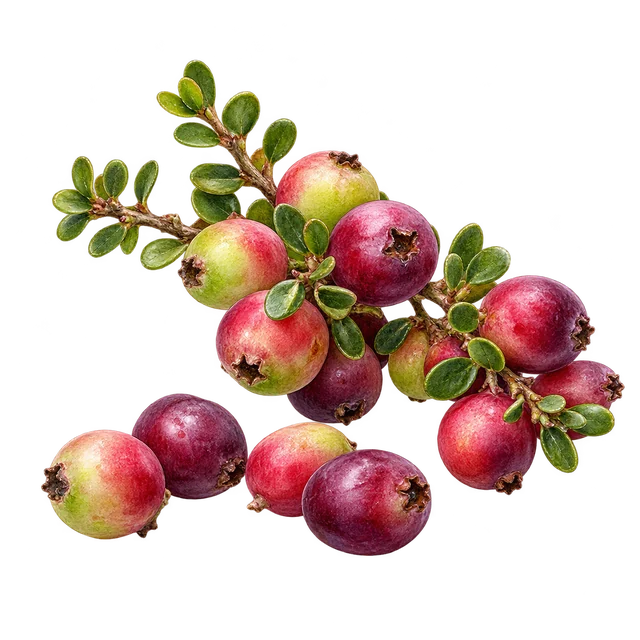
Key cautions
- Use identified food-grade fruit, not an ornamental or wild lookalike.
- Keep prepared foods under the storage conditions specified by the maker; a traditional ingredient does not make an unvalidated preserve shelf-stable.
What’s inside
Small fleshy fruit supplies carbohydrate and fibre; no essential-oil composition is attributed to the edible berries.
Uses in brief

- Small-fruit food
- Value-added fruit preparations
History, folklore and reported uses
History, folklore and traditional uses
Muntries are a southern Australian native-food crop. Their inclusion in the AgriFutures synthesis series reflects culinary production and research, not a therapeutic ranking or a claim that all Kunzea species have edible fruit.
Traditional, historical and reported uses
- Small-fruit food
Food or household practiceWhy this label?
Sources document this named food or material use; no therapeutic outcome is claimed.
Muntries are grown and supplied as an Australian native fruit ingredient, providing a distinct option alongside orchard berries.
- Value-added fruit preparations
Food or household practiceWhy this label?
Sources document this named food or material use; no therapeutic outcome is claimed.
The native-food program includes muntries for food-service and manufactured-food development. Finished foods should disclose added sugar and other ingredients instead of borrowing a whole-fruit nutritional identity.
2 narrowly supported uses; no clinical efficacy or universal preparation is inferred.
Historical-use additions reviewed 2026-10-09
Regional reading paths
These sourced notes describe cultivation, trade, food traditions or material history. A regional connection does not claim exclusive origin.
Australia & Oceania
native; southern Australia
Small fruit for food products.
Identity & detailed reference
Identity
Kunzea pomifera; muntries fruit, distinct from Kunzea species used to make aromatic oils.
Ingredient details, preparation and research
Source plant or material
Kunzea pomifera; muntries fruit, distinct from Kunzea species used to make aromatic oils.
Plant family / material: Myrtaceae
Forms and route
Food-grade fresh/frozen berries and prepared fruit ingredients.
Vitamins and minerals
No oil-derived constituent profile or medicinal dose applies. Nutrient figures would need the actual fruit form and serving.
Absorption and preparation
Cooking, drying, straining and added ingredients change the food that is actually eaten. No special medicinal absorption claim or extract-to-food conversion is established.
Practical preparation
Use correctly identified food fruit. Handle gently and follow supplier refrigeration or freezing advice; use tested recipes for preserved products.
Traditional and reported uses
- Muntries are grown and supplied as an Australian native fruit ingredient, providing a distinct option alongside orchard berries.
- The native-food program includes muntries for food-service and manufactured-food development. Finished foods should disclose added sugar and other ingredients instead of borrowing a whole-fruit nutritional identity.
Contraindications and cautions
- Use identified food-grade fruit, not an ornamental or wild lookalike.
- Keep prepared foods under the storage conditions specified by the maker; a traditional ingredient does not make an unvalidated preserve shelf-stable.
Fruit and oil are separate scopes
The genus name Kunzea also occurs on kānuka and other essential oils. That relationship is botanical, not a reason to substitute oils in food or transfer oil experiments to muntries fruit.
Form-matched nutrition
Government food cards name K. pomifera specifically. Fresh, dried and sweetened materials have different water and ingredient proportions, so a single generic nutrient claim would conceal the form that was actually measured.
Evidence limits
This is a food/material reference, not evidence of disease treatment. Geographic and customary-use records do not establish a medicinal dose. Nutrient quantities are omitted unless a matching food form and serving have been verified.
Entry sources
- AgriFutures: Focus on Muntries
- DAFF: Australian native foods
- DAFF: Australian fruit, nut and vegetable composition cards
Reference entry 481 · Recorded content review: 2026-10-09 · Review scope and dates