


Key cautions
- This card concerns cooked mature beans. Raw or lightly cooked mung sprouts can carry harmful bacteria, particularly relevant for people at higher risk of foodborne illness.
- Legume allergy is possible; a known reaction warrants individual advice rather than assuming all pulses are interchangeable.
What’s inside
Starch and protein with fiber in the whole seed; removing the hull or isolating starch changes the composition. Sweetened foods add ingredients beyond the bean.
Uses in brief

- Cooked pulse ingredient
- Sweet mung-bean soup
History, folklore and reported uses
History, folklore and traditional uses
A multi-country agricultural study documents mungbean cultivation across Southeast Asia. Chinese family cooking accounts also describe a lightly sweet cooked mung-bean soup, showing the pulse’s role beyond savoury meals.
Traditional, historical and reported uses
- Cooked pulse ingredient
Food or household practiceWhy this label?
The cited source documents this material, preparation or cultural practice; it does not establish treatment efficacy.
Whole or split food beans are cooked until tender for pulse-based meals. Use directions for the purchased form: hulled split beans and whole beans do not require identical cooking.
- Sweet mung-bean soup
Food or household practiceWhy this label?
The cited source documents this material, preparation or cultural practice; it does not establish treatment efficacy.
The Woks of Life records Chinese sweet mung-bean soup. It is a cooked bean dessert, and its sugar content depends on the recipe rather than on the green skin.
2 supported featured food or cultural uses; no treatment claim.
Historical-use additions reviewed 2026-10-09
Regional reading paths
These sourced notes describe cultivation, trade, food traditions or material history. A regional connection does not claim exclusive origin.
Asia
Cultivated: Thailand, Laos and other South/Southeast Asian countries.
Cooked pulses for savoury dishes and sweets.
Identity & detailed reference
Identity
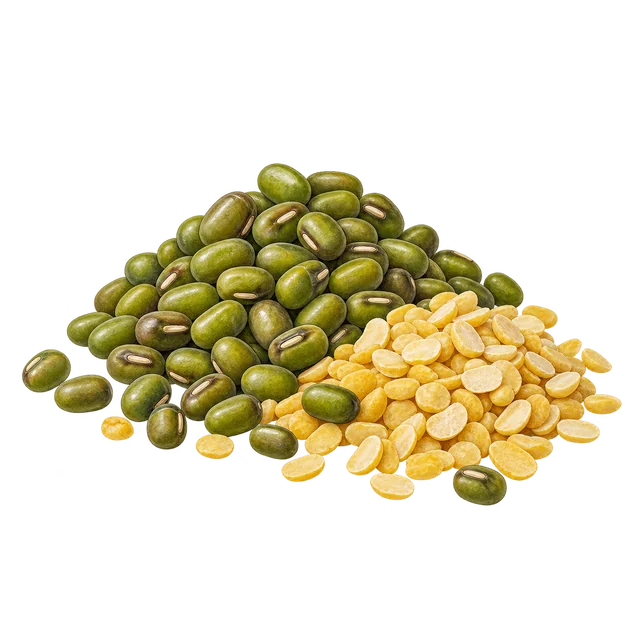
Vigna radiata mature edible seed, usually green-skinned. It is distinct from black gram, Vigna mungo, and from the fresh sprouts produced from germinating seed.
Ingredient details, preparation and research
Also known as: Green gram; Moong; Vigna radiata
Source plant or material
Vigna radiata
Plant family / material: Fabaceae
Forms and route
Whole dried beans, split hulled beans, cooked pulses and food flours. Purified starch noodles and raw sprouts are separate processed or developmental forms.
Vitamins and minerals
Cooked beans contain water, so dry-seed and cooked-serving values differ. No nutrient numbers are assigned to all mung products; isolated starch lacks much of the whole bean’s protein and fiber.
Absorption and preparation
Ordinary cooking changes digestibility. Neither sprouting nor fermentation automatically establishes better nutrient absorption or microbiological safety.
Practical preparation
Sort and rinse dried beans, then cook according to the product until tender. Refrigerate leftovers promptly. Do not treat soaking alone as cooking or as a validated way to make raw sprouts safe.
Combination notes
Use as part of a mixed meal or dessert; no exact nutrient-enhancing pairing is required.
Traditional and reported uses
- Cooked pulse ingredient
- Sweet mung-bean soup
Contraindications and cautions
- This card concerns cooked mature beans. Raw or lightly cooked mung sprouts can carry harmful bacteria, particularly relevant for people at higher risk of foodborne illness.
- Legume allergy is possible; a known reaction warrants individual advice rather than assuming all pulses are interchangeable.
Crop research supports regional importance
The Southeast Asian study evaluated varieties, farming practices and constraints. It establishes agricultural use and diversity, not disease prevention or the efficacy of mung extracts.
Evidence limits
Mature cooked-pulse card; not a home-sprouting protocol or medicinal mung-extract review.
Entry sources
- Schreinemachers et al. (2020): Mungbean in Southeast Asia and East Africa
- The Woks of Life: Mung bean soup
- Kew POWO: Vigna radiata
- FDA: Selecting and serving produce safely
Reference entry 354 · Recorded content review: 2026-10-09 · Review scope and dates