


Key cautions
- Never assume all Acacia species or seeds are edible.
- Do not use ornamental, chemically treated or unidentified seeds as food.
What’s inside
Seed protein, carbohydrate, fibre and fat vary with species, growing site and harvest year. Roasting also changes the finished food.
Uses in brief

- Seed flour foods
- Roasted culinary flavour
History, folklore and reported uses
History, folklore and traditional uses
The Australian Museum records seed milling and bread traditions in central Australian communities. These histories depend on specific plants and local knowledge, not a continent-wide permission to use any Acacia.
Traditional, historical and reported uses
- Seed flour foods
Traditional accountWhy this label?
Sources document this named food or material use; no therapeutic outcome is claimed.
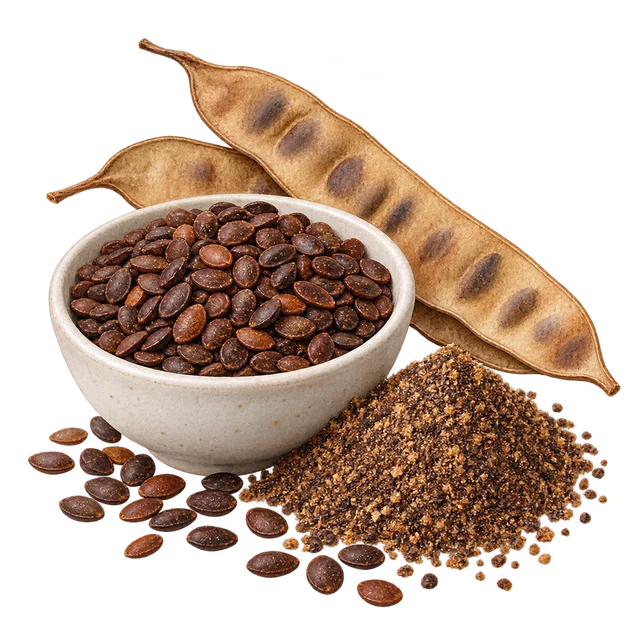
Authenticated edible seeds have been milled into flour in documented Aboriginal food traditions. Flour is a substantial food form, distinct from a trace seasoning.
- Roasted culinary flavour
Food or household practiceWhy this label?
Sources document this named food or material use; no therapeutic outcome is claimed.
Commercial wattleseed supplies roasted flavour in contemporary food products. Product identity should name the species wherever possible.
2 narrowly supported uses; no clinical efficacy or universal preparation is inferred.
Historical-use additions reviewed 2026-10-09
Regional reading paths
These sourced notes describe cultivation, trade, food traditions or material history. A regional connection does not claim exclusive origin.
Australia & Oceania
native; Australia, including central regions
Roasted culinary seed and flour.
Identity & detailed reference
Identity
Wattleseed is a food group anchored here to Acacia victoriae and other separately authenticated edible Acacia species, not every wattle seed.
Ingredient details, preparation and research
Source plant or material
Wattleseed is a food group anchored here to Acacia victoriae and other separately authenticated edible Acacia species, not every wattle seed.
Plant family / material: Fabaceae
Forms and route
Commercially processed edible seed, roasted ground seed and food-grade flour.
Vitamins and minerals
No shared nutrient percentage is assigned to the diverse group. Flour in a recipe is different from an extract or a tiny flavouring addition.
Absorption and preparation
Laboratory digestibility measurements and whole-food digestion are different kinds of evidence; a roasted sample cannot establish human iron absorption for every Acacia food.
Practical preparation
Buy seed processed specifically for food. Follow the labeled culinary use and cook flour-containing foods appropriately. This card supplies neither a wild-selection test nor a detoxification method.
Traditional and reported uses
- Authenticated edible seeds have been milled into flour in documented Aboriginal food traditions. Flour is a substantial food form, distinct from a trace seasoning.
- Commercial wattleseed supplies roasted flavour in contemporary food products. Product identity should name the species wherever possible.
Contraindications and cautions
- Never assume all Acacia species or seeds are edible.
- Do not use ornamental, chemically treated or unidentified seeds as food.
Measured variation matters
A 2024 primary study compared Acacia seed batches by species, location and harvest year. Variation limits generic nutrition claims and shows why species-resolved sourcing is a practical requirement rather than an academic detail.
Knowledge and market development
AgriFutures describes research intended to expand production while the Museum documents deeper flour traditions. The two perspectives are complementary; neither means every wattle has an established edible use.
Evidence limits
This is a food/material reference, not evidence of disease treatment. Geographic and customary-use records do not establish a medicinal dose. Nutrient quantities are omitted unless a matching food form and serving have been verified.
Entry sources
- AgriFutures: The rise of ancient native bush foods
- Australian Museum: Food Culture, Aboriginal Bread
- Chong et al., 2024: Acacia seed composition across species, sites and harvest years
Reference entry 476 · Recorded content review: 2026-10-09 · Review scope and dates