


Key cautions
- Long-term safety and child/pregnancy safety remain inadequately established; check medicines and all blend ingredients.
- Possible digestive upset, rash or allergy.
- The allergy and exercise amounts described here are research exposures, not instructions to reproduce them. They exceed the newer Norwegian assessment’s adult boundary of 1.2 g/day for up to four months. Higher amounts and longer use remain uncertain; the detailed safety assessment below explains that boundary.
- Digestive upset, rash and allergic reactions are reported. Stop a suspected reaction and seek urgent help for breathing difficulty or facial swelling. Check the entire ingredient list and intended route; a risk assessment of MSM does not certify the purity, stability or contaminants of every finished product.
What’s inside
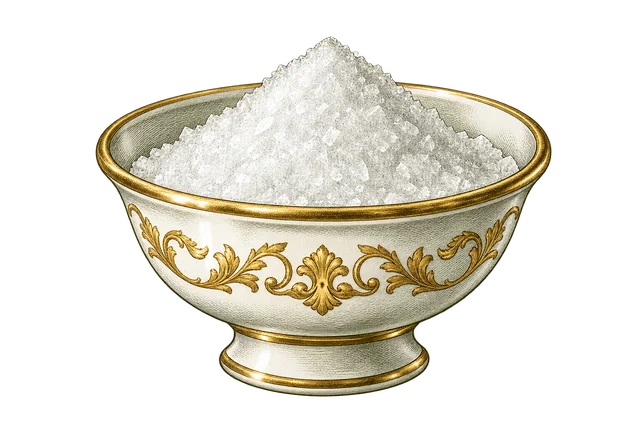
MSM has the molecular formula C2H6O2S: carbon, hydrogen, oxygen and sulfur in a defined molecule. VKM describes a crystalline solid soluble in water. A supplement’s stated milligrams of MSM refer to the whole compound, not an equal mass of elemental sulfur; other ingredients and excipients must be read separately.
VKM: Risk assessment of methylsulfonylmethane, 2021 report
Chemical identity and forms
MSM is methylsulfonylmethane, also known as dimethyl sulfone. It is an organosulfur chemical rather than an herb, so botanical family is not applicable. DMSO is a related but different molecule; findings, routes and precautions are not interchangeable. Identify whether the product is oral or topical and whether it contains MSM alone or a combination.
VKM: Risk assessment of methylsulfonylmethane, 2021 report · NCCIH: DMSO and MSM for osteoarthritis
Nutrition and food amounts
Small MSM quantities occur in a variety of ordinary foods, but no MSM dietary requirement or Daily Value has been established. National Academies guidance explains that recommended sulfur-amino-acid intakes from protein provide the body’s sulfate needs; MSM and sulfate are not the same chemical. Trace-food occurrence does not justify diagnosing “sulfur deficiency” from joint symptoms or treating it with MSM. No reliable therapeutic household serving is assigned.
VKM: Risk assessment of methylsulfonylmethane, 2021 report · National Academies: Dietary Reference Intakes for sulfate, summary (2005)
Uses in brief

- Contemporary supplement use for joint comfort and osteoarthritis symptoms; small short-term trials have mixed or modest findings.
- Marketed for skin, hair and nails; limited skin research does not establish hair regrowth or validate homemade topical mixtures.
History, folklore and reported uses
Modern supplement beginnings
MSM's recognizable healing story belongs to modern supplement culture. The 1999 book The Miracle of MSM presented Stanley Jacob and Ronald Lawrence's enthusiasm for methylsulfonylmethane as a natural answer to pain. Its publisher's description lists arthritis, back pain, muscle pain and several other complaints, and identifies Jacob with the DMSO clinic at Oregon Health Sciences University. That is a traceable record of named advocates and their claims, rather than an inherited herbal tradition or proof that every advertised use works.
The DMSO connection
The relationship to DMSO can make the story sound older and broader than the evidence warrants. They are chemically related substances, but an account of topical DMSO does not automatically apply to oral MSM. NCCIH describes MSM as a dietary supplement sold alone or in combinations such as glucosamine, while noting the small research base. The book's language of natural pain relief shows how a laboratory-linked compound can enter wellness culture. Its sweeping promise of safety remains a claim made by its advocates.
Penguin Random House: The Miracle of MSM, 1999 · NCCIH: DMSO and MSM for osteoarthritis
Arthritis and musculoskeletal pain
Stanley Jacob and Ronald Lawrence’s 1999 book The Miracle of MSM promoted oral MSM for arthritis, back and muscle pain, fibromyalgia and related complaints. Their book helped give a laboratory-linked compound a broad natural-pain-relief reputation.
What the allergy research actually tested
The same 1999 book presentation includes allergies among MSM’s proposed uses. Allergy relief was part of the authors’ broad modern natural-health pitch for the compound. Barrager and colleagues’ 2002 open-label study recruited 55 people with seasonal allergic rhinitis; 50 completed 30 days of oral MSM at 2,600 mg/day. Symptoms improved against participants’ starting scores, but there was no blinded placebo comparison. Blood IgE, an antibody involved in allergic responses, did not significantly change; neither did histamine, measured in only five participants. This small uncontrolled study cannot separate a treatment effect from expectation or changing allergen exposure.
Barrager et al. (2002): Open-label seasonal allergic rhinitis study · Penguin Random House: The Miracle of MSM, 1999
Exercise recovery: a small field trial
Contemporary sports-supplement practice uses MSM for recovery after exertion. Ingredient manufacturer Balchem markets OptiMSM in this setting, drawing on research into soreness and the antioxidant response after exercise. Withee and colleagues’ 2017 trial randomized 24 recreational runners; 22 completed the study. They took oral OptiMSM or placebo at 3 g/day for 21 days before a half-marathon and two days afterward. Some pain differences favored MSM, but the treatment comparisons over time were not statistically significant, and blood markers did not show a demonstrated protective effect against exercise-related oxidative stress or muscle damage. Recruitment fell below the planned sample size. The supplier provided products and laboratory funding, and one author worked for it. At exit, two MSM recipients reported mild digestive effects and one reported insomnia.
Withee et al. (2017): MSM after a half-marathon · Balchem: MSM and OptiMSM product applications
Beauty from within
Modern MSM marketing also targets hair, skin and nails, with claims about collagen-related structure and skin appearance. Balchem’s materials document this beauty-supplement positioning; it is separate from topical DMSO and from the compound’s original pain-advocacy story.
Absorption, preparation and topical limits
Adult studies show oral absorption, and MSM dissolves in water. The available research does not establish a need to combine it with vitamin C, fat or turmeric. Water solubility does not establish that powder disperses uniformly in an oil. An unmeasured homemade oil mixture has no validated concentration, stability or topical benefit here; use evidence about the complete formulated product rather than extrapolating from swallowed capsules.
VKM: Risk assessment of methylsulfonylmethane, 2021 report · Norwegian Institute of Public Health: Re-evaluation of MSM safety, September 2025
Reading a joint or beauty blend
A product may list MSM beside glucosamine, chondroitin or botanical extracts. Read the amount of each ingredient per daily serving and the intended route, rather than treating the blend’s total weight as its MSM content. The knee and skin trials summarized below remain studies of their own oral preparations; they do not test a homemade hair oil or show that a companion ingredient improves MSM absorption.
NCCIH: DMSO and MSM for osteoarthritis · Debbi et al. (2011): MSM in knee osteoarthritis · Randomized trial: MSM and knee quality of life in people with mild knee pain (Nutrients, 2023) · Muizzuddin and Benjamin: Oral MSM and signs of skin ageing, online 2020, issue 2022
Identity & detailed reference
Identity
Methylsulfonylmethane (MSM), also called dimethyl sulfone, is an isolated organosulfur compound. It occurs in small amounts in foods and is chemically related to, but distinct from, dimethyl sulfoxide (DMSO).
Ingredient details, preparation and research
Source plant or material
No single botanical origin. MSM is a chemically defined compound occurring naturally in trace food amounts; commercial supplement manufacture and purity are product-specific.
Plant family / material: Not applicable: an isolated organosulfur chemical has no botanical family.
Forms and route
Oral powders, capsules and tablets, either single-ingredient or combined with glucosamine, chondroitin, botanicals and other joint ingredients. Some topical products also contain MSM; route and full formulation must be identified.
Food sources
MSM occurs in small amounts across ordinary foods including produce, grains, milk, meat, eggs and fish. These traces are not equivalent to concentrated supplement quantities and are not a reason to eat extra spice, drink raw milk or add MSM powder to food.
Vitamins and minerals
MSM has no established dietary requirement or label Daily Value. Sulfate needs are normally met through adequate sulfur-containing amino acids from dietary protein, together with food/water sources. This does not create a requirement for an MSM supplement; no therapeutic MSM food serving or deficiency-correction recipe is established.
Absorption and preparation
MSM is water-soluble and rapidly absorbed after oral administration in adults. The reviewed evidence does not establish a need for vitamin C, dietary fat, turmeric or other herbs to make it work or absorb. Formulation and route still matter; oral uptake does not establish a topical penetration recipe.
Traditional and reported uses
- Contemporary supplement use for joint comfort and osteoarthritis symptoms; small short-term trials have mixed or modest findings.
- Marketed for skin, hair and nails; limited skin research does not establish hair regrowth or validate homemade topical mixtures.
Contraindications and cautions
- Digestive upset, rash and allergic reactions can occur. Long-term safety is not established by short trials.
- Children/adolescents and pregnancy/breastfeeding need professional review because adequate population-specific safety data are lacking.
- Have the complete supplement and medicine list checked. Limited reported interactions do not prove compatibility, especially for multi-ingredient products.
- An oral MSM powder is not an automatically suitable topical ingredient. An unmeasured pinch in an oil blend has no validated uniformity, stability or hair-growth benefit.
- The allergy and exercise amounts described here are research exposures, not instructions to reproduce them. They exceed the newer Norwegian assessment’s adult boundary of 1.2 g/day for up to four months. Higher amounts and longer use remain uncertain; the detailed safety assessment below explains that boundary.
- Digestive upset, rash and allergic reactions are reported. Stop a suspected reaction and seek urgent help for breathing difficulty or facial swelling. Check the entire ingredient list and intended route; a risk assessment of MSM does not certify the purity, stability or contaminants of every finished product.
Similar items and how they compare
- DMSO (dimethyl sulfoxide)
This is a close chemical relative discussed alongside MSM in joint-symptom research; the relationship is chemical, not therapeutic equivalence.
MSM is a sulfone; DMSO is a sulfoxide with different properties, routes and safety considerations.
- Glucosamine
Both are marketed and studied for joint comfort, and some products combine them, making ingredient-specific identification especially useful.
Glucosamine is an amino sugar associated with cartilage; MSM is a chemically different sulfur compound.
Modern use rather than an ancient herbal indication
MSM is marketed for joint comfort and for skin, hair and nails. Its natural occurrence in foods does not establish a traditional herbal indication or a need for concentrated supplementation. Biological anti-inflammatory hypotheses, laboratory findings and personal testimonials do not by themselves establish meaningful pain relief, disease modification or cartilage regeneration in humans.
Small osteoarthritis trial
A 2011 randomized, double-blind trial enrolled 49 adults with radiographically confirmed knee osteoarthritis and followed them for 12 weeks. Some function/total scores improved, while the WOMAC pain and stiffness comparisons were not statistically significant. The investigators described the improvements as small and their clinical importance uncertain. This is preliminary symptom research, not evidence of regrown cartilage or a replacement for an osteoarthritis care plan.
A newer mild-knee-pain study
A 2023 industry-funded trial randomized 88 Japanese adults with mild knee pain; 80 were included in its efficacy analysis. At 12 weeks, the MSM group’s total knee-questionnaire score was about 2.8 points better than placebo on a 100-point scale, a statistically significant but modest difference. Participants receiving treatment for knee osteoarthritis were excluded, so this cannot be treated as a large confirmatory osteoarthritis trial.
Updated safety assessment and its limits
Norway’s Institute of Public Health reassessed MSM in September 2025; the food authority posted its summary in August 2026. Its adult conclusion supports up to 1.2 g/day for no more than four months, with higher assessed amounts uncertain and no safe child/adolescent dose established. This is an authority-specific risk-assessment boundary, not a recommended daily dose, an efficacy threshold or assurance of lifelong safety. It revised the older assessment’s uncertainty-factor approach, not proof that higher doses are harmless.
Adverse effects and special groups
NCCIH reports digestive upset, rash and allergic reactions with MSM and describes safety evidence as limited. Adult short-term results do not establish safety during pregnancy or breastfeeding. Children/adolescents lack an established safe dose. Discuss use with a clinician in those settings, for significant medical conditions or alongside medicines; stop a suspected reaction and seek urgent care for breathing difficulty or facial swelling.
Interactions and joint blends
The 2025 reassessment found no known MSM–medicine interactions and noted low interaction potential in studied CYP-enzyme experiments; that is not a complete clinical compatibility test. Glucosamine, chondroitin, willow, turmeric and other blend ingredients have separate evidence and precautions. A combination study cannot show which ingredient helped or that one ingredient enhanced MSM absorption. No routine companion vitamin, mineral or herb is established as necessary.
Skin, hair and nail claims
One small two-part study examined oral MSM and facial skin-ageing measures: a 20-person placebo-controlled pilot and a 63-person comparison of two amounts. It included an author affiliated with an MSM manufacturer and reported improvements in some skin measures. That design does not establish hair regrowth, treatment of hair loss, nail-disease treatment or effectiveness of MSM applied in oil. These claims need their own trials.
Entry sources
- NCCIH: DMSO and MSM for osteoarthritis
- Norwegian Food Safety Authority: Updated MSM safety assessment, posted August 2026
- Norwegian Institute of Public Health: Re-evaluation of MSM safety, September 2025
- VKM: Risk assessment of methylsulfonylmethane, 2021 report
- Debbi et al.: Randomized MSM trial in knee osteoarthritis (2011)
- Randomized trial: MSM and knee quality of life in people with mild knee pain (Nutrients, 2023)
- Muizzuddin and Benjamin: Oral MSM and signs of skin ageing, online 2020, issue 2022
- National Academies: Dietary Reference Intakes for sulfate, summary (2005)
- EMA: European Union herbal monograph on Salix species, cortex (2017)
- Medsafe: Turmeric/curcumin products and warfarin interaction (2018)
Reference entry 62 · Recorded content review: 2026-10-05 · Review scope and dates