


Key cautions
- Confirm the plant identity; anise myrtle, star anise and aniseed are not interchangeable species.
- Concentrated extract or oil safety is outside this culinary leaf card.
What’s inside
Anise-scented leaf volatiles vary by chemotype. This card does not assign one trans-anethole or methyl-chavicol concentration to all products.
Uses in brief

- Anise-flavoured seasoning
- Historical flavour supply
History, folklore and reported uses
History, folklore and traditional uses
AgriFutures places the native population in northern New South Wales rainforest and explicitly notes limited knowledge of older customary uses. A twentieth-century flavouring history is better documented than broad claims of ancient use.
Traditional, historical and reported uses
- Anise-flavoured seasoning
Food or household practiceWhy this label?
Sources document this named food or material use; no therapeutic outcome is claimed.
Leaves provide an anise-like flavour for food manufacture and cooking; their botanical source is different from Apiaceae aniseed.
- Historical flavour supply
Historical recordWhy this label?
Sources document this named food or material use; no therapeutic outcome is claimed.
The fact sheet reports harvesting when aniseed flavouring was scarce during the Second World War. This is an industrial-history account, not a medical indication.
2 narrowly supported uses; no clinical efficacy or universal preparation is inferred.
Historical-use additions reviewed 2026-10-09
Regional reading paths
These sourced notes describe cultivation, trade, food traditions or material history. A regional connection does not claim exclusive origin.
Australia & Oceania
native; Australia, northern New South Wales
Anise-flavoured leaf seasoning.
Identity & detailed reference
Identity
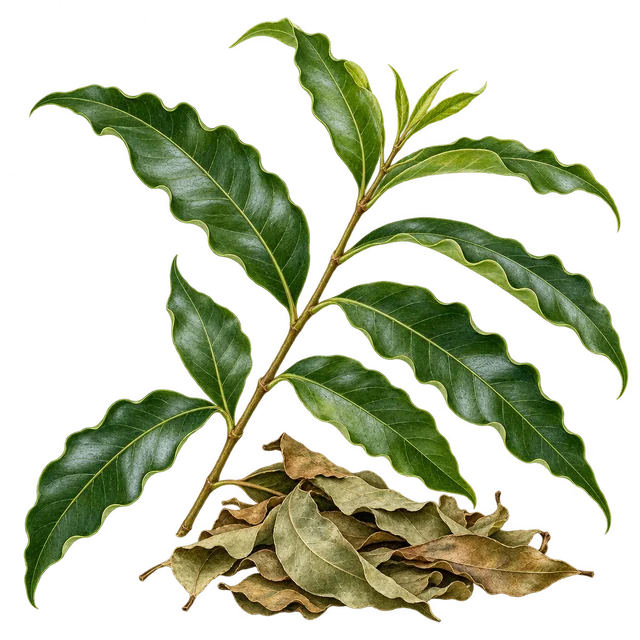
Syzygium anisatum, formerly Backhousia anisata; the aromatic leaf rather than anise seed or star anise.
Ingredient details, preparation and research
Source plant or material
Syzygium anisatum, formerly Backhousia anisata; the aromatic leaf rather than anise seed or star anise.
Plant family / material: Myrtaceae
Forms and route
Food-grade dried whole or ground leaves and culinary leaf products.
Vitamins and minerals
A flavouring portion is not a standardized nutrient supplement. Published food-composition work distinguishes species and sample form.
Absorption and preparation
Aromatic intensity is not evidence of nutrient absorption or medicinal potency. Whole-leaf and extracted-oil exposures differ.
Practical preparation
Use correctly labeled culinary leaf, following the recipe or supplier guidance. Keep it separate from concentrated essential oils and check the ingredient list in mixed seasonings.
Traditional and reported uses
- Leaves provide an anise-like flavour for food manufacture and cooking; their botanical source is different from Apiaceae aniseed.
- The fact sheet reports harvesting when aniseed flavouring was scarce during the Second World War. This is an industrial-history account, not a medical indication.
Contraindications and cautions
- Confirm the plant identity; anise myrtle, star anise and aniseed are not interchangeable species.
- Concentrated extract or oil safety is outside this culinary leaf card.
Do not invent a universal tradition
The source acknowledges rarity and limited records of traditional use. That uncertainty should remain visible rather than being filled with generic bush-medicine claims. Cultivation today does not resolve historical gaps.
Food sample boundaries
The native-food composition project included anise myrtle among additional sampled ingredients. An analysis of a defined leaf batch cannot be reused as a dose or nutrient profile for its essential oil.
Evidence limits
This is a food/material reference, not evidence of disease treatment. Geographic and customary-use records do not establish a medicinal dose. Nutrient quantities are omitted unless a matching food form and serving have been verified.
Entry sources
- AgriFutures: Focus on Anise Myrtle
- DAFF: Australian native foods
- AgriFutures: Native Foods Compositional Data for FSANZ Nutritional Panel Calculator
Reference entry 474 · Recorded content review: 2026-10-09 · Review scope and dates