


Key cautions
- Check recipes and package ingredients for allergens and gluten cross-contact where medically relevant.
- Do not eat raw starch dough or infer safety of an unknown cassava product from its sour smell or label.
What’s inside
Predominantly starch with process-related acidity and structural changes; it does not retain the whole root’s complete food matrix.
Uses in brief

- Starch biscuits
- Breadmaking ingredient
History, folklore and reported uses
History, folklore and traditional uses
The regional selection includes Brazilian polvilho-azedo production in Minas Gerais. Comparative starch research also includes Colombian cassava materials, illustrating a wider South American ingredient science without inventing a single national recipe.
Traditional, historical and reported uses
- Starch biscuits
Food or household practiceWhy this label?
Source documents this specific material, culinary use or attributed practice; no clinical efficacy is inferred.
Embrapa research examines fermentation-related changes in starch and biscuits made from it. This documents a recognizable baked-food use while preserving differences from whole cassava flour.
- Breadmaking ingredient
Laboratory/animal researchWhy this label?
This use entry describes a laboratory, pilot-scale or nonhuman experiment; it does not establish an ordinary household practice, clinical benefit or safe home protocol.
Primary studies investigate sour cassava starch’s expansion in breadmaking. Recipe formulation, genotype and processing influence performance, so sweet starch is not always a direct substitute.
2 bounded uses; regional records do not establish treatment effects.
Historical-use additions reviewed 2026-10-09
Regional reading paths
These sourced notes describe cultivation, trade, food traditions or material history. A regional connection does not claim exclusive origin.
South America
traditional processing; Brazil, Minas Gerais
Sour cassava starch for baked foods.
Identity & detailed reference
Identity
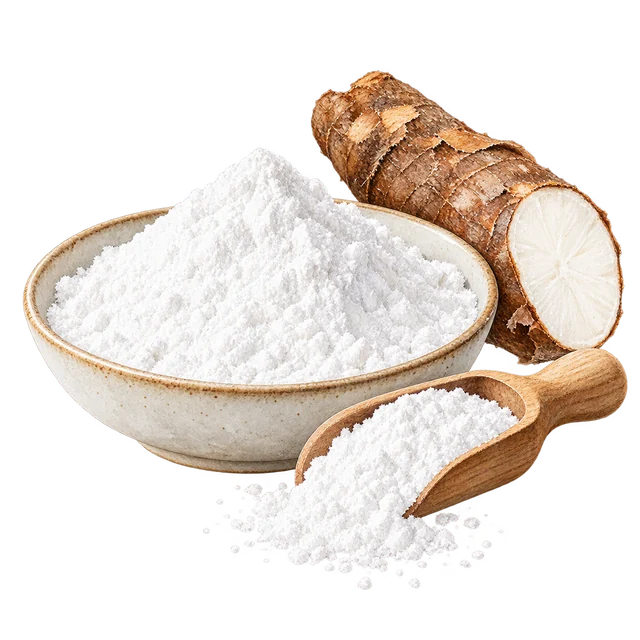
Manihot esculenta; fermented cassava starch; polvilho azedo, fermented sour cassava starch; distinct from whole-root cassava flour, sweet unfermented starch and liquid tucupi.
Ingredient details, preparation and research
Also known as: Manihot esculenta; fermented cassava starch
Source plant or material
Manihot esculenta; fermented cassava starch
Plant family / material: Euphorbiaceae (cassava substrate)
Forms and route
Commercial food-grade dry starch and baked foods made from it.
Vitamins and minerals
A starch is not a substantial protein or fiber food by default. Cheese, eggs, fats and sugar in a baked product belong to that recipe, not to the starch alone.
Absorption and preparation
Fermentation and drying affect functionality, but baking expansion is not a measure of human digestibility or probiotic benefit. Baked starch is not a live-culture supplement.
Practical preparation
Buy properly processed food-grade sour starch, keep dry and prepare in a suitable recipe. Do not attempt spontaneous cassava fermentation, chemical modification or detoxification from this card.
Traditional and reported uses
- Starch biscuits
- Breadmaking ingredient
Contraindications and cautions
- Check recipes and package ingredients for allergens and gluten cross-contact where medically relevant.
- Do not eat raw starch dough or infer safety of an unknown cassava product from its sour smell or label.
Processing explains performance
Research compares fermentation, drying and cassava genotypes rather than claiming one universal product. Results concern food structure and quality, not disease prevention or a home-production safety certification.
Evidence limits
This is a food-form review, not a treatment recommendation. Composition and laboratory findings apply to the material actually studied; no medicinal dose, universal nutrient ranking or preservation guarantee is inferred.
Entry sources
- Embrapa PAB: Polvilho azedo, aspectos físicos, químicos e microbiológicos
- Embrapa PAB: Fermented cassava starch in biscuits
- Fermentation and drying effects on sour-starch breadmaking
- Cassava genotype and sour-starch baking expansion
Reference entry 472 · Recorded content review: 2026-10-09 · Review scope and dates