


Key cautions
- Remove the shell and hard seeds. Check sugar and concentration on prepared products.
- Review concentrated or habitual medicinal use with a pharmacist if taking aspirin or ibuprofen regularly; small interaction studies do not establish the risk of an ordinary cooking amount.
What’s inside
The pulp combines naturally occurring sugars, fiber and organic acids. Its nutritional profile belongs to edible pulp, not the shell, hard seed, seed extract or leaf and bark remedies.
USDA SR28: Tamarinds, raw, food 09322, PDF pages 889–891 · World Agroforestry: Tamarindus indica species profile
Acids, sugars and ripeness
Tartaric acid remains important as the fruit ripens; increasing sugar changes the balance of sourness and sweetness. Sweet-tasting pulp can therefore still be acidic. Added sugar and dilution alter a finished drink or sauce further, so taste alone is not a measure of either vitamin C or carbohydrate content.
World Agroforestry: Tamarindus indica species profile · USDA SR28: Tamarinds, raw, food 09322, PDF pages 889–891
Polyphenols and the plant part studied
A 2005 chemical study examined phenolic antioxidants in seeds and pericarp, the fruit-wall material. Such extraction and laboratory measurements describe those samples; they do not supply a standardized antioxidant dose for a spoonful of culinary paste.
Sudjaroen et al. (2005): Tamarind seed and pericarp phenolic analysis
Nutrients in the amounts people use
Tamarind is often a seasoning shared across several servings rather than a bowlful of fruit. Its pulp is less watery than grapes or cherries. It contributes some minerals and thiamin, but its sourness mainly reflects organic acids, not a large vitamin C supply. Match the amount and form used to the appropriate label or food-composition entry.
USDA SR28: Tamarinds, raw, food 09322, PDF pages 889–891 · World Agroforestry: Tamarindus indica species profile
Uses in brief

- Use unsweetened pulp to add tartness to beans, lentils, vegetables, sauces or drinks.
- Traditional digestive and laxative uses are documented; reliable treatment effects from everyday portions are not established.
History, folklore and reported uses
Pulp, paste and seed are different ingredients
This card uses the edible fruit pulp as its nutritional basis. Commercial paste can be diluted, thickened or sweetened; a concentrate may be much stronger than rehydrated pulp. Tamarind seeds have documented processed food and industrial uses, but the hard seeds left in a pod are not a substitute for a prepared seed ingredient.
World Agroforestry: Tamarindus indica species profile · Singapore NParks: Tamarindus indica, food and traditional uses (2026)
From pod to kitchen ingredient
Whole pods need their brittle shells, tough strings and hard seeds removed. Shelled pulp or a block can be rehydrated and strained for sauces or drinks; follow the particular product’s dilution instructions. Ready-to-use paste and concentrate are not equal spoon for spoon. Start with a little in a dish and adjust the sourness before adding more.
Singapore NParks: Tamarindus indica, food and traditional uses (2026) · World Agroforestry: Tamarindus indica species profile · National Tropical Botanical Garden: Tamarindus indica, culinary traditions
Seeds, leaves and flowers have their own food histories
World Agroforestry records processed seeds as food and seed flour in breads and cakes. NParks also records tender flowers and shoots in regional curries, soups and salads. These are distinct culinary materials, not evidence that the hard seeds in an ordinary pulp portion should be eaten raw or that medicinal leaf preparations equal food.
World Agroforestry: Tamarindus indica species profile · Singapore NParks: Tamarindus indica, food and traditional uses (2026)
A name shaped by cultivation and trade
Tamarind’s name carries a travel story. It derives from Arabic tamr hindi, meaning Indian date, reflecting its long association with Indian cultivation and trade. Its precise birthplace is less certain than that name suggests: Kew’s current taxonomy lists Comoros and Madagascar, while older botanical accounts describe a broader probable tropical African origin. Long cultivation and naturalization make a single confident origin story misleading.
Kew Plants of the World Online: Tamarindus indica, taxonomy and recorded uses · Singapore NParks: Tamarindus indica, food and traditional uses (2026) · National Tropical Botanical Garden: Tamarindus indica, culinary traditions
Sour kitchens and Caribbean sweets
The pulp became a versatile sour ingredient in Indian and Southeast Asian kitchens, appearing in curries, chutneys, pickles and sauces. Its influence even reaches Worcestershire sauce. Across the Caribbean and tropical Americas, cooks found another expression for the same sweet-sour quality. The National Tropical Botanical Garden records sugared pulp in Jamaica, Cuba and the Dominican Republic, and tamarind syrup served over shaved ice in Puerto Rico. These are related food traditions, with different balances of sugar, water and fruit.
Singapore NParks: Tamarindus indica, food and traditional uses (2026) · National Tropical Botanical Garden: Tamarindus indica, culinary traditions
A useful tree and a gathering place
The tree’s usefulness extends beyond the kitchen. World Agroforestry describes broad-crowned tamarind trees as village shade and places for rest and consultation. It also records acidic pulp mixed with sea salt to polish copper, brass and silver. Its hard seeds have been processed into foods and useful materials, while the tree supplies wood and fuel. Tamarind’s history is therefore also a history of household work and shared public space.
Digestive and cooling traditions
Digestive use accompanies the food history. Singapore’s NParks records fruit and leaf preparations used traditionally to support bowel movements and digestion. New York Botanical Garden’s Dominican ethnobotanical account describes tamarind drinks within a cooling, or fresca, tradition. That language belongs to its own cultural framework; it should not be translated into a proven biomedical detoxification effect.
Singapore NParks: Tamarindus indica, food and traditional uses (2026) · New York Botanical Garden: Dominican medicinal plant traditions, tamarind · New York Botanical Garden: Dominican Medicinal Plants, Tamarindo profile and ethnobotanical interview inventory
Digestive and laxative preparations
NParks records tamarind fruit and leaf preparations used in African, Asian and American traditions for digestion, constipation and bowel movement. The familiar sour pulp and medicinal leaf preparations remain different materials.
Singapore NParks: Tamarindus indica, food and traditional uses (2026)
Cooling drinks and heat complaints
NYBG’s Dominican ethnobotanical account records tamarind-pulp drinks among fresca remedies for excess-heat complaints, including hot flashes and night sweats. The same tradition describes blood cleansing in its own cooling-and-balance framework.
New York Botanical Garden: Dominican medicinal plant traditions, tamarind
Headache and sleep remedies
NYBG’s interviews with Dominican participants record tamarind remedies for headache and migraine. The account also specifically identifies oral fruit-pulp preparations for insomnia, preserving several intended uses within the local cooling tradition.
New York Botanical Garden: Dominican medicinal plant traditions, tamarind · New York Botanical Garden: Dominican Medicinal Plants, Tamarindo profile and ethnobotanical interview inventory
Poultices for skin and joint complaints
World Agroforestry records tamarind bark in lotions or poultices for sores and rashes, and young leaves used externally for swollen or painful joints. These external traditions use particular parts of the tree, separately from its familiar sour fruit pulp.
World Agroforestry: Tamarindus indica species profile · Singapore NParks: Tamarindus indica, food and traditional uses (2026)
Household polishing and communal shade
World Agroforestry records acidic tamarind pulp used to polish copper, brass and silver, sometimes with salt. The tree also supplies village shade for rest and consultation, preserving both household and shared-community uses beyond its food value.
Reading the traditional uses
The accounts above record what communities used particular preparations for, not tested treatment instructions. Cooling and blood-cleansing language should be read in its cultural setting, not as proof of detoxification or hormonal effects. Likewise, the bark and leaf poultices document external practice rather than validated treatment of skin disease or painful joints.
Singapore NParks: Tamarindus indica, food and traditional uses (2026) · World Agroforestry: Tamarindus indica species profile · New York Botanical Garden: Dominican medicinal plant traditions, tamarind
Regional reading paths
These sourced notes describe cultivation, trade, food traditions or material history. A regional connection does not claim exclusive origin.
Africa
African native-range association and long cultivation: Sahel and East Africa.
Sour fruit pulp for drinks, sauces and seasoning.
Asia
Introduced/traded and traditional use: Singapore and Malaysia; not claimed as Asian-native.
Sour-sweet fruit pulp flavours sauces and dishes.
Identity & detailed reference
Identity
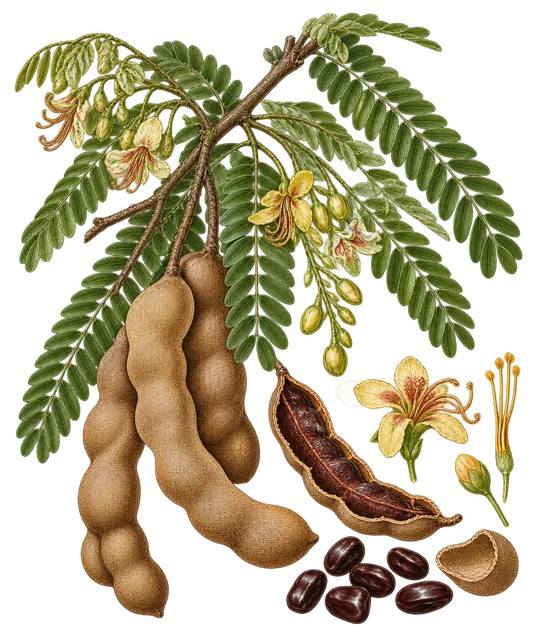
Tamarindus indica L. is a tropical legume-family tree. The usual food is the sticky sweet-sour pulp inside its brown pod, surrounding hard seeds. The pulp, seed, leaf and bark are distinct materials.
Ingredient details, preparation and research
Source plant or material
Tamarindus indica. Ordinary culinary use centers on ripe fruit pulp after the shell and hard seeds are removed. Some cultures also prepare young leaves, flowers or processed seeds.
Plant family / material: Fabaceae (Leguminosae), the legume family.
Forms and route
Whole pods; shelled pulp; compressed pulp blocks; ready-to-use paste; concentrated paste; drinks, candy, chutney and sauces. Seed powders, seed polysaccharides and leaf/bark extracts are separate products. Dilution and added sugar vary considerably.
Food sources
Edible tamarind pulp, used fresh or rehydrated from a block. A small amount can season a whole pot of lentils or vegetables; a larger sweet-pulp tasting portion is different from a concentrated paste serving. Commercial products may include salt, sugar or other ingredients.
Vitamins and minerals
For 30 g edible raw pulp, about one-quarter of the USDA 120 g cup: approximately 72 kcal, 18.8 g carbohydrate, 11.6 g sugars, 1.5 g fiber, 0.8 g protein, 188 mg potassium, 28 mg magnesium, 22 mg calcium, 0.84 mg iron, 0.13 mg thiamin and 1 mg vitamin C. Calculated from USDA SR28 food 09322; shells and seeds are excluded. Cooking portions may be smaller, and concentrate values differ.
Absorption and preparation
Sour taste is not evidence of abundant vitamin C or improved mineral absorption. One simulated-digestion study found tamarind generally did not improve iron or zinc bioaccessibility from the grains tested; that is laboratory evidence, not a human absorption trial. For a practical meal, season beans or lentils with tamarind and add a vitamin-C-rich food such as peppers, guava or citrus for the established general plant-iron benefit. No special fat pairing, fasting schedule or tamarind supplement combination is established.
Traditional and reported uses
- Culinary: a souring agent in chutneys, curries, sauces, marinades, preserves and drinks; sweeter cultivars may be eaten as fruit.
- Nutrition: a small contribution to fiber, minerals and thiamin, rather than a vitamin supplement.
- Traditional practice: NParks records use of fruit and leaves for digestion and constipation in Africa, Asia and the Americas. This documents heritage rather than a validated treatment dose.
- Clinical limits: a small randomized pulp trial did not show clear cardiometabolic benefits versus control. A later exploratory juice study in a specific HIV population cannot establish general treatment claims.
Contraindications and cautions
- Remove pod shells, tough strings and hard seeds from ordinary pulp preparations. Traditional cooked-seed foods require their own preparation and are not equivalent to eating raw seeds.
- Candy, sweetened drinks and sauces may add substantial sugar. Raw-pulp values do not describe every concentrate or jar of paste.
- Tart foods or large portions can be uncomfortable for some people with reflux or sensitive digestion. Start with normal culinary amounts rather than treating the fruit as a laxative medicine.
- Very small human studies found increased aspirin or ibuprofen exposure when tamarind fruit extract accompanied a meal. Clinical importance at normal food portions is uncertain; ask a pharmacist before concentrated or medicinal use alongside these drugs.
- CDC identifies some tamarind/chili candies as a possible lead-exposure source. This concerns contamination of certain products, not inherent lead toxicity of tamarind. Choose reputable products and follow recalls.
- Frequent sipping of acidic drinks or sucking acidic candy can contribute to dental erosion. Have them with meals rather than prolonged exposure and rinse with water afterward.
- Do not assume that food use establishes safety of concentrated leaf, bark or seed remedies, especially during pregnancy, breastfeeding or treatment with medicines.
Similar items and how they compare
- Lemon or lime
All add acidity to food.
Acid type and vitamin C content differ; tamarind pulp is comparatively carbohydrate-dense and not a dependable high-vitamin-C substitute.
- Tamarind seed extract
Comes from the same tree.
Uses a different plant part and concentrated constituents; seed-product studies do not establish effects of fruit pulp.
- Tart cherries
Another sweet-sour fruit.
Different botanical family and nutrient density; cherry-juice sleep findings do not apply to tamarind.
Traditional use and the human evidence
In a six-week randomized study with 40 completers, 20 g pulp daily did not significantly outperform control for body size, glucose, lipids or blood pressure. A 2025 exploratory study compared two tamarind-juice concentrations in people with HIV and elevated triglycerides, reporting some signals but lacking an inactive control. These findings do not establish routine prevention or treatment benefits.
Acidity does not guarantee better iron absorption
A grain-digestion experiment did not find a general iron/zinc benefit from tamarind, and tannins were proposed as a possible explanation. Use vitamin-C-rich produce to support absorption of plant iron in a meal rather than relying on the sour taste of tamarind.
Medicine and product-quality cautions
The aspirin and ibuprofen experiments each involved only six healthy volunteers and measured drug exposure. They justify checking concentrated or medicinal use, but do not demonstrate that every food serving is dangerous. Lead in certain candies is a separate contamination issue that depends on ingredients, manufacturing and packaging.
Entry sources
- Singapore NParks: Tamarindus indica, food and traditional uses (2026)
- World Agroforestry: Tamarindus indica species profile
- Randomized trial (2020): Tamarind pulp and cardiometabolic measurements
- Kew Plants of the World Online: Tamarindus indica, taxonomy and recorded uses
- Sudjaroen et al. (2005): Tamarind seed and pericarp phenolic analysis
- Exploratory trial (2025): Tamarind juice in people with HIV and elevated triglycerides
- Hemalatha et al. (2005): Organic acids and mineral bioaccessibility from grains
- NIH ODS: Vitamin C and absorption of iron from plant foods
- Mustapha et al. (1996): Tamarind fruit extract and aspirin bioavailability in six volunteers
- Garba et al. (2003): Tamarind fruit extract and ibuprofen bioavailability in six volunteers
- CDC: Lead exposure from some foods, cosmetics and medicines
- American Dental Association: Dental erosion and acidic foods or drinks
- USDA SR28: Tamarinds, raw, food 09322, PDF pages 889–891
- National Tropical Botanical Garden: Tamarindus indica, culinary traditions
- New York Botanical Garden: Dominican medicinal plant traditions, tamarind
Reference entry 110 · Recorded content review: 2026-10-06 · Review scope and dates