


Key cautions
- Fruit oil, skin-care products and edible pulp are not interchangeable; check intended use.
What’s inside
Carotenoids, lipids, carbohydrate and other fruit compounds; their profile differs among morphotypes and preparations.
Uses in brief

- Refreshments
- Frozen desserts
History, folklore and reported uses
History, folklore and traditional uses
The same palm fruit connects Peruvian Amazonian food commerce and Brazilian buriti supply chains. Regional names reflect different contexts, while the edible pulp and extracted-oil cards preserve meaningful material differences.
Traditional, historical and reported uses
- Refreshments
Food or household practiceWhy this label?
Source documents this specific material, culinary use or attributed practice; no clinical efficacy is inferred.
Peru’s INACAL identifies aguaje pulp and refreshments as regional commercial foods. This supports a beverage role with composition determined by the actual recipe.
- Frozen desserts
Food or household practiceWhy this label?
Source documents this specific material, culinary use or attributed practice; no clinical efficacy is inferred.
The same official account records ice creams and ice pops, distinct prepared foods rather than clinical supplements.
2 bounded uses; regional records do not establish treatment effects.
Historical-use additions reviewed 2026-10-09
Regional reading paths
These sourced notes describe cultivation, trade, food traditions or material history. A regional connection does not claim exclusive origin.
South America
native and harvested; Peru, Brazil
Edible fruit pulp.
Identity & detailed reference
Identity
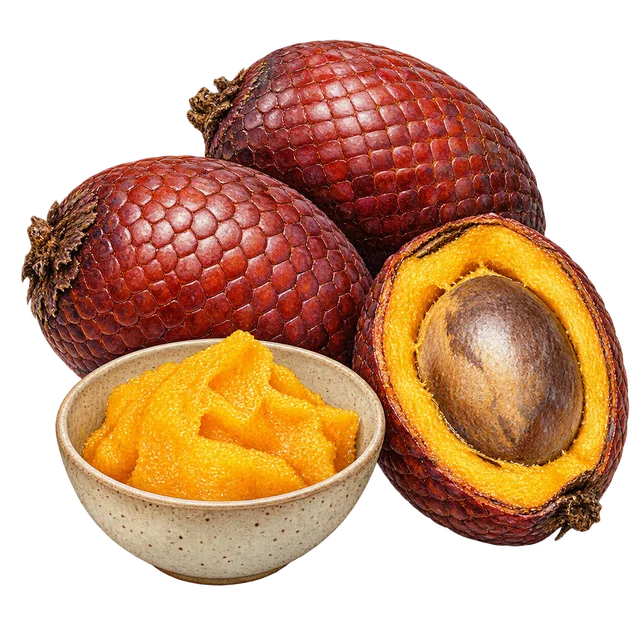
Mauritia flexuosa; the edible fruit pulp of Mauritia flexuosa, called aguaje in Peru and buriti in Brazil; extracted oil is a separate form.
Ingredient details, preparation and research
Also known as: Mauritia flexuosa
Source plant or material
Mauritia flexuosa
Plant family / material: Arecaceae
Forms and route
Clean prepared pulp, commercial frozen pulp, refreshments and frozen desserts.
Vitamins and minerals
A beverage or frozen dessert may be diluted and sweetened. Color is not a quantitative vitamin A measurement, and pulp is not the same as filtered oil.
Absorption and preparation
Carotenoid availability depends on processing and the food matrix. Laboratory antioxidant tests do not establish hormonal or body-shaping effects.
Practical preparation
Use a traceable food-grade pulp product and follow refrigeration or freezing instructions. Keep seed and fibrous coverings out of blended pulp preparations.
Traditional and reported uses
- Refreshments
- Frozen desserts
Contraindications and cautions
- Fruit oil, skin-care products and edible pulp are not interchangeable; check intended use.
Fruit variation
A primary study compared three Peruvian fruit morphotypes and a formulated beverage. Its compositional and stability measurements concern those samples; they cannot set a universal nutrient amount for all aguaje products.
Evidence limits
This is a food-form review, not a treatment recommendation. Composition and laboratory findings apply to the material actually studied; no medicinal dose, universal nutrient ranking or preservation guarantee is inferred.
Entry sources
- INIA: Los cultivos nativos en las comunidades del Perú
- INACAL Peru: Aguaje quality and commercial uses
- Three Peruvian aguaje morphotypes and beverage stability
- FAO: Produzir e conservar, sociobiodiversidade amazônica
Reference entry 460 · Recorded content review: 2026-10-09 · Review scope and dates