


Key cautions
- African wormwood has a recorded history of use for malaria, but WHO advises against using Artemisia plant preparations to prevent or treat it. Suspected malaria needs prompt testing and effective medical care.
- Do not equate A. afra with artemisinin-based combination medicines, A. annua or common wormwood. A shared genus is not evidence of interchangeable treatment.
- Avoid smoke inhalation, enemas, undiluted oils and unsupervised medicinal use. No safety clearance for pregnancy, children or long-term ingestion is provided.
What’s inside
Variable volatile constituents and other plant compounds; profiles depend on plant source and preparation. The presence of aromatic chemicals does not identify a clinically useful antimalarial product.
Uses in brief

- Documented regional herbal practice
- Aromatic household tradition
History, folklore and reported uses
History, folklore and traditional uses
Native: South Africa northward into East Africa and Ethiopia.
Traditional, historical and reported uses
- Documented regional herbal practice
Traditional accountWhy this label?
An attributed cultural or herbal practice is recorded; it does not establish treatment benefit or a safe medicinal dose.
SANBI records varied leaf and aerial-part preparations in Southern Africa, including infusions and external applications. The record concerns what people have done; it is not a set of safe preparation instructions.
- Aromatic household tradition
Food or household practiceWhy this label?
The source supports the named food, cosmetic or material practice; no treatment effect is inferred and the card’s form and safety limits remain attached.
SANBI also records herb-garden and aromatic household uses. Such history does not prove that a plant, smoke or homemade spray safely repels disease-carrying insects.
2 sourced featured uses; cultural or material records are not clinical efficacy evidence.
Historical-use additions reviewed 2026-10-09
Regional reading paths
These sourced notes describe cultivation, trade, food traditions or material history. A regional connection does not claim exclusive origin.
Africa
Native: South Africa northward into East Africa and Ethiopia.
Traditional aromatic herb and infusion material; historical use is not proof of treatment efficacy.
Identity & detailed reference
Identity
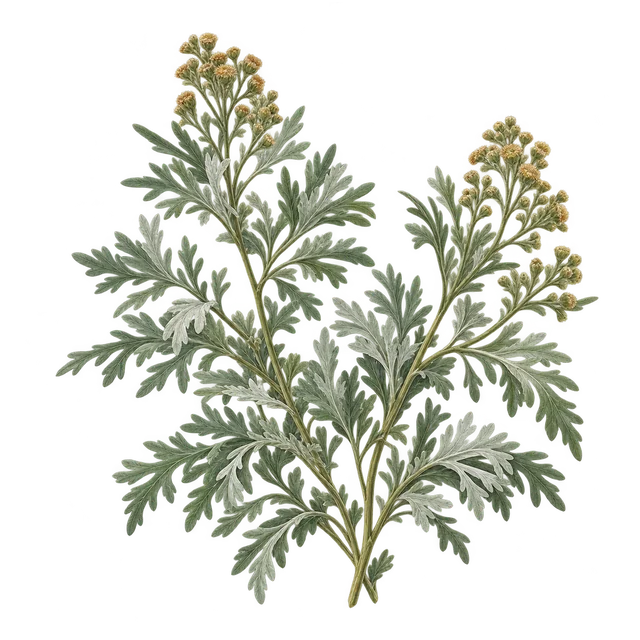
Artemisia afra, African wormwood, a Southern and Eastern African aromatic shrub. It is not Artemisia annua, the artemisinin-associated species, or Artemisia absinthium, common wormwood.
Ingredient details, preparation and research
Source plant or material
Artemisia afra
Plant family / material: Asteraceae
Forms and route
Fresh or dried leaves and small aerial parts documented in traditional preparations. Concentrated extracts, essential oils and pharmaceutical antimalarials are different materials.
Vitamins and minerals
This card does not present African wormwood as a nutrient food. Mineral and phytochemical measurements in dried herb cannot establish an appropriate dietary serving.
Absorption and preparation
Traditional infusions, alcohol extracts and volatile oil differ chemically. No verified absorption or dosing conversion among them is supplied.
Practical preparation
Use this record for cultural and botanical comparison. Do not reproduce historical administration routes or replace insect-bite prevention measures and prescribed medicines with an herb preparation.
Traditional and reported uses
- Documented regional herbal practice
- Aromatic household tradition
Contraindications and cautions
- African wormwood has a recorded history of use for malaria, but WHO advises against using Artemisia plant preparations to prevent or treat it. Suspected malaria needs prompt testing and effective medical care.
- Do not equate A. afra with artemisinin-based combination medicines, A. annua or common wormwood. A shared genus is not evidence of interchangeable treatment.
- Avoid smoke inhalation, enemas, undiluted oils and unsupervised medicinal use. No safety clearance for pregnancy, children or long-term ingestion is provided.
A clear malaria evidence boundary
WHO reviewed non-pharmaceutical Artemisia preparations and does not endorse them for malaria. SANBI’s ethnomedicinal descriptions are useful historical records but are not substitutes for controlled evidence or current treatment guidance.
Evidence limits
Reference-only traditional-practice card, without a medicinal dose or assertion that customary routes are safe or effective.
Entry sources
- SANBI PlantZAfrica: Artemisia afra
- SANBI medicinal monograph: Artemisia afra
- WHO: Non-pharmaceutical forms of Artemisia are not supported for malaria
Reference entry 306 · Recorded content review: 2026-10-09 · Review scope and dates