


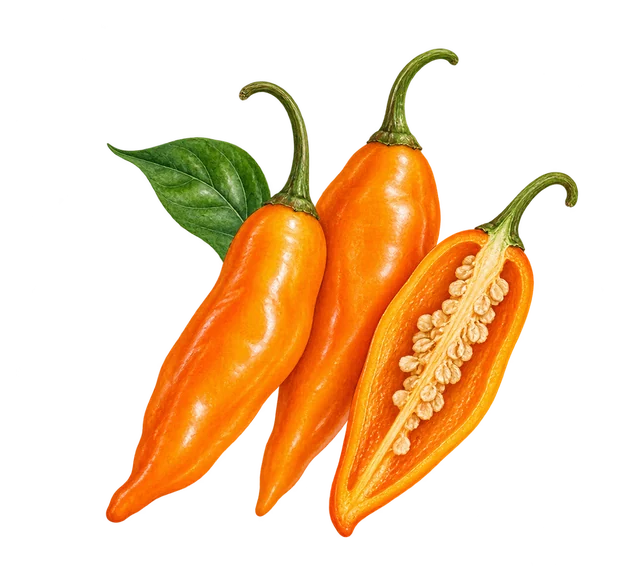
Key cautions
- Hot pepper can irritate eyes, skin and the digestive tract; avoid aerosols when blending.
- Prepared pastes may include salt, preservatives or other ingredients; check the label.
What’s inside
Carotenoids, capsaicinoids, vitamin C and sugars; concentrations change with cultivar and ripeness.
Uses in brief

- Sauces and creams
- Savory stews
History, folklore and reported uses
History, folklore and traditional uses
Regional context: cultivated; Peru. These examples describe specific food or material traditions and production settings; they do not establish exclusive ownership, a single continent-wide recipe, or therapeutic effectiveness.
Traditional, historical and reported uses
- Sauces and creams
Food or household practiceWhy this label?
Source documents this specific material, culinary use or attributed practice; no clinical efficacy is inferred.
PROMPERÚ describes ají amarillo in Peruvian sauces, where the fruit supplies color as well as pungency. Adjust the quantity for the diners rather than treating a strong sensation as a health effect.
- Savory stews
Food or household practiceWhy this label?
Source documents this specific material, culinary use or attributed practice; no clinical efficacy is inferred.
Ají de gallina is a documented example of a stew flavored with this pepper. Its dairy, bread and other ingredients belong to the finished dish, not the pepper’s nutrient profile.
2 bounded uses; regional records do not establish treatment effects.
Historical-use additions reviewed 2026-10-09
Regional reading paths
These sourced notes describe cultivation, trade, food traditions or material history. A regional connection does not claim exclusive origin.
South America
cultivated; Peru
Pepper for sauces and stews.
Identity & detailed reference
Identity
Capsicum baccatum; the culinary fruit sold as ají amarillo; other Capsicum baccatum cultivars need not share its color, heat or flavor.
Ingredient details, preparation and research
Also known as: Capsicum baccatum
Source plant or material
Capsicum baccatum
Plant family / material: Solanaceae
Forms and route
Fresh peppers, frozen fruit and food-grade paste; dried products differ in concentration and may contain salt.
Vitamins and minerals
A spoonful of paste is not nutritionally equivalent to a whole fresh pepper. No serving-specific nutrient amount is assigned.
Absorption and preparation
Carotenoid uptake depends on food matrix and the meal; heat and pigment color do not establish an absorption advantage.
Practical preparation
Buy identified culinary peppers. Wash before cutting; wear gloves if sensitive and avoid touching eyes. Follow frozen-product or paste storage instructions.
Traditional and reported uses
- Sauces and creams
- Savory stews
Contraindications and cautions
- Hot pepper can irritate eyes, skin and the digestive tract; avoid aerosols when blending.
- Prepared pastes may include salt, preservatives or other ingredients; check the label.
Variation among peppers
Analyses of Andean peppers and broader C. baccatum collections found substantial variation in carotenoids, vitamin C and sugars. Those measurements support cultivar-specific descriptions, not a fixed nutrient dose for every ají paste.
Evidence limits
This is a food-form review, not a treatment recommendation. Composition and laboratory findings apply to the material actually studied; no medicinal dose, universal nutrient ranking or preservation guarantee is inferred.
Entry sources
- PROMPERÚ: Ocho comidas típicas del Perú
- Carotenoid composition of Andean ají and rocoto peppers
- Vitamin C and reducing sugars in Capsicum baccatum genotypes
Reference entry 421 · Recorded content review: 2026-10-09 · Review scope and dates