


Key cautions
- Do not identify or forage fungi using this card, photographs or a common name.
- Drying and cooking cannot make an incorrectly identified or contaminated fungus safe
What’s inside
Fungal carbohydrates and proteins, with composition and measured phenolic-related properties influenced by drying.
Uses in brief

- Regional forest food
- Dried food-product research
History, folklore and reported uses
History, folklore and traditional uses
The evidence centers on southern Chilean temperate forests and regional food markets. Community use should remain locally attributed; the existence of edible species in a forest does not imply that unfamiliar fungi are edible.
A closer look at its history
A seasonal forest food tied to a living host
INFOR links diweñe with native Nothofagus woodland and spring fruiting. The visible food structures arise from a continuing tree–fungus relationship, so retaining host forests is part of retaining the food resource. It is neither a root crop nor a fungus that can simply be transferred to any log.
Preserving a short season
University of La Serena researchers compared freeze-drying and hot-air drying to address digüeñe’s perishability. They measured ingredient quality and composition, providing a substantiated preservation research use. Laboratory antioxidant measurements do not establish a neurological or other treatment effect in people.
Additional history reviewed 2026-10-09
Traditional, historical and reported uses
- Regional forest food
Food or household practiceWhy this label?
Source documents this specific material, culinary use or attributed practice; no clinical efficacy is inferred.
INFOR documents collection of identified digüeñe for household food and regional markets in southern Chile. This is evidence of a food practice, not a guide to identifying a harvest.
- Dried food-product research
Laboratory/animal researchWhy this label?
This use entry describes a laboratory, pilot-scale or nonhuman experiment; it does not establish an ordinary household practice, clinical benefit or safe home protocol.
Primary studies examine drying treatments to address perishability. They evaluate processed samples under controlled conditions rather than validating every household drying method.
2 bounded uses; regional records do not establish treatment effects.
Historical-use additions reviewed 2026-10-09
Features and lookalikes to study
Cyttaria espinosae; the food fruiting structures of Cyttaria espinosae, digüeñe; not all fungi growing on trees or every Cyttaria species.
Common names vary between regions and suppliers; the scientific scope above governs this card.
Morphology described in sources
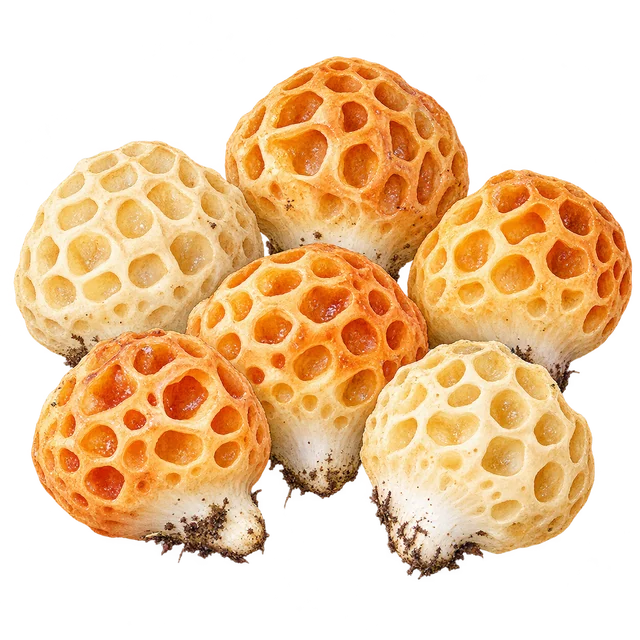
- C. espinosae forms rounded fleshy stromata from woody galls on Nothofagus, particularly N. obliqua. A pale covering ruptures as the surface reproductive cavities develop; mature colour can become yellow-orange.
- Habitat and substrate
- See the source-linked morphology and comparison notes below; a separate habitat summary has not been verified for this card.
- Geographic scope
- A complete regional range is not established here. Broad common names and commercial labels can span different species.
- Season in the cited region
- No region-specific fruiting season has been verified for this card. Do not infer a local season from trade availability.
Cyttaria hariotii, C. darwinii and C. berteroi
A primary specimen study distinguished C. espinosae by its globose form and smaller size relative to C. berteroi, and softer consistency relative to C. hariotii and C. darwinii.
Size and softness overlap with age and hydration. Nothofagus host association is shared by the genus; microscopic asci/spores and regional expertise remain necessary for ambiguous material.
Limits and regional differences
- Digüeñe can be applied more broadly to Cyttaria in regional speech. This card remains C. espinosae; it does not identify every Cyttaria or every round growth on a tree.
- Educational comparison only. Neither this card, an illustration, a photograph, a spore-print colour nor a checklist establishes that a wild collection is safe to eat. A qualified local mycologist must assess uncertain material; do not taste an unknown fungus. Cooking does not reliably eliminate mushroom toxins.
Regional reading paths
These sourced notes describe cultivation, trade, food traditions or material history. A regional connection does not claim exclusive origin.
South America
native; southern Chile
Regionally gathered food fungus; expert identification required.
Identity & detailed reference
Identity
Cyttaria espinosae; the food fruiting structures of Cyttaria espinosae, digüeñe; not all fungi growing on trees or every Cyttaria species.
Ingredient details, preparation and research
Also known as: Cyttaria espinosae
Source plant or material
Cyttaria espinosae
Fungal family: Cyttariaceae
Forms and route
Professionally identified fresh culinary fungi and properly processed dried products from a reliable food supplier.
Vitamins and minerals
Dried material contains less water than fresh fungi, so equal weights are not nutritionally comparable. No serving-specific nutrient amount is assigned.
Absorption and preparation
Measured antioxidant capacity after drying does not establish absorption, immunity enhancement or neuroprotection in humans.
Practical preparation
Buy a correctly identified food product; keep fresh material chilled and use promptly. Follow supplier cooking or rehydration instructions and discard spoiled fungi.
Traditional and reported uses
- Regional forest food
- Dried food-product research
Contraindications and cautions
- Do not identify or forage fungi using this card, photographs or a common name.
- Drying and cooking cannot make an incorrectly identified or contaminated fungus safe. Stop eating if a reaction occurs.
Preservation research has boundaries
Drying studies compare physical, chemical and assay-based properties. Their results describe handling and ingredient quality; they do not establish a medicinal benefit or a safe shelf life for an arbitrary batch.
Evidence limits
A food and processing reference, not an identification key, harvesting authorization or medical guide. Only professionally identified supply is contemplated.
Entry sources
- INFOR: Estudio de hongos silvestres comestibles del sur de Chile
- Drying and physicochemical composition of digüeñe
- Drying treatments and characteristics of digüeñe
Reference entry 447 · Recorded content review: 2026-10-09 · Review scope and dates