


Key cautions
- Buy correctly identified food kernels; ordinary mango stones are not substitutes.
- The fat-rich material can become rancid or moldy in poor storage. Keep ground meal dry and sealed and discard spoiled products.
What’s inside
Kernel lipids, protein and polysaccharides contributing thickening and viscosity. Processing changes water uptake, flavor, fat release and the behavior of a soup.
Uses in brief

- Ogbono soup thickening
- Regional sauce paste
History, folklore and reported uses
History, folklore and traditional uses
Native/cultivated: humid West/Central Africa, including Nigeria and Cameroon.
A closer look at its history
A forest tree valued enough to leave standing
Dika’s history is also the history of managed forest landscapes. The National Research Council’s 2006 account describes valued Irvingia trees being retained when surrounding forest was cleared, and kernels moving through markets in Cameroon, Nigeria, Gabon and Equatorial Guinea. The edible kernel is enclosed in a hard stone that must be cracked, so the traded food represents substantial harvesting and processing work. Sweet-fruited Irvingia gabonensis and the bitter-fruited I. wombolu were valued differently; the usefulness of the kernel did not depend on having a sweet fresh fruit.
Ogbono soup and the misleading name Gaboon chocolate
Ground kernels give ogbono soups and sauces their characteristic thick, slippery texture. Other preparations recorded in the same crop history include a pounded butter-like paste and compressed blocks once called Gaboon chocolate. That historical name refers to the blocks’ appearance and form, not to cacao being an ingredient. Turning kernels into compact paste or blocks made them a recognizable stored and traded commodity. The story is about regional texture preferences and a useful food material, rather than the weight-loss claims later attached to some commercial African-mango extracts.
Additional history reviewed 2026-10-09
Traditional, historical and reported uses
- Ogbono soup thickening
Food or household practiceWhy this label?
The source supports the named food, cosmetic or material practice; no treatment effect is inferred and the card’s form and safety limits remain attached.
The National Research Council records ground dika kernels as an important soup ingredient. Their thickening behavior is a food-function property, not evidence of a digestive treatment.
- Regional sauce paste
Food or household practiceWhy this label?
The source supports the named food, cosmetic or material practice; no treatment effect is inferred and the card’s form and safety limits remain attached.
FAO documents kernels and their trade among humid-zone forest foods. A Cameroon study investigates local culinary practices and processed kernels, showing why different preparations need not behave alike.
2 sourced featured uses; cultural or material records are not clinical efficacy evidence.
Historical-use additions reviewed 2026-10-09
Regional reading paths
These sourced notes describe cultivation, trade, food traditions or material history. A regional connection does not claim exclusive origin.
Africa
Native/cultivated: humid West/Central Africa, including Nigeria and Cameroon.
Ground kernels thicken soups; distinguish kernels from fruit flesh and extracts.
Identity & detailed reference
Identity
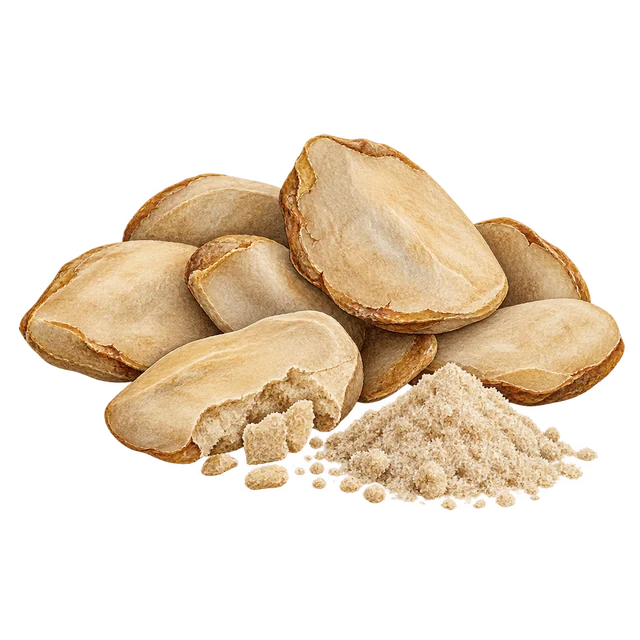
The edible kernels of Irvingia gabonensis and Irvingia wombolu, known as dika, ogbono or odika. These are not Mangifera indica mango seeds, and kernel foods differ from “African mango” extract supplements.
Ingredient details, preparation and research
Also known as: Dika; ogbono kernels
Source plant or material
Irvingia gabonensis and I. wombolu
Plant family / material: Irvingiaceae
Forms and route
Dried whole kernels, ground meal and traditionally processed kernel paste used in cooking. Fruit pulp, extracted fat and commercial weight-management extracts are separate.
Vitamins and minerals
Kernel meal is richer in fat and protein than the fruit pulp. A finished soup’s nutritional value also depends on dilution, vegetables, proteins and added oils; no fixed nutrient serving is inferred.
Absorption and preparation
Processing can change the food matrix and release of constituents, but viscosity measurements are not direct measurements of human absorption or blood-glucose response.
Practical preparation
Use a food-grade whole or ground product in an established cooked soup or sauce. Grind only what is needed, keep utensils clean and refrigerate leftovers promptly.
Traditional and reported uses
- Ogbono soup thickening
- Regional sauce paste
Contraindications and cautions
- Buy correctly identified food kernels; ordinary mango stones are not substitutes.
- The fat-rich material can become rancid or moldy in poor storage. Keep ground meal dry and sealed and discard spoiled products.
Texture research is not supplement evidence
The Cameroon study combines culinary interviews with physicochemical and functional testing of processed kernels. It supports preparation-sensitive food properties; it does not establish clinical weight loss or an extract-equivalent dose in a meal.
Evidence limits
Kernel food scope, excluding clinical assessment of branded Irvingia extracts or universal claims for both species.
Entry sources
- National Research Council, Lost Crops of Africa: Dika
- FAO: Commonly consumed forest and farm tree foods in the West African humid zone
- Kamdem Bemmo et al.: Culinary practices and kernel properties in East Cameroon
Reference entry 309 · Recorded content review: 2026-10-09 · Review scope and dates