


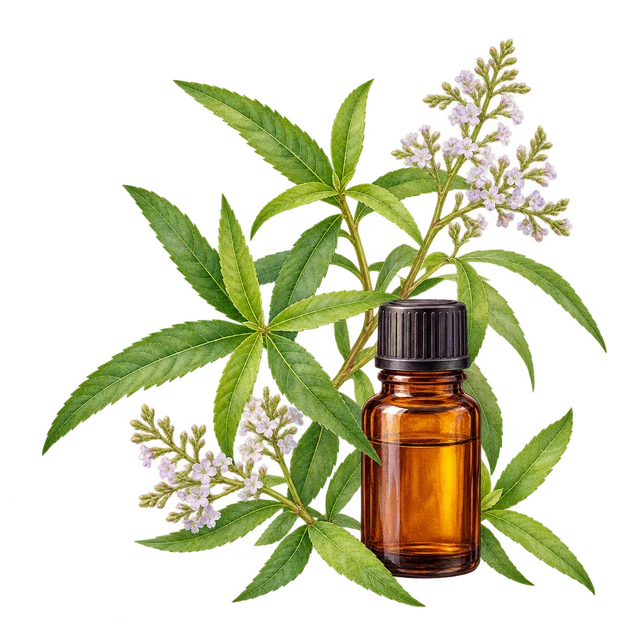
Key cautions
- Essential oils can cause irritation or poisoning when misused; do not swallow this oil or place it in eyes or mucous membranes.
- Keep concentrated product away from children and stop fragrance use if it causes symptoms.
- Safety and efficacy findings for a particular formulation do not transfer to a home mixture.
What’s inside
Volatile terpenoid compounds; a chemical profile depends on plant source, growing conditions, plant part and distillation.
Uses in brief

- Aromatic distillate
- Experimental insect-related application
History, folklore and reported uses
History, folklore and traditional uses
Cultivation and distillation of Ecuadorian lemon verbena provide the regional connection. The common name cedrón is kept alongside the botanical name while the leaf and oil cards preserve a genuine material distinction.
Traditional, historical and reported uses
- Aromatic distillate
Food or household practiceWhy this label?
The source documents an aromatic or manufacturing material, without establishing therapeutic benefit.
Research on Ecuadorian plants includes sensory and chemical characterization of lemon verbena essential oil. This establishes an aromatic-material role, not a medicinal indication.
- Experimental insect-related application
Laboratory/animal researchWhy this label?
This use entry describes a laboratory, pilot-scale or nonhuman experiment; it does not establish an ordinary household practice, clinical benefit or safe home protocol.
The same primary study examines effects against Aedes albopictus. Laboratory endpoints do not establish a registered skin repellent, duration of protection or a safe household recipe.
2 bounded uses; regional records do not establish treatment effects.
Historical-use additions reviewed 2026-10-09
Regional reading paths
These sourced notes describe cultivation, trade, food traditions or material history. A regional connection does not claim exclusive origin.
South America
cultivated and distilled; Ecuador
Aromatic distillate; not equivalent to leaf tea.
Identity & detailed reference
Identity
Aloysia citrodora; concentrated volatile oil of Aloysia citrodora; distinct from cedrón leaf tea and fixed vegetable oils.
Ingredient details, preparation and research
Also known as: Aloysia citrodora
Source plant or material
Aloysia citrodora
Plant family / material: Verbenaceae
Forms and route
Botanically identified essential oil and finished aromatic products; hydrosol, leaf extract and infusion are separate materials.
Vitamins and minerals
No nutrient serving applies. Distillation does not preserve the whole leaf’s food matrix and the product should not be treated as a drink additive.
Absorption and preparation
The water infusion, alcohol extract and oil select different constituents. A leaf-product assessment cannot establish absorption or safety of concentrated oil.
Practical preparation
Use a labeled finished product for its intended route. Do not add drops to drinking water, improvise a repellent or apply concentrate directly to skin.
Traditional and reported uses
- Aromatic distillate
- Experimental insect-related application
Contraindications and cautions
- Essential oils can cause irritation or poisoning when misused; do not swallow this oil or place it in eyes or mucous membranes.
- Keep concentrated product away from children and stop fragrance use if it causes symptoms.
- Safety and efficacy findings for a particular formulation do not transfer to a home mixture.
Leaf medicine is a separate evidence base
EMA assesses identified lemon verbena leaves and preparations. That assessment does not authorize essential-oil ingestion or make the distilled oil interchangeable with the leaf.
Evidence limits
A chemical and aromatic-material reference with experimental insect research. No clinical treatment, oral dose or DIY repellent recommendation is made.
Entry sources
- Chemical profiling and sensory qualities of Aloysia citrodora and Bursera graveolens essential oils from Ecuador
- EMA: Lemon verbena leaf assessment
- Poison Control: Essential oils can be poisonous when misused
Reference entry 446 · Recorded content review: 2026-10-09 · Review scope and dates