


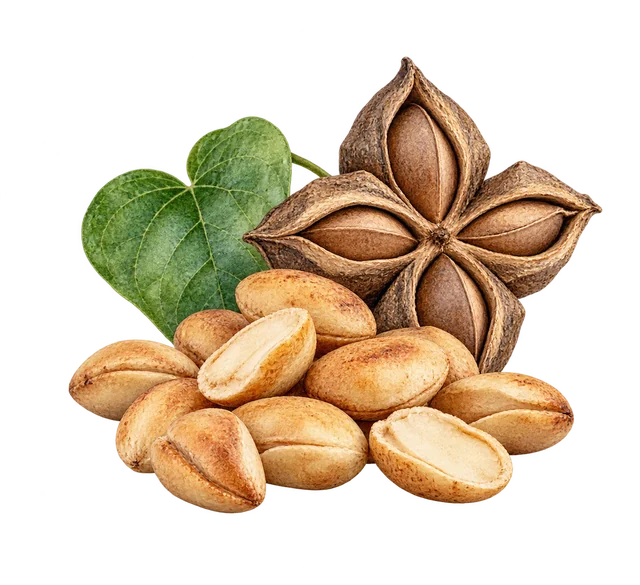
Key cautions
- Avoid raw-seed experimentation and products without clear food-use labeling.
- A product called Inca peanut is not botanically peanut, but that does not rule out allergy or manufacturing cross-contact.
What’s inside
Protein and seed lipids rich in unsaturated fatty acids; processing changes flavor compounds and antinutritional constituents.
Uses in brief

- Roasted seed snack
- Oilseed crop
History, folklore and reported uses
History, folklore and traditional uses
Regional context: native and cultivated; Peru. These examples describe specific food or material traditions and production settings; they do not establish exclusive ownership, a single continent-wide recipe, or therapeutic effectiveness.
Traditional, historical and reported uses
- Roasted seed snack
Food or household practiceWhy this label?
Source documents this specific material, culinary use or attributed practice; no clinical efficacy is inferred.
Peru’s food-composition tables include roasted sacha inchi. This is the appropriate form for the snack entry, not unprocessed seed.
- Oilseed crop
Food or household practiceWhy this label?
Source documents this specific material, culinary use or attributed practice; no clinical efficacy is inferred.
IIAP/INIA documents seed production and oil content in Amazonian ecotypes. Seeds supply a food-processing industry, but pressed oil receives its own card because its composition differs.
2 bounded uses; regional records do not establish treatment effects.
Historical-use additions reviewed 2026-10-09
Regional reading paths
These sourced notes describe cultivation, trade, food traditions or material history. A regional connection does not claim exclusive origin.
South America
native and cultivated; Peru
Properly processed roasted seeds.
Identity & detailed reference
Identity
Plukenetia volubilis; processed edible seeds of Plukenetia volubilis, called sacha inchi; unrelated to the legume peanut despite the nickname.
Ingredient details, preparation and research
Also known as: Plukenetia volubilis
Source plant or material
Plukenetia volubilis
Plant family / material: Euphorbiaceae
Forms and route
Commercially roasted seeds and labeled food ingredients; raw seeds, leaves and extracted oil are separate forms.
Vitamins and minerals
The Peruvian food table identifies roasted sacha inchi as a distinct food. Oil composition cannot be used as the nutrient profile of whole seeds.
Absorption and preparation
Roasting alters seed compounds and texture. Experimental safety assays do not prove all raw, sprouted or home-roasted preparations safe.
Practical preparation
Choose a traceable ready-to-eat roasted product and follow storage guidance. Do not infer a safe home roasting process from an experimental time or temperature.
Traditional and reported uses
- Roasted seed snack
- Oilseed crop
Contraindications and cautions
- Avoid raw-seed experimentation and products without clear food-use labeling.
- A product called Inca peanut is not botanically peanut, but that does not rule out allergy or manufacturing cross-contact.
Safety evidence is preparation-specific
The primary safety assessment compares seed and leaf forms using laboratory and biological models. Roasting research measures chemical changes; neither is a blanket approval of every household preparation.
Evidence limits
This is a food-form review, not a treatment recommendation. Composition and laboratory findings apply to the material actually studied; no medicinal dose, universal nutrient ranking or preservation guarantee is inferred.
Entry sources
- INS Peru: Tablas Peruanas de Alimentos, Sacha Inchi tostado
- IIAP/INIA: El cultivo del sacha inchi en la Amazonía
- Safety assessment of Plukenetia volubilis seeds, leaves and products
- Chemical changes during roasting of germinated sacha inchi
Reference entry 437 · Recorded content review: 2026-10-09 · Review scope and dates