


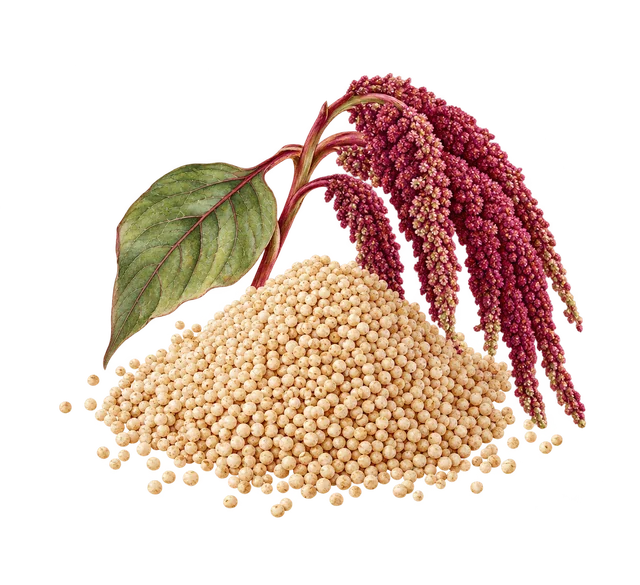
Key cautions
- Check other ingredients in grain bars and flour blends for allergens and gluten cross-contact.
What’s inside
Starch, protein, lipids and dietary fiber; composition varies among grain varieties and with processing.
Uses in brief

- Popped grain
- Flour and cooked foods
History, folklore and reported uses
History, folklore and traditional uses
Kiwicha is one of the grain crops documented by FAO/ANPE in Andean agriculture, including Peru. Local names and processing practices convey regional knowledge; they do not establish an exclusive origin for all grain amaranths.
Traditional, historical and reported uses
- Popped grain
Food or household practiceWhy this label?
Source documents this specific material, culinary use or attributed practice; no clinical efficacy is inferred.
FAO documents kiwicha among Andean food grains, and food research distinguishes processed grain forms. Popped grain offers a different texture from a boiled seed preparation.
- Flour and cooked foods
Food or household practiceWhy this label?
Source documents this specific material, culinary use or attributed practice; no clinical efficacy is inferred.
Milled grain can contribute to mixed food preparations. A flour-containing food has its own formulation and should not inherit the nutrient profile of unmixed whole grain.
2 bounded uses; regional records do not establish treatment effects.
Historical-use additions reviewed 2026-10-09
Regional reading paths
These sourced notes describe cultivation, trade, food traditions or material history. A regional connection does not claim exclusive origin.
South America
native and cultivated; Peru
Grain for popped foods and flour.
Identity & detailed reference
Identity
Amaranthus caudatus; edible grain of Amaranthus caudatus; this card does not cover every amaranth leaf vegetable or ornamental cultivar.
Ingredient details, preparation and research
Also known as: Amaranthus caudatus
Source plant or material
Amaranthus caudatus
Plant family / material: Amaranthaceae
Forms and route
Clean grain, popped grain, flour and cooked grain foods.
Vitamins and minerals
A grain’s protein content does not make every small snack a protein-rich meal. Popped sweets and blended flour products have additional ingredients.
Absorption and preparation
Heat changes grain structure and digestibility; results for one laboratory preparation cannot predict mineral absorption from every mixed meal.
Practical preparation
Use grain sold for food, prepare according to its form and keep cooked food refrigerated. Purchased popped grain avoids treating ornamental seeds as food.
Traditional and reported uses
- Popped grain
- Flour and cooked foods
Contraindications and cautions
- Check other ingredients in grain bars and flour blends for allergens and gluten cross-contact.
Composition is not a fixed species constant
A study of multiple A. caudatus varieties examined differences in yield, chemical composition and protein quality. Processing research separately measured energy and fiber in raw and prepared grain.
Evidence limits
This is a food-form review, not a treatment recommendation. Composition and laboratory findings apply to the material actually studied; no medicinal dose, universal nutrient ranking or preservation guarantee is inferred.
Entry sources
- FAO and ANPE: Guía de campo de los cultivos andinos
- Composition and protein quality of 25 Amaranthus caudatus varieties
- Energy and fiber of raw and processed Amaranthus caudatus
Reference entry 434 · Recorded content review: 2026-10-09 · Review scope and dates