


Key cautions
- Many kimchi products contain fish or shellfish; plant-only versions can still contain soy, wheat or other allergens.
- Keep chilled products refrigerated as labelled. Acidity, bubbling or a fermented smell alone does not prove safety or shelf stability.
What’s inside
Vegetable fiber, salt, organic acids and microbial fermentation products. The nutrient profile depends on vegetables, seasonings, processing and the amount of brine consumed.
Uses in brief

- Fermented vegetable accompaniment
- Making and sharing preserved vegetables
History, folklore and reported uses
History, folklore and traditional uses
UNESCO documents kimjang as making and sharing kimchi within communities. Its account includes seafood traditions; Maangchi separately documents a vegetarian/vegan formulation, which is the boundary used here.
Traditional, historical and reported uses
- Fermented vegetable accompaniment
Food or household practiceWhy this label?
The cited source documents this material, preparation or cultural practice; it does not establish treatment efficacy.
Plant-only kimchi is served as a side dish with meals. Check the entire ingredient list rather than assuming cabbage, chilli and fermentation are the only components.
- Making and sharing preserved vegetables
Food or household practiceWhy this label?
The cited source documents this material, preparation or cultural practice; it does not establish treatment efficacy.
Kimjang includes seasonal cooperation and sharing of prepared vegetables. This cultural record explains the food’s social importance but is not a universal household preservation recipe.
2 supported featured food or cultural uses; no treatment claim.
Historical-use additions reviewed 2026-10-09
Regional reading paths
These sourced notes describe cultivation, trade, food traditions or material history. A regional connection does not claim exclusive origin.
Asia
Traditional processing: Korea; kimjang is the communal preservation tradition.
Fermented vegetables served as a side dish.
Identity & detailed reference
Identity
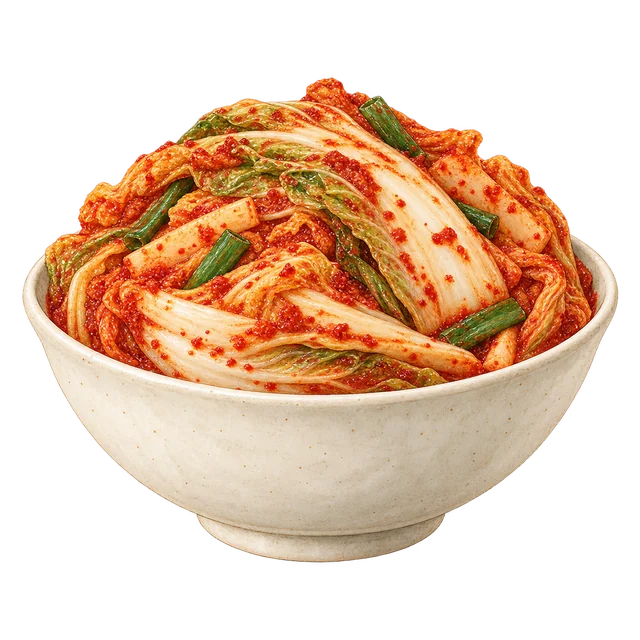
Fermented vegetables, commonly napa cabbage or radish, specifically made without fish sauce, salted seafood or other animal ingredients for this plant-only entry. Kimchi is a food family, not one botanical species.
Ingredient details, preparation and research
Also known as: Vegan kimchi; Vegetarian kimchi; Chaesik-kimchi
Source plant or material
Brassica rapa Pekinensis Group, Raphanus sativus and other vegetables
Plant family / material: Brassicaceae for napa cabbage and radish; other ingredient families vary
Forms and route
Commercial chilled plant-only kimchi, pasteurized products and prepared vegetable side dishes. Ingredient mixtures, salt levels, acidity and live-culture content vary.
Vitamins and minerals
No single sodium, vitamin or live-bacteria amount describes every kimchi. Pasteurization and cooking alter living microbes, and seasoning/brine choices alter nutrient exposure.
Absorption and preparation
Fermentation does not automatically make a food a clinically validated probiotic or ensure greater mineral absorption. A benefit depends on a specific preparation and evidence.
Practical preparation
Purchase an appropriately labelled food product and follow its storage and use-by directions, using clean utensils. This card supplies no improvised salt percentage, room-temperature duration or fermentation endpoint.
Combination notes
Account for kimchi’s seasoning when combining it with other salty foods; plant-only status must be checked across the whole meal.
Traditional and reported uses
- Fermented vegetable accompaniment
- Making and sharing preserved vegetables
Contraindications and cautions
- Many kimchi products contain fish or shellfish; plant-only versions can still contain soy, wheat or other allergens.
- Keep chilled products refrigerated as labelled. Acidity, bubbling or a fermented smell alone does not prove safety or shelf stability.
Microbial analysis describes a changing food
Jung and colleagues used metagenomic methods to study kimchi fermentation. Finding microbial genes and communities characterizes the process; it is not a clinical trial proving health effects for every jar or recipe.
Evidence limits
Plant-only finished-food overview, not a therapeutic probiotic claim or a validated home-fermentation protocol.
Entry sources
- UNESCO: Kimjang in the Republic of Korea
- Maangchi: Vegetarian and vegan kimchi (Chaesik-kimchi)
- Jung et al. (2011): Metagenomic analysis of kimchi
- FDA: Food allergies
Reference entry 365 · Recorded content review: 2026-10-09 · Review scope and dates