


Key cautions
- Buy from a trustworthy food producer and follow cooking and storage directions. Traditional fermentation does not guarantee exclusion of pathogens.
- Do not infer safety from sourness, smell or the presence of lactic-acid bacteria. No home pit-fermentation protocol or starter-culture recommendation is provided.
What’s inside
Predominantly starch with fiber and variable organic acids and microbial metabolites. Protein is limited, and composition depends on the enset variety, processing and fermentation.
Uses in brief

- Cooked bread
History, folklore and reported uses
History, folklore and traditional uses
Traditional processing: southern and southwestern Ethiopia.
Microbiological studies document kocho as an important fermented enset preparation. Storage traditions explain food-system value but are not a blanket endorsement of any pit, vessel or fermentation duration.
Traditional, historical and reported uses
- Cooked bread
Food or household practiceWhy this label?
The source supports the named food, cosmetic or material practice; no treatment effect is inferred and the card’s form and safety limits remain attached.
The National Research Council describes enset’s processed starch and kocho food use. A prepared kocho product is cooked as a staple; it does not inherit the composition of cereal injera.
1 sourced featured uses; cultural or material records are not clinical efficacy evidence.
Historical-use additions reviewed 2026-10-09
Regional reading paths
These sourced notes describe cultivation, trade, food traditions or material history. A regional connection does not claim exclusive origin.
Africa
Traditional processing: southern and southwestern Ethiopia.
Fermented starchy material cooked into bread and other staple foods.
Identity & detailed reference
Identity
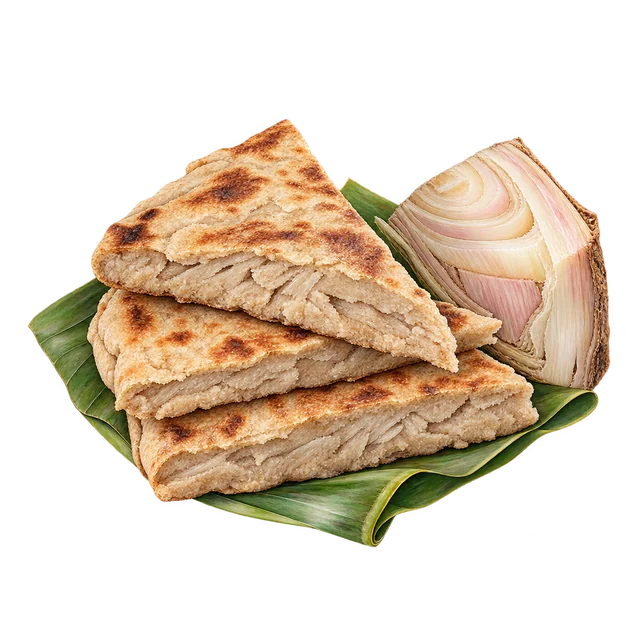
Kocho is a fermented starchy food prepared from processed pseudostem and corm material of Ensete ventricosum. Enset resembles a banana plant, but kocho is not banana fruit and is distinct from other enset products.
Ingredient details, preparation and research
Source plant or material
Fermented Ensete ventricosum pseudostem and corm material
Plant family / material: Musaceae source plant; mixed fermentation microbiota
Forms and route
Prepared fermented dough-like material subsequently cooked into bread or other foods. Raw plant tissue, ongoing household fermentation and isolated microorganisms are outside the ready-food scope.
Vitamins and minerals
Kocho is chiefly an energy staple and should be accompanied by other foods contributing protein and micronutrients. Laboratory data for another enset variety or processing form are not interchangeable.
Absorption and preparation
Fermentation changes acidity and the food matrix, but microbial diversity studies do not directly establish nutrient absorption or probiotic benefit in people.
Practical preparation
Use a prepared food-grade product and cook it according to reliable instructions. Keep equipment clean, prevent raw-food cross-contamination and follow the producer’s instructions for any stored dough.
Traditional and reported uses
- Cooked bread
Contraindications and cautions
- Buy from a trustworthy food producer and follow cooking and storage directions. Traditional fermentation does not guarantee exclusion of pathogens.
- Do not infer safety from sourness, smell or the presence of lactic-acid bacteria. No home pit-fermentation protocol or starter-culture recommendation is provided.
Community dynamics and safety
Studies of kocho show variation in organisms and physicochemical properties across varieties and production conditions. Direct food-safety evaluation is still needed: finding potentially useful bacteria does not establish that an entire batch is safe or therapeutic.
Evidence limits
Finished-food and cultural profile; no claim that kocho is nutritionally complete, inherently pathogen-free or an approved probiotic.
Entry sources
- Yeasts and bacteria associated with Ethiopian kocho
- National Research Council: Lost Crops of Africa, Enset
- Physicochemical and microbial dynamics of kocho from different enset varieties
- Evaluating food safety of traditionally fermented kocho in the Gamo Zone
Reference entry 318 · Recorded content review: 2026-10-09 · Review scope and dates