


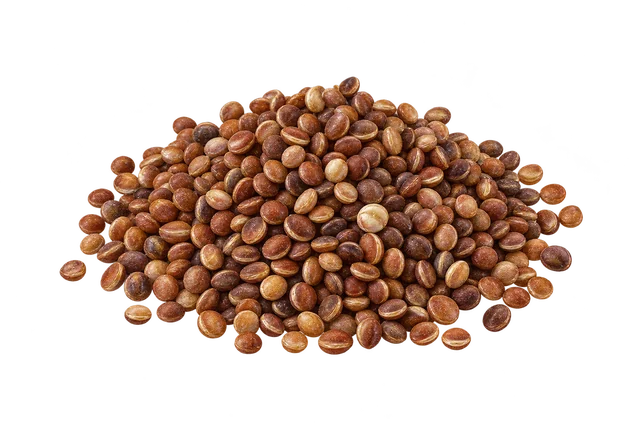
Key cautions
- Do not assume a product is gluten-free solely because kañiwa is not wheat; inspect blend ingredients and cross-contact labeling.
What’s inside
Starch, protein, dietary fiber and phenolic compounds; grain, bran and extruded products differ.
Uses in brief

- Roasted flour foods
- Extruded ingredients
History, folklore and reported uses
History, folklore and traditional uses
Peruvian and Bolivian highland farming systems preserve kañiwa alongside other Andean crops. Its independent identity deserves recognition rather than presenting it simply as another kind of quinoa.
Traditional, historical and reported uses
- Roasted flour foods
Food or household practiceWhy this label?
Source documents this specific material, culinary use or attributed practice; no clinical efficacy is inferred.
The FAO/ANPE guide records roasted kañiwa and flour-based preparations. Roasting gives a culinary form with different texture from boiled whole seed.
- Extruded ingredients
Laboratory/animal researchWhy this label?
This use entry describes a laboratory, pilot-scale or nonhuman experiment; it does not establish an ordinary household practice, clinical benefit or safe home protocol.
A primary food study investigated grain, bran and an extruded product from two kañiwa varieties. This documents a modern food-ingredient application rather than a single traditional recipe.
2 bounded uses; regional records do not establish treatment effects.
Historical-use additions reviewed 2026-10-09
Regional reading paths
These sourced notes describe cultivation, trade, food traditions or material history. A regional connection does not claim exclusive origin.
South America
native and cultivated; Peru, Bolivia
Roasted grain and flour.
Identity & detailed reference
Identity
Chenopodium pallidicaule; edible kañiwa seeds, Chenopodium pallidicaule; not a small-grained cultivar of quinoa.
Ingredient details, preparation and research
Also known as: Chenopodium pallidicaule
Source plant or material
Chenopodium pallidicaule
Plant family / material: Amaranthaceae
Forms and route
Clean grain, roasted flour called cañihuaco or kañiwaco, and formulated foods.
Vitamins and minerals
The whole seed and separated bran cannot share one nutrient profile. No serving-level protein, iron or fiber quantity is inferred from a laboratory sample.
Absorption and preparation
Processing changes the physical food matrix. Chemical antioxidant capacity does not measure nutrient absorption or prove a benefit to intestinal health.
Practical preparation
Choose cleaned food-grade grain or ready-prepared roasted flour. Follow the product instructions for cooking or mixing, and protect dry flour from moisture.
Traditional and reported uses
- Roasted flour foods
- Extruded ingredients
Contraindications and cautions
- Do not assume a product is gluten-free solely because kañiwa is not wheat; inspect blend ingredients and cross-contact labeling.
Variety and processing matter
Analyses found dietary-fiber and phenolic differences among tested fractions. Another study examined antioxidant capacity. Neither establishes that every retail kañiwa product has the same composition or treats illness.
Evidence limits
This is a food-form review, not a treatment recommendation. Composition and laboratory findings apply to the material actually studied; no medicinal dose, universal nutrient ranking or preservation guarantee is inferred.
Entry sources
- FAO and ANPE: Guía de campo de los cultivos andinos
- Chemical and functional characterization of kañiwa grain, extrudate and bran
- Phenolics and antioxidant capacity of cañihua
Reference entry 433 · Recorded content review: 2026-10-09 · Review scope and dates