


Key cautions
- Warfarin: keep leafy-green intake consistent.
- Clean between stalks; keep refrigerated.
- Bok choy and napa cabbage are different forms.
What’s inside
Water, fiber, vitamins and minerals including calcium and iron; serving and preparation matter.
Uses in brief

- Stir-fried or steamed greens
- Roasted vegetable side
- Raw slaw
History, folklore and reported uses
History, folklore and traditional uses
Bok choy is part of Chinese leafy-vegetable cultivation and is familiar as pak choi and xiao bai cai in different language and market settings. Modern cultivars vary in stalk color and size; baby bok choy is not automatically a different species.
Singapore NParks documents green- and white-stalked forms cooked as greens. Extension kitchen guides also show the vegetable adapting to slaws, roasting and flavored sauces.
Traditional, historical and reported uses
- Stir-fried greens
Food or household practiceWhy this label?
The specific claim documents a food preparation or recorded culinary practice; safety qualifications remain attached and no treatment effect is inferred.
NParks records stir-frying xiao bai cai. Purdue advises allowing the firmer stalks more cooking time than leaves, helping each part reach a suitable texture.
- Steamed or boiled side vegetable
Food or household practiceWhy this label?
The specific claim documents a food preparation or recorded culinary practice; safety qualifications remain attached and no treatment effect is inferred.
Purdue describes boiling or steaming both parts, with stalks started earlier. This is a simple cooked-green use, distinct from seed or extract products.
- Roasting with savory seasoning
Food or household practiceWhy this label?
The specific claim documents a food preparation or recorded culinary practice; safety qualifications remain attached and no treatment effect is inferred.
Illinois Extension includes roasting as a way to prepare bok choy and describes garlic, ginger and chili as flavor partners. Use a recipe appropriate to the vegetable’s size.
- Crunchy slaw
Food or household practiceWhy this label?
The specific claim documents a food preparation or recorded culinary practice; safety qualifications remain attached and no treatment effect is inferred.
Illinois Extension notes that the mildly sweet white stalks work in coleslaw and the leaves may be eaten raw. Treat this as raw perishable produce and follow safe handling.
4 supported featured uses; food practices are not claims of treatment benefit.
Historical-use additions reviewed 2026-10-09
Regional reading paths
These sourced notes describe cultivation, trade, food traditions or material history. A regional connection does not claim exclusive origin.
Asia
Cultivated and traditional food: China and Southeast Asia, including Singapore.
Leaves and succulent stems boiled or stir-fried.
Identity & detailed reference
Identity
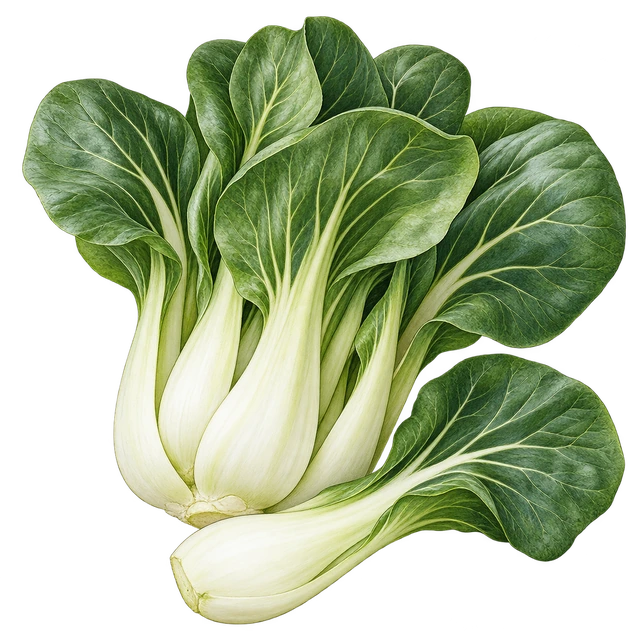
The edible leaves and fleshy stalks of non-heading bok choy. Green-stalked and white-stalked cultivars belong here; napa cabbage and flowering choy sum are related but distinct vegetable forms.
Ingredient details, preparation and research
Also known as: Pak choi; Pak choy; Bok choi; Pac choi; Xiao bai cai; Shanghai bok choy (green-stalked type)
Source plant or material
Brassica rapa L., Chinensis Group
Plant family / material: Brassicaceae
Forms and route
Baby or mature leaves and stalks eaten cooked or prepared as raw produce. The crop name does not describe seed extracts or all vegetables called Chinese cabbage.
Vitamins and minerals
Purdue’s FoodLink table gives 74 mg calcium for 1 cup shredded bok choy (70 g), a raw-produce portion. That reference does not describe a cup of cooked greens or a sauce-rich dish.
Absorption and preparation
Some fat with vegetables helps vitamin K absorption. No special oil, supplement or compulsory combination is needed.
Practical preparation
Separate leaves or cut lengthwise to wash between stalks. Trim the base. Cut larger stalks to recipe size and begin cooking them before the tender leaves.
Combination context
Keep the overall leafy-green pattern stable when using warfarin.
Combination notes
Garlic, ginger, sesame sauce or a peanut sauce are documented culinary partners. Check allergens and sodium in sauces.
Traditional and reported uses
- Stir-fried or steamed greens
- Roasted vegetable side
- Raw slaw
Contraindications and cautions
- If taking warfarin or another vitamin K antagonist, keep leafy-green intake consistent and check with your care team before a large dietary change.
- Soil can collect between stalks. Wash thoroughly and prevent cross-contamination; refrigerate this perishable green. Washing is not sterilization.
- Use recognized food-grade bok choy. Chinese cabbage is a broad common name and does not make every similarly named plant identical.
Similar items and how they compare
- Napa cabbage
Another Chinese cabbage crop within Brassica rapa.
Forms an elongated head; bok choy is non-heading with fleshy exposed stalks.
- Choy sum
Related leafy Brassica rapa vegetable.
Grown for flowering shoots; not an exact synonym for bok choy.
The market name needs a crop boundary
This card uses the Chinensis Group rather than treating napa cabbage, choy sum and all Chinese cabbage as synonyms. Both stalk-color forms are covered.
Calcium reference stays with the stated portion
The table’s cup of shredded raw bok choy weighs 70 g. Packing and cooking alter the amount of plant material in a cup.
Evidence limits
No thyroid-treatment, detoxification or clinical benefit is inferred. Broad ancient dates are not used to assign a precise origin to today’s cultivars.
Entry sources
- Singapore NParks: Growing Five Leafy Vegetables
- Illinois Extension: Little Bok Choy Cabbages Welcome Big Flavors
- Purdue Extension FoodLink: Bok choy
- NIH ODS: Vitamin K, health-professional fact sheet
- FDA: Selecting and Serving Produce Safely
Reference entry 285 · Recorded content review: 2026-10-09 · Review scope and dates