


Key cautions
- Caffeine can affect sleep, anxiety and heart rate
- Do not use wild holly leaves identified only by a common name, or assume a concentrated product has the same safety as tea.
What’s inside
Caffeine and other leaf metabolites, including phenolic compounds; species and preparation affect the profile.
Uses in brief

- Leaf infusion
History, folklore and reported uses
History, folklore and traditional uses
The cited community studies concern Ecuador’s Napo province. They preserve Kichwa names and practices while showing that cultivation and everyday use change over time; no continent-wide ceremonial script is inferred.
Traditional, historical and reported uses
- Leaf infusion
Food or household practiceWhy this label?
The cited material is a specified culinary ingredient or beverage, with its own preparation limits; no medical effect is inferred.
Research in Napo documents guayusa cultivation, preparation and consumption among particular Kichwa families. This is a living local practice, not a generic claim about all Amazonian peoples.
1 bounded uses; regional records do not establish treatment effects.
Historical-use additions reviewed 2026-10-09
Regional reading paths
These sourced notes describe cultivation, trade, food traditions or material history. A regional connection does not claim exclusive origin.
South America
native and cultivated; Ecuador, Napo Kichwa communities
Caffeinated leaf beverage; community-specific cultural practice.
Identity & detailed reference
Identity
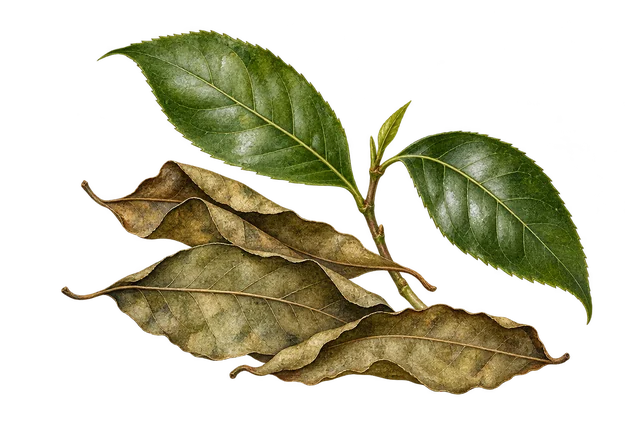
Ilex guayusa; leaves of Ilex guayusa used as a beverage; not yerba mate, yaupon or arbitrary ornamental holly.
Ingredient details, preparation and research
Also known as: Ilex guayusa
Source plant or material
Ilex guayusa
Plant family / material: Aquifoliaceae
Forms and route
Dried beverage leaves, tea bags and prepared infusions; concentrated extracts and energy drinks are separate.
Vitamins and minerals
No fixed caffeine content is assigned to an unspecified cup. Dry-leaf analysis cannot be used as a brewed-serving nutrient label.
Absorption and preparation
Infusion strength varies with preparation. A study of a standardized extract does not predict absorption or performance effects from every household beverage.
Practical preparation
Buy correctly identified beverage-grade leaves, use potable water and follow label instructions. Let hot drinks cool before consumption and account for other caffeine sources.
Traditional and reported uses
- Leaf infusion
Contraindications and cautions
- Caffeine can affect sleep, anxiety and heart rate. Obtain individual advice for pregnancy, breastfeeding, children or relevant medical conditions.
- Do not use wild holly leaves identified only by a common name, or assume a concentrated product has the same safety as tea.
Extract trials have narrow scope
An acute trial in young adults tested specified guayusa-extract amounts and measured cognitive and cardiovascular outcomes. It does not establish a treatment, long-term safety or equivalent effects from an ordinary infusion.
Species-specific chemistry
Comparative analysis distinguishes caffeine-containing Ilex species. A shared genus or stimulant effect cannot establish interchangeability with another holly.
Evidence limits
No medical dose or therapeutic claim is made. Community testimony, plant chemistry and short-term extract experiments answer different questions.
Entry sources
- Ikiam: Etnobotánica de Ilex guayusa en comunidades Kichwa de Napo
- Socio-cultural components of guayusa consumption in Amazonian Kichwa communities
- LC-MS comparison of caffeine-containing Ilex species
- Acute dose-response trial of guayusa extract in young adults
Reference entry 427 · Recorded content review: 2026-10-09 · Review scope and dates