


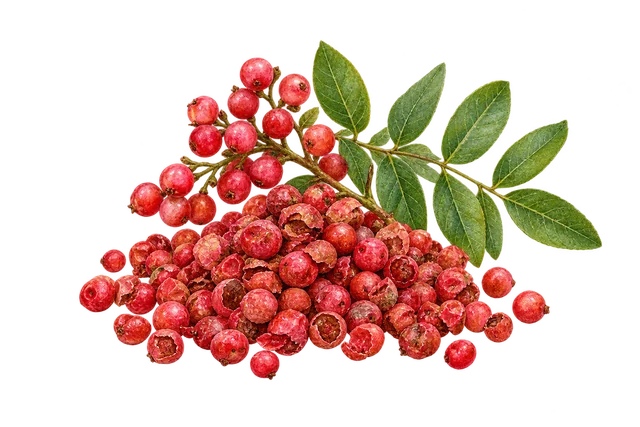
Key cautions
- People allergic to cashew or pistachio should ask an allergy clinician before trying pink peppercorn
- Avoid handling unknown Schinus plants or using their sap; the spice card is not a wild-harvest guide.
What’s inside
Volatile aroma compounds and phenolics; chemical profiles differ among species, samples and extraction methods.
Uses in brief

- Whole or crushed seasoning
- Prepared seasoning blends
History, folklore and reported uses
History, folklore and traditional uses
Regional context: native and cultivated; Brazil. These examples describe specific food or material traditions and production settings; they do not establish exclusive ownership, a single continent-wide recipe, or therapeutic effectiveness.
Traditional, historical and reported uses
- Whole or crushed seasoning
Food or household practiceWhy this label?
Source documents this specific material, culinary use or attributed practice; no clinical efficacy is inferred.
Embrapa documents Brazilian production of the dried fruits as pimenta-rosa for the domestic and export condiment markets. It is valued for aroma and appearance rather than black-pepper equivalence.
- Prepared seasoning blends
Food or household practiceWhy this label?
Source documents this specific material, culinary use or attributed practice; no clinical efficacy is inferred.
Pink pepper can enter food spice mixtures, but the ingredient declaration must still distinguish it from Piper pepper and identify other allergens. No particular blend is standardized by this species card.
2 bounded uses; regional records do not establish treatment effects.
Historical-use additions reviewed 2026-10-09
Regional reading paths
These sourced notes describe cultivation, trade, food traditions or material history. A regional connection does not claim exclusive origin.
South America
native and cultivated; Brazil
Dried fruits used as seasoning.
Identity & detailed reference
Identity
Schinus terebinthifolia; dried fruits of Schinus terebinthifolia, often written S. terebinthifolius in older sources; not Piper nigrum or every pink-pepper species.
Ingredient details, preparation and research
Also known as: Schinus terebinthifolia
Source plant or material
Schinus terebinthifolia
Plant family / material: Anacardiaceae
Forms and route
Food-grade dried berries, lightly crushed spice and blended seasonings. Bark, leaves, sap and essential oils are outside this food scope.
Vitamins and minerals
It is normally a seasoning, not a substantial nutrient serving. No mineral, vitamin or energy amount is assigned to a pinch of berries.
Absorption and preparation
Extract assays do not show how much of a compound is absorbed from food, and crushing is not a medicinal activation process.
Practical preparation
Use a traceable culinary product with the species stated where possible. Crush only as needed and store away from moisture and heat.
Traditional and reported uses
- Whole or crushed seasoning
- Prepared seasoning blends
Contraindications and cautions
- People allergic to cashew or pistachio should ask an allergy clinician before trying pink peppercorn. Cross-sensitization has been observed, but it does not predict every person’s clinical reaction.
- Avoid handling unknown Schinus plants or using their sap; the spice card is not a wild-harvest guide.
Allergy evidence has limits
The cited study used skin-prick testing in cashew- or pistachio-allergic participants and did not perform oral challenges. It flags a plausible risk while leaving the frequency of actual eating reactions uncertain.
Evidence limits
This is a food-form review, not a treatment recommendation. Composition and laboratory findings apply to the material actually studied; no medicinal dose, universal nutrient ranking or preservation guarantee is inferred.
Entry sources
- Embrapa: Cultivo da aroeira-vermelha para produção de pimenta-rosa
- Pink peppercorn sensitization in cashew/pistachio-allergic individuals
- Chemical and cytotoxicity profiles of Schinus spice samples
Reference entry 425 · Recorded content review: 2026-10-09 · Review scope and dates