


Key cautions
- Check the actual blend for allergens and added salt
- A heritage account of smoking is not a validated home-processing or contamination-control instruction.
What’s inside
Capsaicinoids and pepper pigments, coriander volatile compounds and sodium from salt.
Uses in brief

- Finishing seasoning
- Seasoning legumes and savory foods
History, folklore and reported uses
History, folklore and traditional uses
Mapuche producer Ginette Rivera Tralma, based in Cholchol, Chile, describes the cultural and family knowledge behind her merkén. This card credits that testimony without treating her recipe as compulsory for every Mapuche household.
Traditional, historical and reported uses
- Finishing seasoning
Food or household practiceWhy this label?
Source documents this specific material, culinary use or attributed practice; no clinical efficacy is inferred.
Mapuche producer Ginette Rivera Tralma describes adding merkén at the table to already prepared dishes. Her testimony preserves a specific family practice and acknowledges differences between places and producers.
- Seasoning legumes and savory foods
Food or household practiceWhy this label?
Source documents this specific material, culinary use or attributed practice; no clinical efficacy is inferred.
The same account describes a traditional fat-and-merkén seasoning for legumes. INDAP’s culinary coverage records broader uses with potatoes and other foods; the pairing is about taste, not proven medicinal synergy.
2 bounded uses; regional records do not establish treatment effects.
Historical-use additions reviewed 2026-10-09
Regional reading paths
These sourced notes describe cultivation, trade, food traditions or material history. A regional connection does not claim exclusive origin.
South America
traditional processing; Mapuche producers, Chile
Smoked-chile seasoning blend; recipes vary.
Identity & detailed reference
Identity
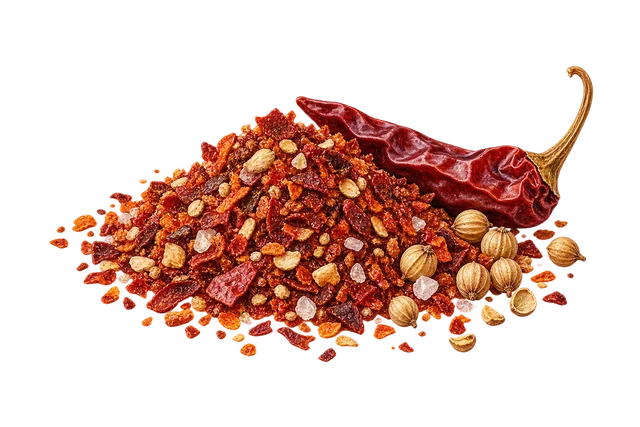
Capsicum annuum; mixed seasoning; a prepared Mapuche-associated seasoning, principally smoked chile with toasted coriander seed and salt; it is not one botanical species.
Ingredient details, preparation and research
Also known as: Capsicum annuum; mixed seasoning
Source plant or material
Capsicum annuum; mixed seasoning
Plant family / material: Solanaceae (chile); Apiaceae (coriander)
Forms and route
Dry granular seasoning and labeled commercial blends; ingredient proportions and added herbs vary.
Vitamins and minerals
Usual seasoning quantities are small. Salt concentration and serving size determine sodium contribution; no universal nutrient value is appropriate.
Absorption and preparation
Smoking and grinding affect flavor and concentration; no superior nutrient absorption or detoxification effect is established.
Practical preparation
Choose a labeled food product from a traceable producer. Keep dry and sealed, use clean utensils and follow the package’s storage period.
Traditional and reported uses
- Finishing seasoning
- Seasoning legumes and savory foods
Contraindications and cautions
- Check the actual blend for allergens and added salt. Chile powder can irritate eyes and airways.
- A heritage account of smoking is not a validated home-processing or contamination-control instruction.
A blend with a documented maker
INDAP’s firsthand interview identifies smoked cacho-de-cabra chile, toasted coriander and salt in Rivera Tralma’s recipe. Retail examples include extra herbs, so a product name cannot replace its ingredient declaration.
Evidence limits
This is a food-form review, not a treatment recommendation. Composition and laboratory findings apply to the material actually studied; no medicinal dose, universal nutrient ranking or preservation guarantee is inferred.
Entry sources
- INDAP: Productora de Cholchol Ginette Rivera Tralma y el merkén mapuche
- INDAP: Red Tiendas Mundo Rural, traditional products
- INDAP: Ingredients for Chilean Cuisine Day
Reference entry 423 · Recorded content review: 2026-10-09 · Review scope and dates