


Key cautions
- Allspice is Pimenta dioica, not mixed spice.
- Use culinary berries; do not substitute concentrated oil.
- Use a tested method for pickles and preserves.
What’s inside
Aromatic constituents create a warm flavor associated with several other spices. This card does not assign an exact nutrient amount or clinical effect to a seasoning portion.
Uses in brief

- Jamaican jerk seasoning
- Sweet-food seasoning
- Pickling spice
History, folklore and reported uses
History, folklore and traditional uses
Kew records Pimenta dioica as native from southern Mexico through Central America and the Caribbean. Jamaican usage commonly calls its spice pimento, a name that should be read in its food and regional context.
Jamaica Tourism Board’s own account places pimento alongside Scotch bonnet pepper, thyme, scallion, onion and garlic in jerk seasoning. It also describes cooking over pimento wood, illustrating two different uses of the tree rather than two names for the same ingredient.
A closer look at its history
Pimento records a mistaken search for pepper
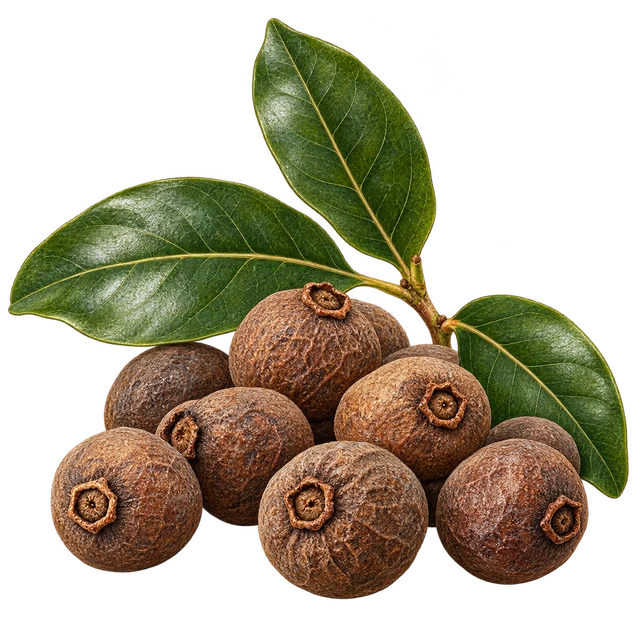
Allspice is the dried unripe fruit of Pimenta dioica. Kew cautiously interprets a 1492 journal passage about Indigenous Cubans recognizing pepper as probably referring to allspice, not Asian black pepper. The uncertainty matters: the historical text is suggestive, not a modern botanical specimen. Jamaica became a major producer and exporter.
Cayman trees left an archival trail
Large old tree remains at a George Town building site, followed by archival records of nineteenth-century exports, helped revise the assumption that allspice was merely introduced to Grand Cayman. Kew also records leaf flavoring and wood used to smoke meat and fish, distinct uses beyond the familiar dried berry.
Additional history reviewed 2026-10-10
Traditional, historical and reported uses
- Jamaican jerk seasoning
Food or household practiceWhy this label?
Records a specific culinary preparation of the named material; this is a food-practice category, not evidence of a medical benefit.
Jamaica Tourism Board identifies allspice, locally called pimento, among core jerk-seasoning ingredients. Recipes vary; the berry’s culinary role is not a claim that a single mixture defines every household’s practice.
- Sweet-food seasoning
Food or household practiceWhy this label?
Records a specific culinary preparation of the named material; this is a food-practice category, not evidence of a medical benefit.
UF/IFAS suggests allspice as a flavor for oatmeal, sweet potatoes and desserts. Using aroma to adjust a recipe is a cooking choice, not evidence that the spice lowers blood sugar.
- Pickling spice
Food or household practiceWhy this label?
Records a specific culinary preparation of the named material; this is a food-practice category, not evidence of a medical benefit.
The National Center for Home Food Preservation includes whole allspice in its tested Spiced Green Tomatoes recipe. Follow that recipe’s acid and processing instructions; the spice is not the preserving safety mechanism.
- Pimento-wood cooking heritage
Food or household practiceWhy this label?
Records a specific culinary preparation of the named material; this is a food-practice category, not evidence of a medical benefit.
Jamaica Tourism Board describes a jerk restaurant cooking meat over pimento logs. This records the tree’s wood as a cooking material, separately from berries used in the seasoning. It is not a recommendation to burn unidentified wood.
- Soap and perfume ingredients
Food or household practiceWhy this label?
Kew’s botanical profile explicitly identifies both plant parts and their industrial fragrance uses. The evidence does not establish therapeutic value or a DIY exposure level.
Kew records essential oils distilled from allspice berries and leaves in soap and perfumery. The two source materials and their concentrated oils are distinct from culinary dried berries; this industrial use is not a home remedy or permission to swallow the oils.
- Walking sticks and umbrella handles
Food or household practiceWhy this label?
Kew reports both the material use and actual Pimenta dioica walking-stick specimens in its own Economic Botany Collection; this is a documented craft use without an invented date or place of manufacture.
Allspice wood has been used for walking sticks and umbrella handles. Kew’s Economic Botany Collection holds several walking sticks made from Pimenta dioica, giving this material use a concrete collection record separate from berry seasoning and pimento-wood cooking.
6 distinct supported uses are featured. Culinary, material and attributed historical practices are distinguished from medicinal efficacy; no fixed seven-use quota is imposed.
Historical-use additions reviewed 2026-10-09
Story sources
- Kew POWO: Pimenta dioica (L.) Merr., accepted name and native range
- Spices Board India: Allspice, Pimenta dioica and pimento trade names
- Jamaica Tourism Board: The Secret to True Jamaican Jerk, seasoning and pimento wood
- Kew Species Profile and Economic Botany Collection: Pimenta dioica oils, walking sticks and umbrella handles
- Kew POWO species profile: Capsicum annuum, sweet peppers and pimiento names
Regional reading paths
These sourced notes describe cultivation, trade, food traditions or material history. A regional connection does not claim exclusive origin.
North America
Native/cultivated: Mexico and Central America; traded Caribbean spice.
Dried berries season food.
Identity & detailed reference
Identity
The dried unripe berry of Pimenta dioica, a myrtle-family tree. Allspice is one spice, often called pimento in Jamaica; it is not a ready-mixed combination of cinnamon, cloves and nutmeg.
Ingredient details, preparation and research
Also known as: Pimento (Jamaican spice); Jamaica pepper; Pimenta dioica; Pimienta de Jamaica; Pimienta gorda; all spice
Source plant or material
Pimenta dioica (L.) Merr.
Plant family / material: Myrtaceae
Forms and route
Whole dried allspice berries or ground culinary allspice. Leaves, wood, berry oil and leaf oil are distinct plant materials with separate uses; a food-flavoring role does not make essential oil a home remedy.
Vitamins and minerals
Allspice is generally used in small seasoning amounts. No serving-specific vitamin or mineral claim is assigned here. A salted seasoning blend, sweet pickle and plain ground berry have different nutritional profiles.
Absorption and preparation
No clinically established nutrient-absorption advantage or required medicinal combination is claimed for allspice.
Practical preparation
Use whole or ground food-grade allspice in the recipe quantity. If a recipe infuses whole berries and calls for straining, remove them before serving. For preserved foods, follow a tested full recipe.
Combination context
No special nutrient-absorption pairing is established.
Combination notes
Allspice can join other herbs and spices in jerk seasoning or warm dessert flavors. Check a packaged mixture for its complete ingredient list and added salt or sugar.
Traditional and reported uses
- Jamaican jerk seasoning
- Sweet-food seasoning
- Pickling spice
- Pimento-wood cooking heritage
- Soap and perfume ingredients
- Walking sticks and umbrella handles
Contraindications and cautions
- Buy food-grade allspice identified as Pimenta dioica. “Allspice” or “pimento” in a common name is not enough to identify an unfamiliar ornamental plant.
- Use whole or ground culinary berries as a recipe ingredient. Concentrated berry or leaf oils are different preparations; this card provides no oral, skin or inhalation remedy using them.
- Allspice in a pickle is a flavor ingredient, not a substitute for the correct acidity, refrigeration or heat processing. Follow the complete tested preservation recipe.
- A historical or laboratory antimicrobial claim does not establish that the spice treats infection or makes unsafe food safe.
Similar items and how they compare
- Mixed spice or pumpkin-spice blends
Can have a related warm aroma and may include allspice.
A blend contains several ingredients; allspice itself is the dried berry of one species.
- West Indian bay, Pimenta racemosa
A related myrtle-family tree with aromatic leaves.
It is a different species. Bay leaves and bay-rum products are not allspice berries.
- Pimento wood and allspice oils
Come from, or are associated with, the same aromatic tree.
Wood used in cooking and oils used by industry are different materials from the ground berry on the spice shelf.
- Pimiento sweet peppers
The names pimento and pimiento can be confused across food traditions.
Sweet Capsicum annuum peppers are nightshade-family fruits, while Jamaican allspice berries come from the myrtle-family tree Pimenta dioica. Check the recipe and product identity; the ingredients are not interchangeable.
A single botanical spice
Florida’s agriculture department identifies commercial allspice as the dried unripe berry of Pimenta dioica. Similarity to several familiar spice aromas does not make it a mixture.
Use evidence must follow the plant part
The Spices Board lists berries, berry oil, leaf oil and oleoresin as separate commercial materials. Laboratory or industrial statements about an oil cannot be transferred directly to ground berries in a meal.
Local cooking evidence has a clear scope
The Tourism Board’s jerk account supports Jamaican food practice, while the University of Georgia preservation recipe supports a specific pickled-food use. Neither source tests a medical outcome.
Pimento names need culinary context
Kew records pimento among allspice names and pimiento among Capsicum annuum names. This card’s pimento alias refers to Jamaican allspice berries; it does not relabel the sweet peppers sold as pimiento or pimento in other foods.
Evidence limits
This card is centered on Pimenta dioica berries, with wood crafts and distilled berry/leaf oils clearly separated. No human disease-treatment effect, medicinal dose or nutrient-source claim is established. Common names do not authenticate unrelated ornamentals or identify pimiento sweet peppers as allspice.
Entry sources
- Kew POWO: Pimenta dioica (L.) Merr., accepted name and native range
- Florida Department of Agriculture: Plant Pathology Circular 271, allspice identity
- Spices Board India: Allspice, Pimenta dioica and pimento trade names
- Jamaica Tourism Board: The Secret to True Jamaican Jerk, seasoning and pimento wood
- National Center for Home Food Preservation: Spiced Green Tomatoes, tested allspice-containing pickle recipe
- University of Florida IFAS: Shopping for Health, Herbs and Spices
- Kew POWO: Pimenta racemosa, accepted name and Caribbean range
- Kew Species Profile and Economic Botany Collection: Pimenta dioica oils, walking sticks and umbrella handles
- Kew POWO species profile: Capsicum annuum, sweet peppers and pimiento names
Reference entry 277 · Recorded content review: 2026-10-09 · Review scope and dates