


Key cautions
- Fermentable fructans can cause bloating or abdominal discomfort, especially in sensitive people; a smaller food portion may be better tolerated.
- Do not assume roasting or boiling removes all fermentable carbohydrate.
- Use verified food-grade tubers and discard spoiled portions; no wild identification guide is provided.
What’s inside
Water, fiber and carbohydrate including inulin-type fructans. Cultivar, harvest and storage conditions affect the carbohydrate mixture.
Uses in brief

- Raw crisp vegetable
- Cooked tuber dishes
History, folklore and reported uses
History, folklore and traditional uses
Canada’s plant-genetic-resources report includes Jerusalem artichoke among crops with a North American history. Botanical extension records its sunflower relationship and edible underground tubers, preserving the distinction from the unrelated globe artichoke.
Traditional, historical and reported uses
- Raw crisp vegetable
Food or household practiceWhy this label?
Label describes the stated practice or evidence, not an efficacy grade. Exact form and cautions remain attached.
NC State records raw tuber use. A crisp preparation retains a different texture from cooked mash, but it does not avoid the fructan tolerance issue.
- Cooked tuber dishes
Food or household practiceWhy this label?
Label describes the stated practice or evidence, not an efficacy grade. Exact form and cautions remain attached.
The same botanical source records boiled, mashed and roasted preparations. Recipe additions determine salt and fat rather than the tuber’s name alone.
2 supported uses; records describe the named form and are not treatment recommendations.
Historical-use additions reviewed 2026-10-09
Regional reading paths
These sourced notes describe cultivation, trade, food traditions or material history. A regional connection does not claim exclusive origin.
North America
Native/traditional food and cultivated: Canada and United States.
Edible tubers used as vegetables; inulin may cause gas.
Identity & detailed reference
Identity
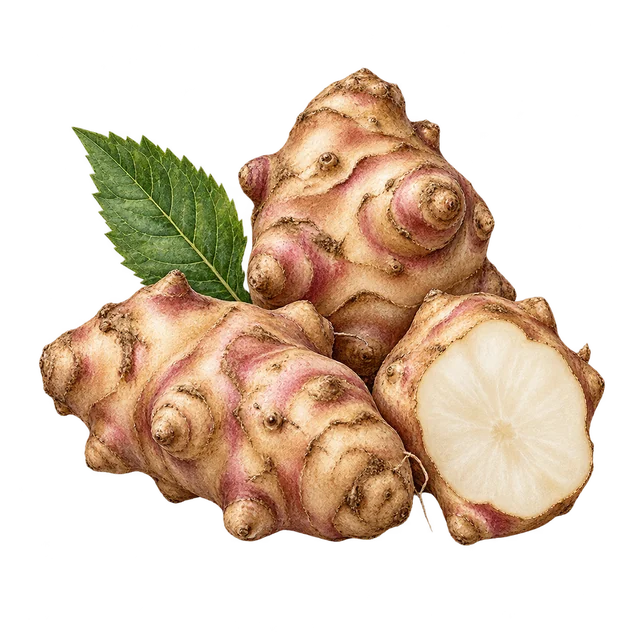
Tubers of Helianthus tuberosus. Despite its names, the plant is neither a globe artichoke nor a crop originating in Jerusalem.
Ingredient details, preparation and research
Also known as: Sunchoke; Topinambur
Source plant or material
Helianthus tuberosus
Plant family / material: Asteraceae
Forms and route
Fresh washed tubers, cooked vegetable dishes and food-grade processed products. Isolated inulin powder is a separate ingredient from whole tubers.
Vitamins and minerals
The tuber’s carbohydrate profile differs from that of a starch-rich potato. It is not a carbohydrate-free food or a guaranteed suitable replacement in an individualized medical diet.
Absorption and preparation
Inulin reaches the large intestine where microbes can ferment it. This explains both interest in its prebiotic properties and the possibility of gas; tolerance varies between people.
Practical preparation
Scrub sound tubers thoroughly and remove damaged areas. Peel if preferred and prepare raw in a suitable recipe or cook by boiling, roasting or mashing. Refrigerate prepared food promptly.
Traditional and reported uses
- Raw crisp vegetable
- Cooked tuber dishes
Contraindications and cautions
- Fermentable fructans can cause bloating or abdominal discomfort, especially in sensitive people; a smaller food portion may be better tolerated.
- Do not assume roasting or boiling removes all fermentable carbohydrate.
- Use verified food-grade tubers and discard spoiled portions; no wild identification guide is provided.
Inulin trials are not whole-tuber trials
A human study tested bakery products containing isolated Jerusalem-artichoke or chicory inulin and examined intestinal microbiota and tolerance. It cannot establish the same response for every serving of fresh sunchokes, and gastrointestinal effects were relevant.
Evidence limits
Regional history and food/material practice do not establish treatment efficacy. Composition depends on the named species, part and preparation; no medicinal dose or universal nutrient ranking is inferred.
Entry sources
- Agriculture Canada: Country Report on Plant Genetic Resources
- NC State Extension: Helianthus tuberosus
- Kleessen et al. (2007): Jerusalem artichoke and chicory inulin in bakery products
- USDA Agricultural Handbook 66: Jerusalem Artichoke, hosted by University of Minnesota
Reference entry 420 · Recorded content review: 2026-10-09 · Review scope and dates