


Key cautions
- Choose food-grade pads with spines and fine glochids properly removed; unknown cacti are not substitutes.
- Do not replace diabetes medication with nopal or change treatment based on this food card.
- Commercial pickled or salted products can contain substantial added sodium; check the label.
What’s inside
Water, fiber and mucilage-forming polysaccharides, with minerals and plant acids. Species, pad maturity and processing affect composition.
Uses in brief

- Vegetable salads and accompaniments
- Grilled pads and cooked dishes
History, folklore and reported uses
History, folklore and traditional uses
CONABIO documents nopal’s importance in Mexican dryland landscapes and household gardens. It distinguishes pads, sweet tuna and acidic xoconostle, each with a different edible part and culinary role.
Traditional, historical and reported uses
- Vegetable salads and accompaniments
Food or household practiceWhy this label?
Label describes the stated practice or evidence, not an efficacy grade. Exact form and cautions remain attached.
Mexican agriculture sources record nopalitos in salads and as side dishes. Preparation changes their mucilaginous texture without turning the food into a medicine.
- Grilled pads and cooked dishes
Food or household practiceWhy this label?
Label describes the stated practice or evidence, not an efficacy grade. Exact form and cautions remain attached.
Regional documentation also places nopalitos in grilled meals and stews, demonstrating a savory vegetable use distinct from prickly-pear fruit sweets.
2 supported uses; records describe the named form and are not treatment recommendations.
Historical-use additions reviewed 2026-10-09
Regional reading paths
These sourced notes describe cultivation, trade, food traditions or material history. A regional connection does not claim exclusive origin.
North America
Native/cultivated: Mexico.
Prepared young pads as vegetables; fruit also has distinct culinary uses.
Identity & detailed reference
Identity
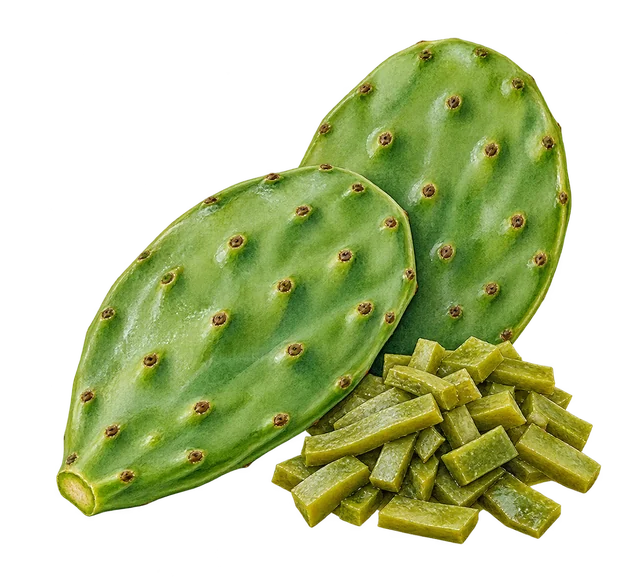
Nopalitos are young cladodes, or flattened stems, of edible Opuntia species, including O. ficus-indica. They are not true leaves.
Ingredient details, preparation and research
Also known as: Nopalitos; Cactus pads
Source plant or material
Opuntia spp., including O. ficus-indica
Plant family / material: Cactaceae
Forms and route
De-spined fresh pads, cooked nopalitos and commercially prepared foods. Tuna fruit, xoconostle fruit, dried powders and extracts require separate descriptions.
Vitamins and minerals
Cooked pads differ from sweet prickly-pear fruit and dehydrated powder. A vegetable portion cannot inherit concentrated supplement claims or nutrient values.
Absorption and preparation
Mucilage affects texture and digestion, but no universal absorption benefit or dependable glucose-lowering dose follows from culinary use.
Practical preparation
Prefer already cleaned culinary pads. Rinse and cook using an established food recipe, handling any remaining spines carefully. Refrigerate cut or cooked portions promptly.
Traditional and reported uses
- Vegetable salads and accompaniments
- Grilled pads and cooked dishes
Contraindications and cautions
- Choose food-grade pads with spines and fine glochids properly removed; unknown cacti are not substitutes.
- Do not replace diabetes medication with nopal or change treatment based on this food card.
- Commercial pickled or salted products can contain substantial added sodium; check the label.
Small meal studies are limited
A controlled study included 14 people with type 2 diabetes and compared specified breakfasts with or without steamed nopal. Short-term post-meal responses do not prove long-term disease control, apply to every recipe or authorize stopping medication.
Evidence limits
Regional history and food/material practice do not establish treatment efficacy. Composition depends on the named species, part and preparation; no medicinal dose or universal nutrient ranking is inferred.
Entry sources
- CONABIO: Nopales
- Mexico Agriculture: El nopal, riqueza del campo mexicano
- López-Romero et al. (2014): Nopal and postprandial responses with two breakfasts
Reference entry 413 · Recorded content review: 2026-10-09 · Review scope and dates