


Key cautions
- Kidney disease or potassium limits: check first.
- Review medicine interactions and liver concerns.
- Avoid unsupervised medicinal use.
What’s inside
Noni contains potassium and varied plant compounds. Juice composition depends on processing and dilution; a product marketed as a tonic is not nutritionally or medically standardized.
Uses in brief

- Documented fruit and juice use
- Pacific food-wrapping and dye heritage
- Haitian leaf-use history
History, folklore and reported uses
History, folklore and traditional uses
Kew records a native range across tropical and subtropical Asia to northern Australia. Noni traveled widely through the Pacific; Hawaiian horticultural accounts identify it as a likely Polynesian canoe plant.
The tree is now established in many Caribbean islands too. The Haitian name fey doulè appears in TRAMIL’s survey record. Pacific food history and Caribbean medicinal history should be named separately rather than presented as one universal tradition.
Traditional, historical and reported uses
- Ripe fruit as an emergency food
Food or household practiceWhy this label?
This records an identified food preparation or material practice, without claiming a medical outcome.
A USDA species account records ripe noni fruit eaten during food shortage in Indonesia, Australia and Pacific islands. Its strong smell helps explain why this use differs from that of an ordinary sweet dessert fruit.
- Fruit juice production
Food or household practiceWhy this label?
This records an identified food preparation or material practice, without claiming a medical outcome.
Hawaii CTAHR documents fresh-pressed juice and a separate aged, drip-extracted product. These are processing traditions, not proof of a tonic effect; this card does not supply a home-aging protocol.
- Leaves as a cooking wrapper
Food or household practiceWhy this label?
This records an identified food preparation or material practice, without claiming a medical outcome.
CTAHR’s ethnobotanical compilation records leaves used to wrap and flavor meat during cooking. This is an attributed culinary practice involving a different plant part, not an invitation to treat arbitrary leaves as safe food.
- Bark and root colorants
Food or household practiceWhy this label?
This records an identified food preparation or material practice, without claiming a medical outcome.
The species has a material history as a dye plant: bark and roots supplied red to orange/yellow colorants in regional accounts. A dye use does not imply that these parts should be eaten or applied as medicine.
- Haitian topical leaf tradition
Traditional accountWhy this label?
The source records a community’s intended traditional use; it does not establish clinical benefit or a safe home treatment.
TRAMIL records fresh noni leaves applied locally for rheumatism in Haiti. The entry documents an intended use; it does not show that a poultice relieves arthritis or that topical use is safe for every person.
Distinct documented practices are featured without filling a quota. Food, material use and traditional remedy accounts retain separate evidence labels; none is a cure claim.
Historical-use additions reviewed 2026-10-09
Story sources
- Kew POWO: Morinda citrifolia L.
- University of Hawaii CTAHR: Noni botany
- USDA Forest Service, John K. Francis: Morinda citrifolia, noni
- University of Hawaii CTAHR: Noni natural habitats
- University of Hawaii CTAHR: Traditional and Modern Uses of Noni
- University of Hawaii CTAHR: Noni fruit juices
- TRAMIL: Morinda citrifolia
- NIH NCCIH: Noni, usefulness and safety (updated February 2025)
- Mueller et al. (2000): Noni juice, hidden potential for hyperkalemia?
- FDA: What You Need to Know About Juice Safety
Regional reading paths
These sourced notes describe cultivation, trade, food traditions or material history. A regional connection does not claim exclusive origin.
Australia & Oceania
cultivated; Pacific islands including Samoa and Hawaiʻi
Prepared fruit products.
Identity & detailed reference
Identity
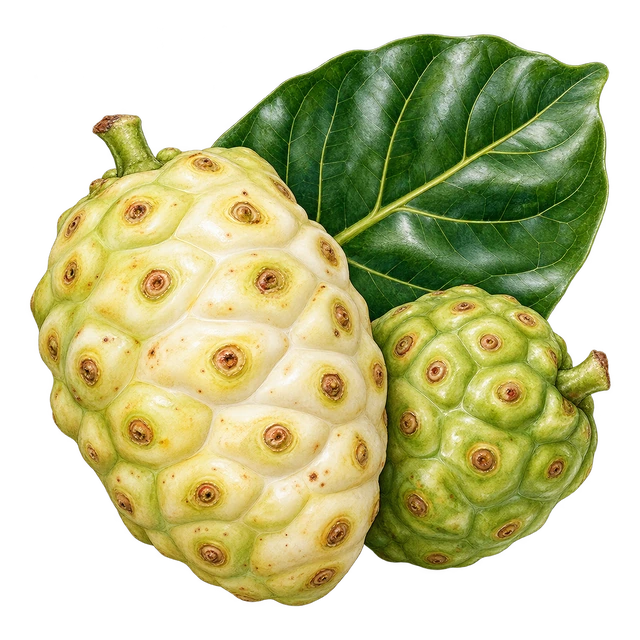
The fruit of Morinda citrifolia, a member of the coffee family. This card records edible-fruit history while distinguishing juice, leaf traditions, bark/root dyes and concentrated extracts; none is interchangeable.
Ingredient details, preparation and research
Also known as: Indian mulberry; Morinda; Mengkudu; Nono; Cheese fruit; Cheesefruit; Fey doulè
Source plant or material
Morinda citrifolia L.
Plant family / material: Rubiaceae
Forms and route
Ripe fruit and commercially prepared fruit juice. Fresh-pressed, aged juice, blended beverages, dried powders and extracts differ in composition and handling.
Vitamins and minerals
Potassium is a safety consideration as well as a nutrient. A clinical report measured substantial potassium in a noni juice product, but its value is not a universal serving figure. No copper value, nutrient-superiority claim or therapeutic intake target is assigned.
Absorption and preparation
No special nutrient-absorption benefit of noni is established here. Fermentation or an “antioxidant” label does not prove a health outcome or remove potassium concerns.
Practical preparation
Use correctly identified food-grade fruit or a labeled food beverage. Choose juice that has been treated to control pathogens and refrigerate as directed. Do not substitute root, bark, seed or leaf preparations for the fruit product.
Combination context
No medicinal combination or required nutrient-absorption pairing is established for this food.
Combination notes
Commercial blends may include other juices and sweeteners. Check the actual ingredient list; dilution does not establish that a product fits a potassium restriction.
Traditional and reported uses
- Documented fruit and juice use
- Pacific food-wrapping and dye heritage
- Haitian leaf-use history
Contraindications and cautions
- If you have kidney disease or a potassium restriction, ask your clinician before using noni. Juice can contribute clinically important potassium.
- Noni may interact with medicines that increase potassium, lower blood pressure or affect the liver. Review the exact product with your clinician or pharmacist.
- Liver problems have been reported after noni juice or tea; causation is uncertain. Stop and seek medical advice for jaundice, dark urine or other concerning symptoms.
- Pregnancy and breastfeeding safety, fruit-extract safety and topical safety are insufficiently established. Avoid starting medicinal noni use without professional advice.
- Do not replace cancer treatment or other prescribed care with noni. Historical use and laboratory activity do not establish a benefit in people.
- Home-aged juice is not covered by a validated food-safety process here. Prefer properly treated commercial beverages and follow their storage instructions.
Similar items and how they compare
- True mulberries
Indian mulberry is a common noni name.
Morinda citrifolia belongs to Rubiaceae, not the Morus genus of true mulberries.
- Noni extract or leaf tea
May originate from the same plant.
Different plant parts and concentrations have separate safety questions and are not equivalent to fruit food.
What the current evidence can establish
NCCIH’s February 2025 summary says very few human studies exist and no benefit for a health condition has been demonstrated in people. Laboratory antimicrobial or tumor-cell activity is not a treatment recommendation.
A relevant potassium case
Mueller and colleagues reported high blood potassium in a man with chronic renal insufficiency who was using noni juice. The analysis illustrates why an uncounted beverage can undermine an individualized low-potassium plan; it does not prove all fruit servings cause this problem.
Liver reports and product uncertainty
NCCIH notes liver-toxicity reports after juice or tea while explaining that causation is unclear. Its limited short-term juice safety information cannot establish safety of indefinite use, extracts, pregnancy exposure or skin application.
Evidence limits
This is a food-and-heritage card, not a medicinal dosing guide. Product composition varies, and current safety information does not establish a routine therapeutic intake. No homemade fermentation, wound treatment or cancer regimen is endorsed.
Entry sources
- Kew POWO: Morinda citrifolia L.
- University of Hawaii CTAHR: Noni botany
- USDA Forest Service, John K. Francis: Morinda citrifolia, noni
- University of Hawaii CTAHR: Noni natural habitats
- University of Hawaii CTAHR: Traditional and Modern Uses of Noni
- University of Hawaii CTAHR: Noni fruit juices
- TRAMIL: Morinda citrifolia
- NIH NCCIH: Noni, usefulness and safety (updated February 2025)
- Mueller et al. (2000): Noni juice, hidden potential for hyperkalemia?
- FDA: What You Need to Know About Juice Safety
Reference entry 255 · Recorded content review: 2026-10-09 · Review scope and dates