


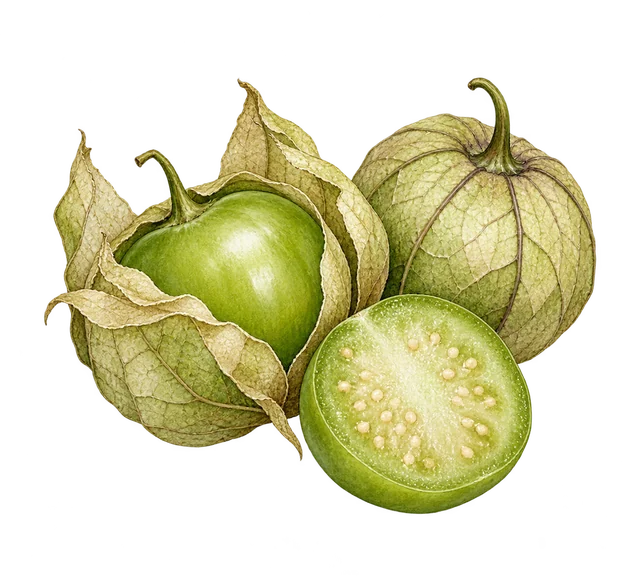
Key cautions
- Remove the papery husk and wash the fruit before preparation.
- Do not eat leaves or assume all ornamental lantern-fruited plants are culinary tomatillos.
- Home-preserved salsa requires a tested formulation; do not reduce acid or increase vegetables arbitrarily.
What’s inside
Water, organic acids, fiber and small amounts of vitamins and minerals; green and purple cultivars differ in pigments.
Uses in brief

- Salsa verde
- Cooked green dishes
History, folklore and reported uses
History, folklore and traditional uses
CONABIO documents long-standing Mexican use of husk tomatoes. Utah State’s horticultural guidance distinguishes green and purple cultivars, showing why the common phrase green tomato can obscure botanical identity.
Traditional, historical and reported uses
- Salsa verde
Food or household practiceWhy this label?
Label describes the stated practice or evidence, not an efficacy grade. Exact form and cautions remain attached.
CONABIO records tomatillos in green sauces, including dishes with chile and maize. The fruit’s tartness is a culinary characteristic.
- Cooked green dishes
Food or household practiceWhy this label?
Label describes the stated practice or evidence, not an efficacy grade. Exact form and cautions remain attached.
Enchiladas and chilaquiles use cooked tomatillo-based sauces. Their complete ingredients, not the fruit alone, determine salt, fat and nutrient content.
2 supported uses; records describe the named form and are not treatment recommendations.
Historical-use additions reviewed 2026-10-09
Regional reading paths
These sourced notes describe cultivation, trade, food traditions or material history. A regional connection does not claim exclusive origin.
North America
Domesticated/cultivated: Mexico.
Husked fruit used in salsa verde and cooked dishes.
Identity & detailed reference
Identity
Fruit of Physalis philadelphica, also called tomate de cáscara or miltomate in relevant regional contexts. Some literature uses P. ixocarpa; identify the actual cultivated food.
Ingredient details, preparation and research
Also known as: Tomate de cáscara; Husk tomato; Miltomate
Source plant or material
Physalis philadelphica
Plant family / material: Solanaceae
Forms and route
Fresh husked fruit, roasted or simmered sauces, and tested preserved products. Papery husks, leaves and ornamental Physalis plants are excluded.
Vitamins and minerals
A vegetable-like fruit serving is different from a salty prepared salsa. No treatment claim follows from laboratory work on isolated physalins or other compounds.
Absorption and preparation
Cooking changes texture and some nutrients. No special absorption-enhancing pairing is required; recipe safety takes precedence in preservation.
Practical preparation
Choose sound fruit with the expected cultivar characteristics, remove husks, rinse and prepare raw or cooked according to a trusted recipe. Refrigerate fresh sauces and opened jars.
Traditional and reported uses
- Salsa verde
- Cooked green dishes
Contraindications and cautions
- Remove the papery husk and wash the fruit before preparation.
- Do not eat leaves or assume all ornamental lantern-fruited plants are culinary tomatillos.
- Home-preserved salsa requires a tested formulation; do not reduce acid or increase vegetables arbitrarily.
Cultivar and preservation boundaries
University extension describes multiple fruit colors and growth characteristics. USDA/NCHFP separately supplies tested canning procedures; garden ripeness and sour taste are not substitutes for a validated preservation recipe.
Evidence limits
Regional history and food/material practice do not establish treatment efficacy. Composition depends on the named species, part and preparation; no medicinal dose or universal nutrient ranking is inferred.
Entry sources
- CONABIO: Qué nos aportan los tomates verdes
- Utah State Extension: How to Grow Tomatillos
- USDA / NCHFP: Complete Guide to Home Canning, tomatoes and salsa
Reference entry 412 · Recorded content review: 2026-10-09 · Review scope and dates