


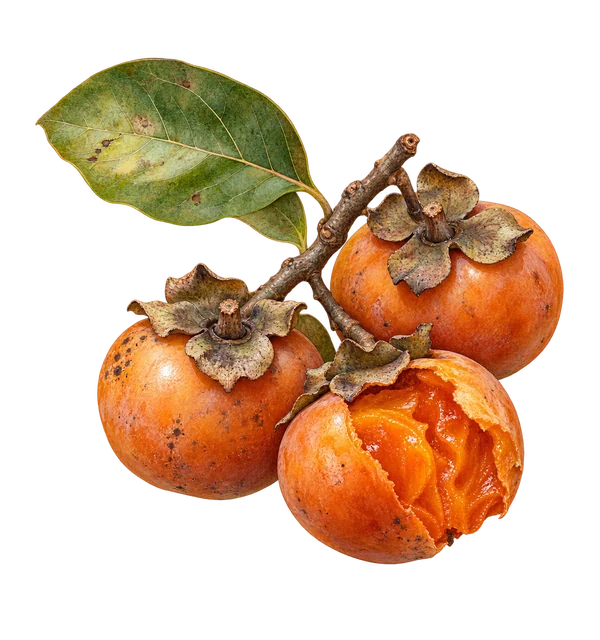
Key cautions
- Wait until the fruit is properly ripe and soft for the cultivar; unripe American persimmons can be strongly astringent.
- Remove seeds and the calyx before using pulp; do not blend whole fruit indiscriminately.
- Refrigerate ripe pulp and discard moldy or deteriorated fruit.
What’s inside
Sugars, pectin, fiber and phenolic compounds; soluble tannins contribute the marked astringency of unripe fruit.
Uses in brief

- Fresh ripe fruit
- Pulp desserts and baking
History, folklore and reported uses
History, folklore and traditional uses
US Forest Service documents Diospyros virginiana across eastern and central North America and its edible-fruit cultivation. Purdue’s regional kitchen guidance records pulp-based preparations rather than assuming all persimmons are eaten firm.
Traditional, historical and reported uses
- Fresh ripe fruit
Food or household practiceWhy this label?
Label describes the stated practice or evidence, not an efficacy grade. Exact form and cautions remain attached.
Purdue distinguishes native types that need to soften and lose astringency before eating. Ripeness is central to this food’s quality.
- Pulp desserts and baking
Food or household practiceWhy this label?
Label describes the stated practice or evidence, not an efficacy grade. Exact form and cautions remain attached.
The same source records puddings, cookies and cakes made from prepared pulp, with seeds and skin separated. Freezing pulp carries the seasonal fruit into later cooking.
2 supported uses; records describe the named form and are not treatment recommendations.
Historical-use additions reviewed 2026-10-09
Regional reading paths
These sourced notes describe cultivation, trade, food traditions or material history. A regional connection does not claim exclusive origin.
North America
Native/cultivated: eastern and central United States.
Fully ripe fruit eaten fresh or used in cooked foods.
Identity & detailed reference
Identity
Fruit of Diospyros virginiana, especially fully ripe pulp. Diospyros kaki and its non-astringent cultivars are different fruit identities.
Ingredient details, preparation and research
Also known as: Common persimmon; Diospyros virginiana
Source plant or material
Diospyros virginiana
Plant family / material: Ebenaceae
Forms and route
Fresh fully ripe fruit, seed-free pulp, frozen pulp and baked foods. Bark, leaves and medicinal extracts are separate.
Vitamins and minerals
Composition changes with ripeness and with added ingredients in pudding or cake. Nutrition figures for large Asian persimmons should not automatically describe smaller American fruit.
Absorption and preparation
Ripening reduces astringency and changes palatability; it is not evidence that eating more fruit produces a medicinal effect.
Practical preparation
Wash ripe fruit, remove the calyx and separate pulp from seeds and skin with suitable kitchen equipment. Use promptly or freeze according to food-preservation guidance.
Traditional and reported uses
- Fresh ripe fruit
- Pulp desserts and baking
Contraindications and cautions
- Wait until the fruit is properly ripe and soft for the cultivar; unripe American persimmons can be strongly astringent.
- Remove seeds and the calyx before using pulp; do not blend whole fruit indiscriminately.
- Refrigerate ripe pulp and discard moldy or deteriorated fruit.
Botanical identity prevents false comparison
USDA’s species account and edible-landscape guidance concern American persimmon. Commercial nutrition tables and studies headed only persimmon may instead concern D. kaki, dried fruit or an extract.
Evidence limits
Regional history and food/material practice do not establish treatment efficacy. Composition depends on the named species, part and preparation; no medicinal dose or universal nutrient ranking is inferred.
Entry sources
- US Forest Service: Common Persimmon
- Purdue Extension FoodLink: Persimmon
- USDA National Agroforestry Center: Edible Woody Landscapes
Reference entry 409 · Recorded content review: 2026-10-09 · Review scope and dates