


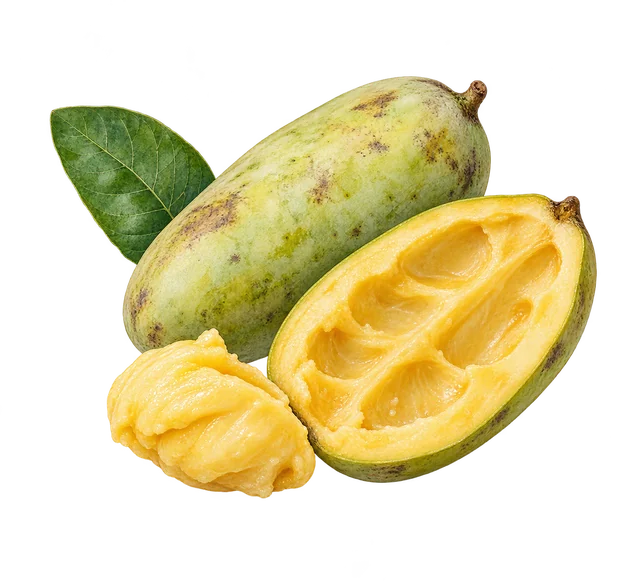
Key cautions
- Do not eat seeds or skin; remove them fully before blending pulp.
- Some people experience stomach upset or allergy
- Do not use a decorative picture or this text to identify wild fruit, and do not treat leaf or bark extracts as food.
What’s inside
Fruit carbohydrate, fiber, some fat and characteristic aroma compounds. Other plant parts contain biologically active compounds and are not equivalent foods.
Uses in brief

- Fresh ripe pulp
- Desserts and frozen pulp
History, folklore and reported uses
History, folklore and traditional uses
US Forest Service describes a native eastern North American tree. Kentucky State’s breeding and horticultural program documents its development as a cultivated regional fruit; orchard-grown fruit and wild populations contribute different histories.
Traditional, historical and reported uses
- Fresh ripe pulp
Food or household practiceWhy this label?
Label describes the stated practice or evidence, not an efficacy grade. Exact form and cautions remain attached.
Penn State records the fruit’s kitchen role and explicitly excludes skin and seeds. Its soft pulp is the edible portion, not the entire blended fruit.
- Desserts and frozen pulp
Food or household practiceWhy this label?
Label describes the stated practice or evidence, not an efficacy grade. Exact form and cautions remain attached.
Pawpaw is used in prepared desserts, including ice cream, and pulp can be saved for later cooking. The added ingredients determine the finished food’s nutritional profile.
2 supported uses; records describe the named form and are not treatment recommendations.
Historical-use additions reviewed 2026-10-09
Regional reading paths
These sourced notes describe cultivation, trade, food traditions or material history. A regional connection does not claim exclusive origin.
North America
Native: eastern United States.
Ripe fruit pulp; seeds and skin are excluded.
Identity & detailed reference
Identity
Ripe edible pulp of Asimina triloba. Seeds, skin and leaf or bark extracts are excluded.
Ingredient details, preparation and research
Also known as: American pawpaw; Asimina triloba
Source plant or material
Asimina triloba
Plant family / material: Annonaceae
Forms and route
Fresh ripe pulp, refrigerated or frozen seed-free pulp and prepared desserts. Dried fruit or extracts should not inherit the safety assumptions of ordinary fresh pulp.
Vitamins and minerals
A fruit ingredient whose cultivar, ripeness and recipe affect composition. Custard-like texture does not imply the protein or calcium profile of dairy custard.
Absorption and preparation
No special absorption claim is established. Studies of isolated Annonaceae compounds do not show benefits from eating this pulp.
Practical preparation
Buy sound ripe fruit, wash the exterior, cut open and separate the pulp from skin and seeds. Refrigerate promptly or freeze prepared pulp using food-handling guidance.
Traditional and reported uses
- Fresh ripe pulp
- Desserts and frozen pulp
Contraindications and cautions
- Do not eat seeds or skin; remove them fully before blending pulp.
- Some people experience stomach upset or allergy. Stop eating it if it causes symptoms.
- Do not use a decorative picture or this text to identify wild fruit, and do not treat leaf or bark extracts as food.
Cultivar research is agricultural
Kentucky State evaluates cultivars and growing conditions, helping explain variation in fruit quality. These horticultural findings are not clinical evidence for a pawpaw supplement.
A common-name trap
Asimina triloba belongs to Annonaceae. Tropical Carica papaya is a different species and family even where both are called pawpaw; seed and extract information cannot be transferred between them.
Evidence limits
Regional history and food/material practice do not establish treatment efficacy. Composition depends on the named species, part and preparation; no medicinal dose or universal nutrient ranking is inferred.
Entry sources
- US Forest Service: Asimina triloba
- Penn State Extension: Pawpaw Fruit in the Garden and Kitchen
- Kentucky State University: Pawpaw FAQ
- USDA National Agroforestry Center: Edible Woody Landscapes
Reference entry 408 · Recorded content review: 2026-10-09 · Review scope and dates