


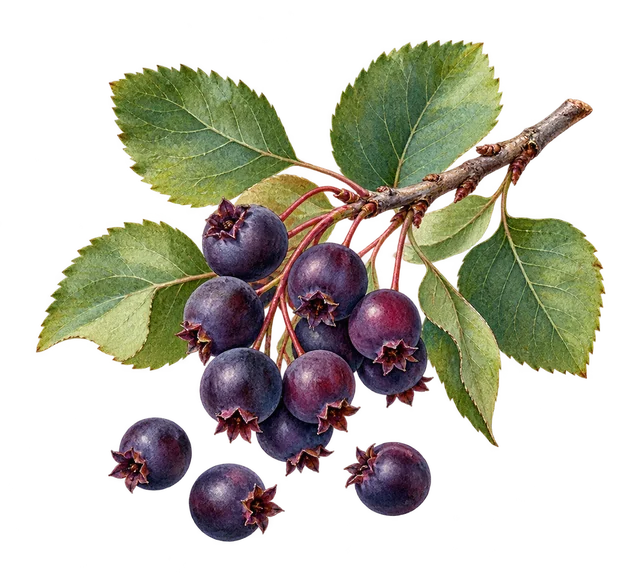
Key cautions
- Use correctly identified food fruit; a blueberry-like appearance is not enough for wild identification.
- Refrigerate ripe fruit promptly and discard moldy or damaged material.
- Use a tested preserve recipe; sweetness or purple color does not establish safe shelf stability.
What’s inside
Fruit sugars, fiber and pigmented phenolic compounds. The balance varies by species, cultivar, ripeness and processing.
Uses in brief

- Fresh seasonal fruit
- Pies and preserves
- Dried fruit food tradition
History, folklore and reported uses
History, folklore and traditional uses
USDA and Extension sources place serviceberries in North American edible landscapes. NPS records juneberries in Mandan, Hidatsa and Arikara food processing, including dried fruit; that is a specific community account rather than a universal tradition.
Traditional, historical and reported uses
- Fresh seasonal fruit
Food or household practiceWhy this label?
Label describes the stated practice or evidence, not an efficacy grade. Exact form and cautions remain attached.
Utah State documents fresh eating and notes that fruit quality differs among cultivars. Saskatoon plantings provide a cultivated alternative to unverified wild gathering.
- Pies and preserves
Food or household practiceWhy this label?
Label describes the stated practice or evidence, not an efficacy grade. Exact form and cautions remain attached.
The same source records pies, juice, jam and jelly. Concentration, straining and added sugar produce materially different foods.
- Dried fruit food tradition
Traditional accountWhy this label?
Label describes the stated practice or evidence, not an efficacy grade. Exact form and cautions remain attached.
NPS documents dried juneberries in a particular Plains food context, demonstrating preservation beyond the short harvest season.
3 supported uses; records describe the named form and are not treatment recommendations.
Historical-use additions reviewed 2026-10-09
Regional reading paths
These sourced notes describe cultivation, trade, food traditions or material history. A regional connection does not claim exclusive origin.
North America
Native/cultivated: Canada and United States.
Ripe fruits eaten fresh or preserved.
Identity & detailed reference
Identity
Edible ripe pomes of Amelanchier alnifolia and other specified culinary Amelanchier species. They resemble blueberries but are botanically different.
Ingredient details, preparation and research
Also known as: Juneberry; Shadbush; Saskatoon
Source plant or material
Amelanchier alnifolia and other edible Amelanchier species
Plant family / material: Rosaceae
Forms and route
Fresh or frozen ripe fruit, juice, jam, jelly and baked preparations. Leaves, bark and medicinal extracts are outside this food card.
Vitamins and minerals
Whole fruit retains fiber that clarified juice may not. Sweetened preserves and pies add ingredients; no single nutrient figure describes the whole genus.
Absorption and preparation
Freezing preserves a usable fruit form; it does not establish a special absorption benefit. Laboratory antioxidant measures should not be translated into disease prevention.
Practical preparation
Remove damaged fruit and stems, rinse with potable water and handle gently. Eat sound ripe fruit or freeze for later cooking; follow tested guidance for jam and jelly.
Traditional and reported uses
- Fresh seasonal fruit
- Pies and preserves
- Dried fruit food tradition
Contraindications and cautions
- Use correctly identified food fruit; a blueberry-like appearance is not enough for wild identification.
- Refrigerate ripe fruit promptly and discard moldy or damaged material.
- Use a tested preserve recipe; sweetness or purple color does not establish safe shelf stability.
Species and cultivar matter
Extension lists several cultivars selected for fruit size and flavor. A genus-wide common name cannot support a single precise nutrition profile or one botanical origin for every retail product.
Evidence limits
Regional history and food/material practice do not establish treatment efficacy. Composition depends on the named species, part and preparation; no medicinal dose or universal nutrient ranking is inferred.
Entry sources
- Utah State Extension: How to Grow Serviceberries
- USDA National Agroforestry Center: Edible Woody Landscapes
- NPS: Subsistence, Tribal Nutrition and Health
Reference entry 407 · Recorded content review: 2026-10-09 · Review scope and dates