


Key cautions
- Refrigerate opened maple syrup according to the label; mold can grow despite its sweetness.
- Discard moldy syrup rather than skimming and reboiling it.
- Read ingredients when maple flavoring, pancake syrup or sweetened blends are sold alongside pure syrup.
What’s inside
Predominantly sugars, chiefly sucrose, in water, with smaller quantities of minerals and flavor compounds. Color and flavor vary with season and processing.
Uses in brief

- Table sweetener
- Concentrated maple products
History, folklore and reported uses
History, folklore and traditional uses
Canada and the northeastern United States have substantial maple-sap industries. Canadian food standards define maple products by their sap origin and concentration, preserving a practical distinction from flavored sugar syrups.
Traditional, historical and reported uses
- Table sweetener
Food or household practiceWhy this label?
Label describes the stated practice or evidence, not an efficacy grade. Exact form and cautions remain attached.
Pure syrup adds sweetness and maple flavor to foods. The amount used determines its contribution; a traditional identity does not make unlimited portions advisable.
- Concentrated maple products
Food or household practiceWhy this label?
Label describes the stated practice or evidence, not an efficacy grade. Exact form and cautions remain attached.
Canadian labeling guidance distinguishes syrup, maple sugar, butter and taffy. These products reflect further processing and need separate texture and storage expectations.
2 supported uses; records describe the named form and are not treatment recommendations.
Historical-use additions reviewed 2026-10-09
Regional reading paths
These sourced notes describe cultivation, trade, food traditions or material history. A regional connection does not claim exclusive origin.
North America
Traditional processing/cultivated: Canada and northeastern United States.
Concentrated tree sap used as a sweetener.
Identity & detailed reference
Identity
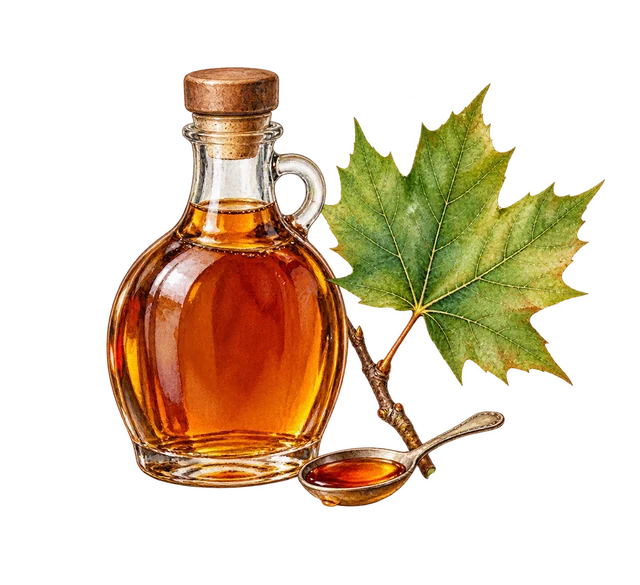
Syrup derived from suitable Acer tree sap, especially Acer saccharum. Maple-flavored pancake syrup can be a different product made mainly from other sweeteners.
Ingredient details, preparation and research
Also known as: Maple sap syrup
Source plant or material
Acer saccharum and other suitable Acer species; concentrated sap
Plant family / material: Sapindaceae
Forms and route
Pure maple syrup, maple sugar and other concentrated maple products; flavored blends require their own ingredient descriptions.
Vitamins and minerals
Trace nutrients do not cancel the sugar content. Portion and the entire recipe matter more than a health ranking against other sweeteners.
Absorption and preparation
No special nutrient-absorption benefit is established. Maple sugar and syrup differ in water content, so equal weights are not equivalent.
Practical preparation
Use a clean utensil and return opened syrup to the refrigerator. For homemade syrup or long-term preservation, follow current Extension procedures rather than an improvised concentration or storage rule.
Traditional and reported uses
- Table sweetener
- Concentrated maple products
Contraindications and cautions
- Refrigerate opened maple syrup according to the label; mold can grow despite its sweetness.
- Discard moldy syrup rather than skimming and reboiling it.
- Read ingredients when maple flavoring, pancake syrup or sweetened blends are sold alongside pure syrup.
Storage is a food-safety issue
University of Maine Extension advises refrigeration after opening and discarding moldy syrup. Heating a moldy product is not a reliable rescue step because some mold toxins can persist.
Regional industry evidence
Natural Resources Canada documents maple syrup among forest-based foods. Production history supports regional association, not claims that syrup prevents disease.
Evidence limits
Regional history and food/material practice do not establish treatment efficacy. Composition depends on the named species, part and preparation; no medicinal dose or universal nutrient ranking is inferred.
Entry sources
- Natural Resources Canada: Non-timber forest products
- CFIA: Labelling requirements for maple products
- University of Maine Extension: Maple Syrup, Fridge or Pantry?
- Agriculture Canada: Canadian Maple Products, Situation and Trends
Reference entry 406 · Recorded content review: 2026-10-09 · Review scope and dates