


Key cautions
- Buy properly processed food-grade grain; do not harvest where access, rights or water quality are uncertain.
- Refrigerate cooked grain promptly and handle leftovers as perishable food.
- Seasoning packets and prepared dishes can add salt and allergens absent from the plain grain.
What’s inside
Starch, protein and fiber, with minerals and other grain constituents. The cooked grain contains much more water than the dry product.
Uses in brief

- Cooked grain side dishes
- Soups and casseroles
History, folklore and reported uses
History, folklore and traditional uses
Parks Canada specifically documents manoomin’s importance to Anishinaabeg communities around Ontario’s Trent-Severn Waterway, including Williams Treaties First Nations. Cultural rights and stewardship belong in its story alongside cooking, without turning that account into a universal Indigenous tradition.
Traditional, historical and reported uses
- Cooked grain side dishes
Food or household practiceWhy this label?
Label describes the stated practice or evidence, not an efficacy grade. Exact form and cautions remain attached.
University of Minnesota Extension records plain cooked wild rice and notes processing-related differences in cooking time.
- Soups and casseroles
Food or household practiceWhy this label?
Label describes the stated practice or evidence, not an efficacy grade. Exact form and cautions remain attached.
The same source recommends cooked grain in soups and casseroles and describes freezing cooked portions. Added ingredients determine the finished dish’s composition.
2 supported uses; records describe the named form and are not treatment recommendations.
Historical-use additions reviewed 2026-10-09
Regional reading paths
These sourced notes describe cultivation, trade, food traditions or material history. A regional connection does not claim exclusive origin.
North America
Native/traditional food: Canada and United States; Anishinaabeg of Ontario specifically documented.
Cooked aquatic-grass grain; cultural harvesting rights and stewardship matter.
Identity & detailed reference
Identity
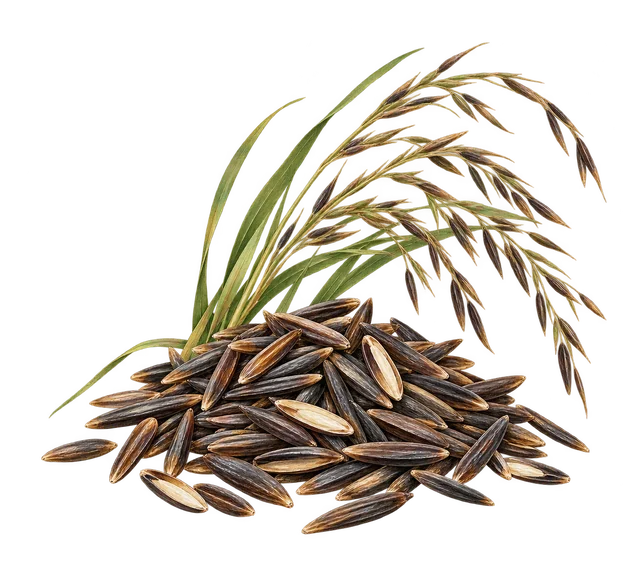
Grain of Zizania palustris and Z. aquatica. Asian Zizania vegetables and Oryza rice are separate foods.
Ingredient details, preparation and research
Also known as: Manoomin; Northern wild rice
Source plant or material
Zizania palustris and Z. aquatica
Plant family / material: Poaceae
Forms and route
Cleaned, dried/parched grain and fully cooked dishes. Lake-harvested and cultivated-paddy products may differ in processing and cooking time.
Vitamins and minerals
A grain food that can contribute to a varied meal. Mixed wild-rice packages may contain substantial ordinary rice and seasonings; read ingredients before assigning composition.
Absorption and preparation
Parched and other processed grains hydrate differently. No special absorption advantage follows simply from the word wild.
Practical preparation
Rinse and cook according to the specific package or a tested recipe. Hand-parched products may cook faster than darker commercial grain; do not assume one timing fits every form.
Traditional and reported uses
- Cooked grain side dishes
- Soups and casseroles
Contraindications and cautions
- Buy properly processed food-grade grain; do not harvest where access, rights or water quality are uncertain.
- Refrigerate cooked grain promptly and handle leftovers as perishable food.
- Seasoning packets and prepared dishes can add salt and allergens absent from the plain grain.
Identity and stewardship
Canada’s plant-genetic-resource report distinguishes the relevant Zizania species and their conservation needs. Its agricultural evidence does not justify treating all retail wild rice as lake-harvested or culturally equivalent.
Evidence limits
Regional history and food/material practice do not establish treatment efficacy. Composition depends on the named species, part and preparation; no medicinal dose or universal nutrient ranking is inferred.
Entry sources
- Parks Canada: Manoomin (Wild Rice)
- University of Minnesota Extension: Wild or brown rice
- Agriculture Canada: Country Report on Plant Genetic Resources
- Health Canada: Fried wild rice
Reference entry 405 · Recorded content review: 2026-10-09 · Review scope and dates