


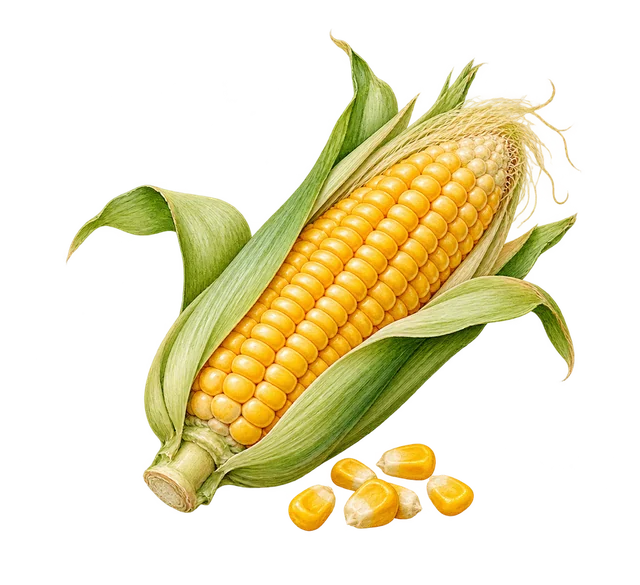
Key cautions
- Use grain supplied for food, never pesticide-treated planting seed.
- Discard moldy grain; cooking is not a reliable way to remove every fungal toxin.
- Corn itself lacks wheat gluten, but mixed foods and processing cross-contact can matter for coeliac disease.
What’s inside
Starch, variable fiber and protein; germ contains oil. Pigments vary by cultivar, with carotenoids in many yellow types and anthocyanins in some colored types.
Uses in brief

- Masa foods
- Whole-kernel soups and fresh corn
History, folklore and reported uses
History, folklore and traditional uses
CONABIO traces maize domestication to Mesoamerican teosinte ancestry and documents continuing farmer selection. NPS records maize alongside beans, squash and sunflower in Mandan, Hidatsa and Arikara food systems; these are particular histories, not one universal farming story.
Traditional, historical and reported uses
- Masa foods
Food or household practiceWhy this label?
Label describes the stated practice or evidence, not an efficacy grade. Exact form and cautions remain attached.
Nixtamalized maize becomes masa for tortillas, tamales and related foods. The process and recipe create a different form from uncooked meal.
- Whole-kernel soups and fresh corn
Food or household practiceWhy this label?
Label describes the stated practice or evidence, not an efficacy grade. Exact form and cautions remain attached.
CONABIO records whole kernels in soups and maize eaten at different maturity stages. Fresh sweet corn and mature soup grain require different preparation.
2 supported uses; records describe the named form and are not treatment recommendations.
Historical-use additions reviewed 2026-10-09
Regional reading paths
These sourced notes describe cultivation, trade, food traditions or material history. A regional connection does not claim exclusive origin.
North America
Domesticated/cultivated: Mexico and Mesoamerica; staple crop in Belize and United States.
Grain, masa and fresh kernels used in foods.
Identity & detailed reference
Identity
Edible grain of Zea mays subsp. mays. Sweet corn, flour/dent maize, popcorn and nixtamalized products belong to the crop but are not interchangeable foods.
Ingredient details, preparation and research
Also known as: Corn; Maíz
Source plant or material
Zea mays
Plant family / material: Poaceae
Forms and route
Fresh or frozen kernels, dried food grain, meal, hominy and masa products. Corn oil, purified starch, syrups and fermented drinks are separate preparations.
Vitamins and minerals
Whole grain retains more of the kernel than refined starch. Fresh kernels, dried meal and cooked tortillas differ in water content; their composition should not be compared as identical weights.
Absorption and preparation
Nixtamalization changes the grain matrix and can improve availability of bound niacin while adding calcium when lime is used. It is a specific process, not a property of all corn products.
Practical preparation
Cook the purchased form as directed. Use prepared masa or a validated nixtamalization method; culinary lime is not interchangeable with construction lime. Refrigerate cooked perishable dishes promptly.
Traditional and reported uses
- Masa foods
- Whole-kernel soups and fresh corn
Contraindications and cautions
- Use grain supplied for food, never pesticide-treated planting seed.
- Discard moldy grain; cooking is not a reliable way to remove every fungal toxin.
- Corn itself lacks wheat gluten, but mixed foods and processing cross-contact can matter for coeliac disease.
Processing determines the food
Official nixtamalization documentation explains a transformation of grain into dough. Nutrient claims for the processed product should not be assigned to purified starch, corn syrup or extracted oil.
Evidence limits
Regional history and food/material practice do not establish treatment efficacy. Composition depends on the named species, part and preparation; no medicinal dose or universal nutrient ranking is inferred.
Entry sources
- CONABIO: Maíces
- Mexico Agriculture: Del maíz a la tortilla y nixtamalización
- NPS: Subsistence, Tribal Nutrition and Health
- CONABIO: La cocina tradicional mexicana
- Belize Agriculture: Agricultural market prices, February 2020
Reference entry 403 · Recorded content review: 2026-10-09 · Review scope and dates