


Key cautions
- Contains wheat and gluten unless specifically made and verified otherwise.
- Do not eat raw starter, dough or discard made with untreated flour.
- Discard moldy or abnormally discolored starter rather than scraping it; use a reputable food-safety method.
What’s inside
Flour starch, protein and variable fiber; fermentation produces organic acids and aroma compounds. Whole-grain content, salt and additions govern the loaf’s composition.
Uses in brief

- Leavened bread
- Cooked griddle foods
History, folklore and reported uses
History, folklore and traditional uses
University of Alaska Fairbanks documents sourdough’s practical role among miners and homesteaders with uncertain supply routes. That Alaskan history is one regional branch of a much older, widely shared fermentation practice.
Traditional, historical and reported uses
- Leavened bread
Food or household practiceWhy this label?
Label describes the stated practice or evidence, not an efficacy grade. Exact form and cautions remain attached.
Starter organisms generate gases and acids used in breadmaking. Baking transforms the dough into food and substantially changes the living microbial component.
- Cooked griddle foods
Food or household practiceWhy this label?
Label describes the stated practice or evidence, not an efficacy grade. Exact form and cautions remain attached.
UAF also records sourdough in hotcakes, waffles and other fully cooked foods. Discard can be an ingredient only when handled safely and cooked, not consumed raw.
2 supported uses; records describe the named form and are not treatment recommendations.
Historical-use additions reviewed 2026-10-09
Regional reading paths
These sourced notes describe cultivation, trade, food traditions or material history. A regional connection does not claim exclusive origin.
North America
Introduced/traditional processing: United States, including Alaska.
Baked leavened bread made using fermented flour starter.
Identity & detailed reference
Identity
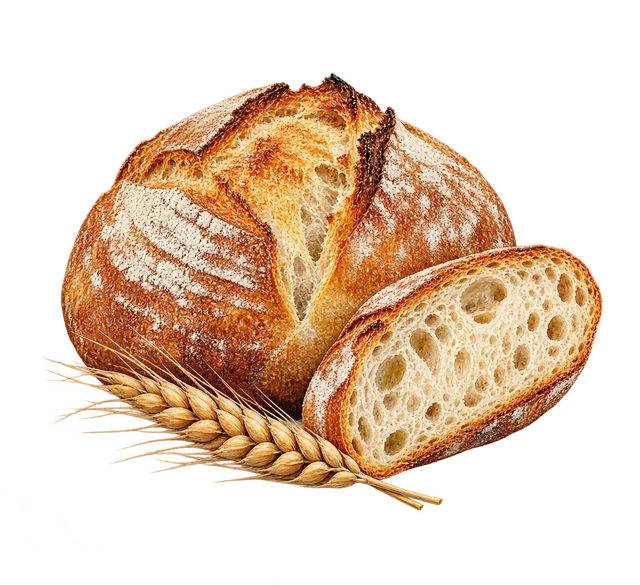
Here, wheat-based sourdough bread made from Triticum aestivum flour, water, a starter and recipe ingredients. Rye and gluten-free versions require separate ingredient descriptions.
Ingredient details, preparation and research
Source plant or material
Triticum aestivum flour; yeasts and lactic acid bacteria
Plant family / material: Poaceae (wheat substrate); microbial starter
Forms and route
Fully baked bread and cooked sourdough foods. Raw starter, uncooked discard, dough and supplements made from fermentation products are different forms.
Vitamins and minerals
Sourdough is not automatically whole-grain or low-sodium. A refined-flour loaf and a whole-grain loaf need separate nutritional interpretation.
Absorption and preparation
Fermentation can modify carbohydrates and phytate, but duration and flour matter. Ordinary wheat sourdough is not made safe for coeliac disease by fermentation.
Practical preparation
Follow a tested baking recipe, maintain clean utensils and fully bake flour-containing foods. Refrigerate or otherwise handle perishable additions safely. Starter age is not a safety certificate.
Traditional and reported uses
- Leavened bread
- Cooked griddle foods
Contraindications and cautions
- Contains wheat and gluten unless specifically made and verified otherwise.
- Do not eat raw starter, dough or discard made with untreated flour.
- Discard moldy or abnormally discolored starter rather than scraping it; use a reputable food-safety method.
Geography does not dictate one microbiome
Landis and colleagues studied 500 starters across four continents and found little support for simple geographic patterns. Microbial interactions helped explain variation in rise and aroma; a location label does not guarantee a unique organism or clinical benefit.
Evidence limits
Regional history and food/material practice do not establish treatment efficacy. Composition depends on the named species, part and preparation; no medicinal dose or universal nutrient ranking is inferred.
Entry sources
- University of Alaska Fairbanks Extension: Sourdough
- Landis et al. (2021): The diversity and function of sourdough starter microbiomes
- University of Minnesota Extension: Is flour a food safety concern?
Reference entry 402 · Recorded content review: 2026-10-09 · Review scope and dates