


Key cautions
- Alcohol may be present even when the drink tastes sweet and refreshing.
- Use safely produced beverages and potable ice/water; avoid unverified home ferments and spoiled products.
- Consider added sugar and salt
What’s inside
Maize-derived carbohydrate, residual sugars, organic acids, ethanol and volatile aroma compounds; bacterial and yeast composition varies.
Uses in brief

- Sweet-tart maize drink
- Wixárika ceremonial account
History, folklore and reported uses
History, folklore and traditional uses
Mexican sources locate familiar street and market versions in Jalisco and Nayarit. SIAP also documents Wixárika nawa in a specific ceremonial context; that account should not be flattened into a single recipe or practice shared by all Indigenous communities.
Traditional, historical and reported uses
- Sweet-tart maize drink
Food or household practiceWhy this label?
Label describes the stated practice or evidence, not an efficacy grade. Exact form and cautions remain attached.
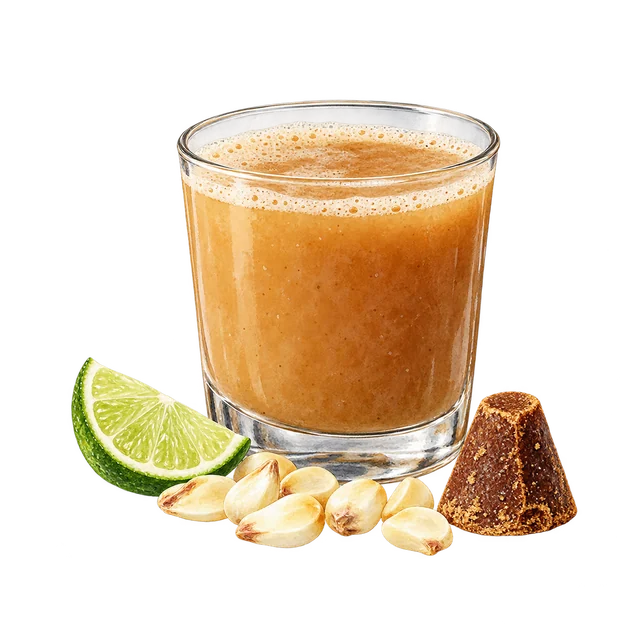
Contemporary regional accounts record serving tejuino with citrus, salt and piloncillo, sometimes citrus ice. Each addition changes flavor and composition.
- Wixárika ceremonial account
Traditional accountWhy this label?
Label describes the stated practice or evidence, not an efficacy grade. Exact form and cautions remain attached.
SIAP documents nawa in Wixárika ceremonies. This is attributed cultural history, not an instruction to recreate a ceremony or a claim that modern retail tejuino is identical.
2 supported uses; records describe the named form and are not treatment recommendations.
Historical-use additions reviewed 2026-10-09
Story sources
Regional reading paths
These sourced notes describe cultivation, trade, food traditions or material history. A regional connection does not claim exclusive origin.
North America
Traditional processing: western Mexico, including Jalisco and Nayarit.
Maize-based fermented drink; recipes and alcohol content vary.
Identity & detailed reference
Identity
Tejuino based on Zea mays, with preparation varying between masa and germinated-grain traditions. It is not automatically identical to more strongly fermented tesgüino.
Ingredient details, preparation and research
Source plant or material
Zea mays substrate; mixed fermentation
Plant family / material: Poaceae (maize substrate); mixed microbial community
Forms and route
Prepared fermented drink, often with piloncillo, citrus and salt; frozen citrus additions and other toppings change the recipe.
Vitamins and minerals
Sweetener and dilution determine much of the serving’s carbohydrate content. A fermented label does not mean low-sugar, alcohol-free or nutritionally complete.
Absorption and preparation
Laboratory work on organisms isolated from tejuino does not establish that every beverage delivers an effective probiotic strain or dose.
Practical preparation
Choose a producer using controlled food handling and follow its storage guidance. No germination or room-temperature fermentation recipe is provided.
Traditional and reported uses
- Sweet-tart maize drink
- Wixárika ceremonial account
Contraindications and cautions
- Alcohol may be present even when the drink tastes sweet and refreshing.
- Use safely produced beverages and potable ice/water; avoid unverified home ferments and spoiled products.
- Consider added sugar and salt. Those needing to avoid alcohol should not rely on a generic low-alcohol description.
Eight-sample composition study
A 2021 study compared four artisanal and four commercial samples and found differences in chemical and microbial profiles. Its limited sample cannot establish a universal alcohol level, safety standard or health effect.
Evidence limits
Regional history and food/material practice do not establish treatment efficacy. Composition depends on the named species, part and preparation; no medicinal dose or universal nutrient ranking is inferred.
Entry sources
- Mexico Agriculture: Tejuino, una bebida muy refrescante
- SIAP: Tejuino and Wixárika nawa traditions
- Rubio-Castillo et al. (2021): Tejuino composition, safety quality and microbial identification
- Mexico Agriculture: Bebidas ancestrales fermentadas mexicanas
- UNAM: Bebidas fermentadas indígenas
Reference entry 401 · Recorded content review: 2026-10-09 · Review scope and dates