


Key cautions
- Use hygienically prepared products with safe water and appropriate storage.
- Discard visibly moldy or spoiled product; do not use it as a home medicine.
- Microbial activity and possible alcohol vary
What’s inside
Maize starch, some protein and fiber, organic acids and a changing microbial community; cacao adds its own fats and flavor compounds.
Uses in brief

- White maize beverage
- Cacao-containing drink
History, folklore and reported uses
History, folklore and traditional uses
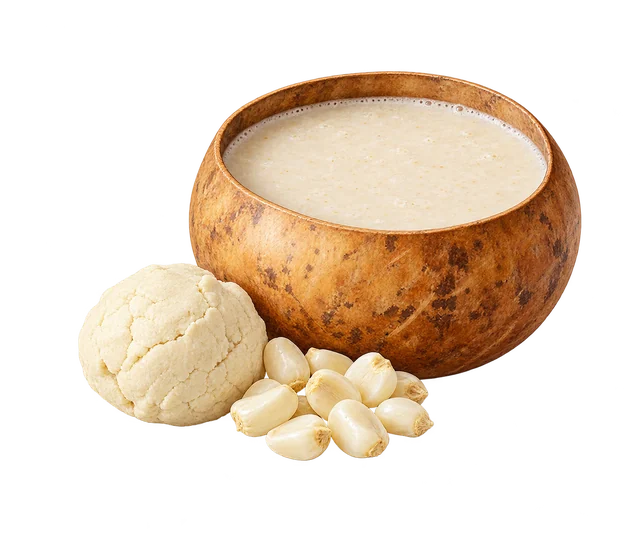
Pozol is especially associated with Chiapas and Tabasco. Tabasco’s agriculture account distinguishes white, cacao-containing and sour variants, preserving a more specific identity than a general fermented-corn label.
Traditional, historical and reported uses
- White maize beverage
Food or household practiceWhy this label?
Label describes the stated practice or evidence, not an efficacy grade. Exact form and cautions remain attached.
The white form uses maize without cacao; its flavor and solids differ from chocolate-containing versions. For this card, confirm that the supplied product is actually fermented.
- Cacao-containing drink
Food or household practiceWhy this label?
Label describes the stated practice or evidence, not an efficacy grade. Exact form and cautions remain attached.
Tabasco sources record maize combined with cacao as a familiar household beverage. Added sugar is optional and changes the nutritional profile.
2 supported uses; records describe the named form and are not treatment recommendations.
Historical-use additions reviewed 2026-10-09
Regional reading paths
These sourced notes describe cultivation, trade, food traditions or material history. A regional connection does not claim exclusive origin.
North America
Traditional processing: Chiapas and Tabasco, Mexico.
Fermented nixtamalized-maize dough beverage, sometimes with cacao.
Identity & detailed reference
Identity
Fermented nixtamalized Zea mays dough dispersed in water, sometimes with Theobroma cacao. Pozol is not pozole, the maize-based soup.
Ingredient details, preparation and research
Source plant or material
Zea mays, sometimes Theobroma cacao; mixed fermentation
Plant family / material: Poaceae (maize); Malvaceae when cacao is included
Forms and route
Fermented maize dough and its beverage; cacao, sweetener and dilution vary. Fresh unfermented forms are separately identified.
Vitamins and minerals
Nutrient density depends on the amount of dough, water, cacao and sugar. It is neither a nutritionally standardized meal replacement nor a predictable vitamin supplement.
Absorption and preparation
Nixtamalization and fermentation alter the food matrix, but this does not establish a fixed mineral-absorption benefit in every serving.
Practical preparation
Buy from a producer using controlled food-safety procedures and follow handling directions. This cultural description is not a home fermentation protocol.
Traditional and reported uses
- White maize beverage
- Cacao-containing drink
Contraindications and cautions
- Use hygienically prepared products with safe water and appropriate storage.
- Discard visibly moldy or spoiled product; do not use it as a home medicine.
- Microbial activity and possible alcohol vary. Avoid unverified live preparations when advised to avoid them during pregnancy or immune suppression.
Microbial ecology, not treatment evidence
A primary study followed microbial communities and fermentation products in pozol using culture-based and molecular methods. It establishes a changing food ecosystem, not proven digestive or immune benefits for consumers.
Reject unsafe historical claims
Some cultural accounts include unvalidated medicinal claims or unsafe preparation suggestions. They are used here only for regional food identity; no mold-consumption or home antibiotic advice is adopted.
Evidence limits
Regional history and food/material practice do not establish treatment efficacy. Composition depends on the named species, part and preparation; no medicinal dose or universal nutrient ranking is inferred.
Entry sources
- Mexico Agriculture Tabasco: Pozol con cacao
- Study: Microbial community dynamics during production of pozol
- UNAM: Bebidas fermentadas indígenas
- Mexico Agriculture: Bebidas ancestrales fermentadas mexicanas
Reference entry 399 · Recorded content review: 2026-10-09 · Review scope and dates