


Key cautions
- Use correctly identified culinary pod from a reliable supplier. Do not assume bark, root or concentrated preparations share the fruit’s food use.
- Hard pod fragments can be unpleasant to swallow; handle the purchased cut or whole form according to the recipe. Discard moldy or spoiled stock.
What’s inside
Sugars, starch, fiber, aromatic constituents and phenolic compounds. Original analyses found different concentrations in the different anatomical sections of a pod.
Uses in brief

- Soup and condiment flavor
History, folklore and reported uses
History, folklore and traditional uses
Native and traded: West/Central Africa; Cameroon forest-food markets.
The Cameroon inventory records pods sold as forest products. Drying and trading make a seasonal fruit available to cooks, but market presence alone does not certify freedom from contamination.
Traditional, historical and reported uses
- Soup and condiment flavor
Food or household practiceWhy this label?
The source supports the named food, cosmetic or material practice; no treatment effect is inferred and the card’s form and safety limits remain attached.
FAO’s West African food inventory classifies Tetrapleura as a spice and condiment. Its aroma contributes to cooked dishes; this is not a recommendation to make medicinal decoctions.
1 sourced featured uses; cultural or material records are not clinical efficacy evidence.
Historical-use additions reviewed 2026-10-09
Regional reading paths
These sourced notes describe cultivation, trade, food traditions or material history. A regional connection does not claim exclusive origin.
Africa
Native and traded: West/Central Africa; Cameroon forest-food markets.
Aromatic pods season soups and other cooked dishes.
Identity & detailed reference
Identity
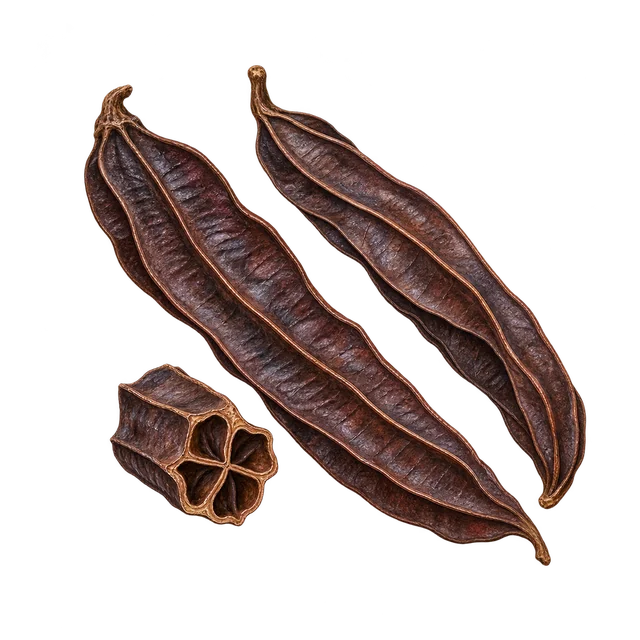
The aromatic fruit pods of Tetrapleura tetraptera, known as prekese or aridan. The characteristic fruit is the culinary material; bark, leaves, roots and isolated extracts are not substitutes.
Ingredient details, preparation and research
Also known as: Prekese; aridan
Source plant or material
Tetrapleura tetraptera
Plant family / material: Fabaceae
Forms and route
Clean dried whole or cut pods and labeled ground culinary spice. Laboratory extracts and concentrated products are outside the preparation described here.
Vitamins and minerals
Dry-weight composition varies across pod sections. A pod infused in soup and removed does not deliver the same nutrient amount as consuming the entire ground fruit.
Absorption and preparation
Polyphenol and mineral assays are not measurements of absorption from soup. No established medicinal combination or bioavailability-enhancing recipe is claimed.
Practical preparation
Use food-grade dried pod as a flavoring in an established dish. Remove coarse pieces where the recipe calls for an infusion; do not turn the history into a high-dose extract recipe.
Traditional and reported uses
- Soup and condiment flavor
Contraindications and cautions
- Use correctly identified culinary pod from a reliable supplier. Do not assume bark, root or concentrated preparations share the fruit’s food use.
- Hard pod fragments can be unpleasant to swallow; handle the purchased cut or whole form according to the recipe. Discard moldy or spoiled stock.
Anatomical composition matters
A primary Nigerian study measured sugars, starch, minerals and phytochemicals in separate fruit sections. The differences support exact-part labeling; chemical content by itself cannot demonstrate clinical benefit or establish a treatment dose.
Evidence limits
Only culinary and material-composition evidence is summarized. Traditional medicinal descriptions do not establish safe or effective treatment.
Entry sources
- FAO: Non-wood forest products in Africa, Cameroon
- FAO: Commonly consumed forest and farm tree foods in the West African humid zone
- Akin-Idowu et al.: Chemical composition of Tetrapleura dry fruit
Reference entry 295 · Recorded content review: 2026-10-09 · Review scope and dates