


Key cautions
- May contain alcohol: avoid when alcohol must be excluded, including pregnancy and before driving.
- Choose a reputable producer and follow refrigeration and use-by instructions; visible mold or deterioration is a reason to discard.
- Do not rely on taste, fizz or sourness to prove a homemade batch is safe.
What’s inside
Water, residual sugars, organic acids, aroma compounds and potentially ethanol. Live microbial communities vary by batch and processing.
Uses in brief

- Fermented pineapple beverage
History, folklore and reported uses
History, folklore and traditional uses
Mexican agriculture sources distinguish older maize-associated tepache from widely used pineapple preparations and describe regional variations. This card centers on the pineapple drink without claiming one uniform national recipe.
Traditional, historical and reported uses
- Fermented pineapple beverage
Food or household practiceWhy this label?
Label describes the stated practice or evidence, not an efficacy grade. Exact form and cautions remain attached.
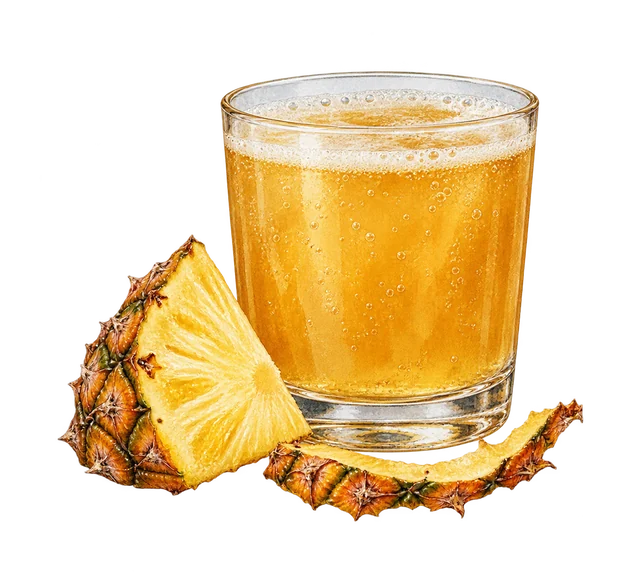
Mexican food documentation records a sweet-tart drink using pineapple, often including the peel. Other regions vary the fruit or add ingredients; the product’s actual label takes precedence over a generic name.
1 supported uses; records describe the named form and are not treatment recommendations.
Historical-use additions reviewed 2026-10-09
Regional reading paths
These sourced notes describe cultivation, trade, food traditions or material history. A regional connection does not claim exclusive origin.
North America
Traditional processing: Mexico, including central Mexico and Oaxaca.
Fermented pineapple drink; alcohol content and safety depend on process.
Identity & detailed reference
Identity
Tepache made from pineapple (Ananas comosus) and a mixed fermentation. Older and regional versions may use maize or other fruits; these are not one standardized formula.
Ingredient details, preparation and research
Source plant or material
Ananas comosus substrate; mixed microbial fermentation
Plant family / material: Bromeliaceae (pineapple substrate); mixed microbial community
Forms and route
Fresh or packaged fermented beverage; pasteurized and live products differ. Added spirits, sugar and flavorings change the finished drink.
Vitamins and minerals
Fermentation does not guarantee low sugar or alcohol-free status. The beverage cannot be assigned the fiber and vitamin profile of a serving of whole pineapple.
Absorption and preparation
Finding bacteria that survive a laboratory acid test does not show they confer a benefit when someone drinks the product.
Practical preparation
Use a commercially prepared or professionally controlled product as labeled. No room-temperature fermentation schedule or sealed-bottle recipe is supplied; pressure and microbial control require validated procedures.
Traditional and reported uses
- Fermented pineapple beverage
Contraindications and cautions
- May contain alcohol: avoid when alcohol must be excluded, including pregnancy and before driving.
- Choose a reputable producer and follow refrigeration and use-by instructions; visible mold or deterioration is a reason to discard.
- Do not rely on taste, fizz or sourness to prove a homemade batch is safe.
Microbial findings are preliminary
A 2025 study of homemade tepache found a mixed microbial community, including organisms persisting under antibiotic exposure in the experiment. It is a small laboratory investigation, not a clinical trial or proof that all tepache is unsafe or probiotic.
Form matters
Pineapple beverage, maize-based historical versions and spirit-fortified drinks differ. Regional descriptions cannot establish a universal alcohol percentage or storage life.
Evidence limits
Regional history and food/material practice do not establish treatment efficacy. Composition depends on the named species, part and preparation; no medicinal dose or universal nutrient ranking is inferred.
Entry sources
- Mexico Agriculture: Tepache dulce bebida, tradicionalmente mexicana
- Allshouse et al. (2025): The microbiota of homemade tepache includes antibiotic-resistant microorganisms
- UNAM: Bebidas fermentadas indígenas
- Mexico Agriculture: Bebidas ancestrales fermentadas mexicanas
Reference entry 398 · Recorded content review: 2026-10-09 · Review scope and dates