


Key cautions
- For coeliac disease, choose a product explicitly suitable for a gluten-free diet; mixed flours and sweets may contain wheat.
- Use food-grade cultivated grain rather than unidentified wild plants or planting seed.
- Read sweet and snack labels for sugar and other allergens.
What’s inside
Starch, protein, seed lipids and fiber; grain proteins include lysine. Exact composition changes with species, milling, cooking and added ingredients.
Uses in brief

- Popped-grain sweets
- Grain in maize-based foods
History, folklore and reported uses
History, folklore and traditional uses
CONABIO distinguishes grain amaranth from leafy quintoniles. ICAMEX documents Mexican cultivation and historical grain preparations, including tzoalli; such records describe food and cultural practice, not a therapeutic regimen.
Traditional, historical and reported uses
- Popped-grain sweets
Food or household practiceWhy this label?
Label describes the stated practice or evidence, not an efficacy grade. Exact form and cautions remain attached.
CONABIO describes consumption as popped seeds, familiar in Mexican sweets. Sweetener changes the finished food, so the plain seed should not inherit the candy’s nutrition profile.
- Grain in maize-based foods
Food or household practiceWhy this label?
Label describes the stated practice or evidence, not an efficacy grade. Exact form and cautions remain attached.
ICAMEX records historical combinations with maize in tamales and tortillas, showing amaranth’s place beyond confectionery. Present recipes vary by household and region.
2 supported uses; records describe the named form and are not treatment recommendations.
Historical-use additions reviewed 2026-10-09
Regional reading paths
These sourced notes describe cultivation, trade, food traditions or material history. A regional connection does not claim exclusive origin.
North America
Cultivated/traditional processing: Mexico and Mesoamerica.
Popped grain used in sweets and other foods.
Identity & detailed reference
Identity
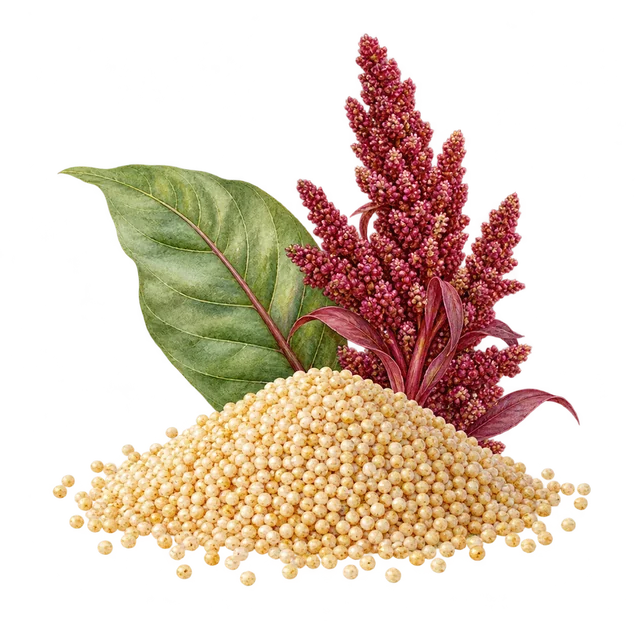
Food grain of Amaranthus hypochondriacus and A. cruentus, among the cultivated grain amaranths. Leaves sold as vegetables are a different food form.
Ingredient details, preparation and research
Also known as: Amaranto
Source plant or material
Amaranthus hypochondriacus and A. cruentus
Plant family / material: Amaranthaceae
Forms and route
Food-grade whole seed, popped grain and milled flour; cooked grain dishes and mixed sweets. Garden seed treated for planting is not food.
Vitamins and minerals
A grain-like food supplying energy and protein, not an automatic complete meal. Popped-grain candy includes added sweetener; it is not compositionally equivalent to plain cooked grain.
Absorption and preparation
Amaranth contains no wheat gluten intrinsically, but a product can contain wheat or cross-contact. Milling and heat change texture and digestibility; no universal absorption percentage is given.
Practical preparation
Cook whole grain or use popped grain according to a reliable recipe and package instructions. Amaranth flour does not behave like wheat gluten dough, so use recipes designed for it.
Traditional and reported uses
- Popped-grain sweets
- Grain in maize-based foods
Contraindications and cautions
- For coeliac disease, choose a product explicitly suitable for a gluten-free diet; mixed flours and sweets may contain wheat.
- Use food-grade cultivated grain rather than unidentified wild plants or planting seed.
- Read sweet and snack labels for sugar and other allergens.
Botanical and food-form precision
CONABIO lists several domesticated grain species. A. tricolor leaf vegetables, whole grain and isolated proteins are not interchangeable in composition or in research interpretation.
Evidence limits
Regional history and food/material practice do not establish treatment efficacy. Composition depends on the named species, part and preparation; no medicinal dose or universal nutrient ranking is inferred.
Entry sources
- CONABIO: Qué nos aportan los amarantos
- CONABIO: Especies domesticadas en México
- ICAMEX: Guía para la producción agroecológica del amaranto (2025)
Reference entry 394 · Recorded content review: 2026-10-09 · Review scope and dates