


Key cautions
- Obtain correctly identified culinary material; other plants called spicebush cannot be substituted.
- Concentrated oils and extracts are not equivalent to small food amounts
What’s inside
Aromatic volatile compounds and seed lipids occur in this plant. Chemical profiles vary by plant part; a measured leaf-oil profile must not be presented as berry composition.
Uses in brief

- Dried-fruit seasoning
- Aromatic sachets
History, folklore and reported uses
History, folklore and traditional uses
NC State records Lindera benzoin across southeastern Canada and the central/eastern United States, with documented spice, tea and aromatic uses. Its broad ethnobotanical summary does not identify every community, so no universal Indigenous practice is asserted.
Traditional, historical and reported uses
- Dried-fruit seasoning
Food or household practiceWhy this label?
Label describes the stated practice or evidence, not an efficacy grade. Exact form and cautions remain attached.
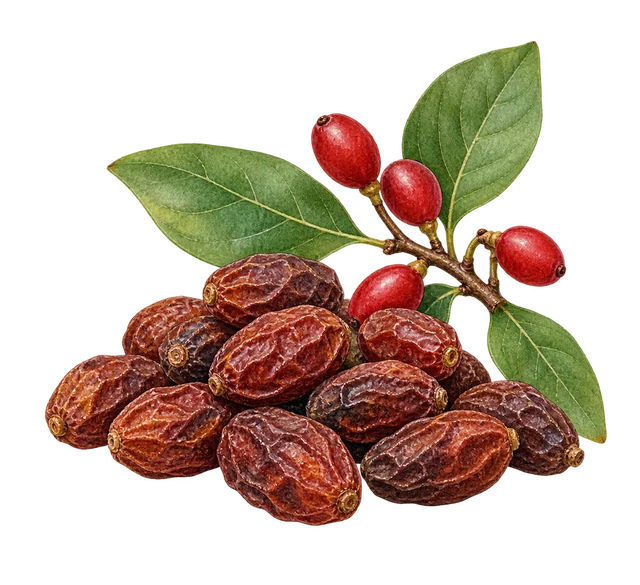
NC State records the dried fruit as a spice. Its peppery aroma is a culinary quality, not evidence that it treats digestive or other disorders.
- Aromatic sachets
Food or household practiceWhy this label?
Label describes the stated practice or evidence, not an efficacy grade. Exact form and cautions remain attached.
The same source records fragrant dried fruits in sachets. A nonfood fragrance use should remain separate from the quality requirements for edible spices.
2 supported uses; records describe the named form and are not treatment recommendations.
Historical-use additions reviewed 2026-10-09
Regional reading paths
These sourced notes describe cultivation, trade, food traditions or material history. A regional connection does not claim exclusive origin.
North America
Native: eastern United States and Canada.
Dried aromatic fruits used as a spice.
Identity & detailed reference
Identity
The fruits of Lindera benzoin, a shrub in the laurel family. This card concerns culinary fruit, not concentrated berry extracts or leaf essential oil.
Ingredient details, preparation and research
Also known as: Northern spicebush
Source plant or material
Lindera benzoin
Plant family / material: Lauraceae
Forms and route
Identified food-grade dried fruits, whole or ground. Leaves, twigs and laboratory extracts are separate preparations.
Vitamins and minerals
Used as a seasoning rather than a measured nutrient source; reliable serving-specific composition is not supplied.
Absorption and preparation
No special preparation or food pairing has been established to enhance absorption of this spice’s constituents.
Practical preparation
Use purchased food-grade dried fruit according to a culinary recipe. Store away from moisture; discard moldy material. This is not a wild-harvesting guide.
Traditional and reported uses
- Dried-fruit seasoning
- Aromatic sachets
Contraindications and cautions
- Obtain correctly identified culinary material; other plants called spicebush cannot be substituted.
- Concentrated oils and extracts are not equivalent to small food amounts. No medicinal dosing or safety in pregnancy is established here.
Chemistry is part-specific
A 2016 analysis studied distilled oil from leaves collected in Alabama. An earlier berry study isolated compounds using alcohol extraction and laboratory assays. Neither study establishes clinical benefits or a safe dose for a berry supplement.
Evidence limits
Regional history and food/material practice do not establish treatment efficacy. Composition depends on the named species, part and preparation; no medicinal dose or universal nutrient ranking is inferred.
Entry sources
- NC State Extension: Lindera benzoin
- Setzer (2016): Chemical composition of Lindera benzoin leaf oil
- Anderson et al.: Biologically active lactones from Lindera benzoin berries
Reference entry 390 · Recorded content review: 2026-10-09 · Review scope and dates