


Key cautions
- Rye contains gluten; ordinary rye sourdough is not safe for a celiac gluten-free diet. Wheat may also be included.
- Do not eat raw dough or assume a starter makes contaminated ingredients safe.
What’s inside
Starch, cereal proteins, fibre depending on flour extraction, salt and fermentation-derived acids. Baking changes the matrix and eliminates the assumption of an active live-culture food.
Uses in brief

- Daily sliced bread
- Inherited sourdough baking
History, folklore and reported uses
History, folklore and traditional uses
Traditional processing: Daujėnai, Lithuania, with inherited dough-fermentation practices.
Traditional, historical and reported uses
- Daily sliced bread
Food or household practiceWhy this label?
The linked sources document this material-specific use; no treatment outcome or universal safety is inferred.
The Daujėnai product account records a durable regional rye loaf. It is a baked staple, not a prescribed amount of fermented grain or a supplement.
- Inherited sourdough baking
Food or household practiceWhy this label?
The linked sources document this material-specific use; no treatment outcome or universal safety is inferred.
WIPO describes Lithuanian plain-fermented and scalded-flour bread traditions. The distinction documents different processes and craftsmanship rather than a ranking of medical benefits.
2 supported material-specific uses; practices are not proof of treatment efficacy.
Historical-use additions reviewed 2026-10-09
Regional reading paths
These sourced notes describe cultivation, trade, food traditions or material history. A regional connection does not claim exclusive origin.
Europe
Traditional processing: Daujėnai, Lithuania, with inherited dough-fermentation practices.
Fermented and then baked cereal food; baking means it is not automatically a live-culture food.
Identity & detailed reference
Identity
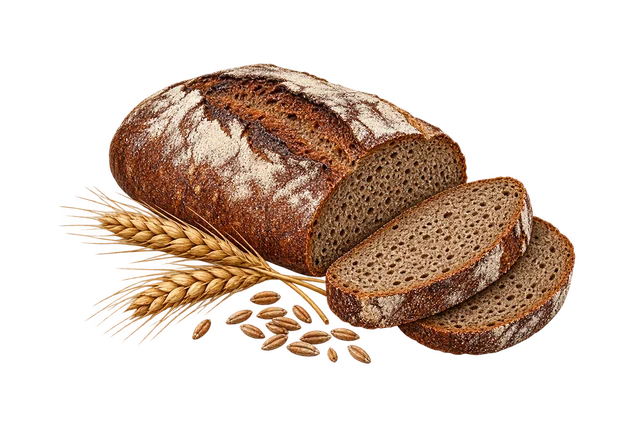
Rye sourdough bread is a baked cereal food made with rye flour and a fermented dough culture. Formulas may also contain wheat, other grains, sweeteners or seeds.
Ingredient details, preparation and research
Also known as: Ruginė duona; Rye sourdough
Source plant or material
Secale cereale L. flour + sourdough microorganisms
Plant family / material: Poaceae; sourdough includes yeasts and lactic-acid bacteria
Forms and route
Baked loaves and slices, including regional scalded-rye methods. Unbaked starter, raw dough, rye grain and bread-based beverages are distinct stages or products.
Vitamins and minerals
Wholemeal and refined-flour loaves differ in fibre. A regional name does not guarantee one nutrient profile; the actual grain mix, salt and serving size matter.
Absorption and preparation
Sourdough processing can change cereal chemistry, but the extent depends on the formula and fermentation. No universal absorption advantage or medicinal effect is assigned to every loaf.
Practical preparation
Choose a finished loaf with an ingredient label, or follow a reliable baking recipe through full baking. Store according to the product’s directions and freeze portions if needed.
Combination notes
Use as bread within a meal; select toppings for preference and dietary needs without claiming a necessary therapeutic combination.
Traditional and reported uses
- Daily sliced bread
- Inherited sourdough baking
Contraindications and cautions
- Rye contains gluten; ordinary rye sourdough is not safe for a celiac gluten-free diet. Wheat may also be included.
- Do not eat raw dough or assume a starter makes contaminated ingredients safe.
- Discard mouldy bread rather than trimming visible mould from a porous loaf.
Similar items and how they compare
- Rye grain
Both contain rye.
Bread is a fermented and baked mixed product rather than intact grain.
A baked ferment is not a probiotic serving
Fermentation occurs before baking. NIH probiotic definitions should not be applied to bread simply because sourdough microorganisms helped make the dough.
Fermentation does not establish gluten removal
NIDDK identifies rye and wheat as gluten-containing grains. A sour flavour or long fermentation is not evidence that an ordinary loaf meets gluten-free requirements.
Evidence limits
No promise of celiac safety, low glycaemic effect or enhanced mineral absorption applies universally to rye sourdough. Product-specific testing would be needed.
Entry sources
- European Commission: Daujėnų naminė duona PGI
- WIPO: Lithuanian rye-bread knowledge and traditional production
- NIDDK: Eating, diet and nutrition for celiac disease
- NIH ODS: Probiotics, food and supplement distinctions
Reference entry 387 · Recorded content review: 2026-10-09 · Review scope and dates