


Key cautions
- Rye contains gluten and is unsuitable for a gluten-free diet for celiac disease.
- Use grain sold as food, not treated planting seed. Reject visibly mouldy or abnormal grain; do not attempt to salvage a suspect batch for flour.
What’s inside
Starch, protein, fibre including arabinoxylans, and grain minerals. Bran removal changes composition; rye proteins include gluten-related secalins.
Uses in brief

- Flour for regional bread
- Whole-grain food ingredient
History, folklore and reported uses
History, folklore and traditional uses
Cultivated and traditional processing: Lithuania and the Baltic rye-bread tradition.
Traditional, historical and reported uses
- Flour for regional bread
Food or household practiceWhy this label?
The linked sources document this material-specific use; no treatment outcome or universal safety is inferred.
The Daujėnai bread specification documents rye flour in a Lithuanian bread-making tradition. Rye flour is a base ingredient; the baked bread’s fermentation and other ingredients require separate description.
- Whole-grain food ingredient
Food or household practiceWhy this label?
The linked sources document this material-specific use; no treatment outcome or universal safety is inferred.
USDA composition records separately identify rye grain and rye flour. Whole-grain forms preserve more of the grain structure than finely milled or refined products.
2 supported material-specific uses; practices are not proof of treatment efficacy.
Historical-use additions reviewed 2026-10-09
Regional reading paths
These sourced notes describe cultivation, trade, food traditions or material history. A regional connection does not claim exclusive origin.
Europe
Cultivated and traditional processing: Lithuania and the Baltic rye-bread tradition.
Grain/flour for breads and other cereal foods; contains gluten.
Identity & detailed reference
Identity
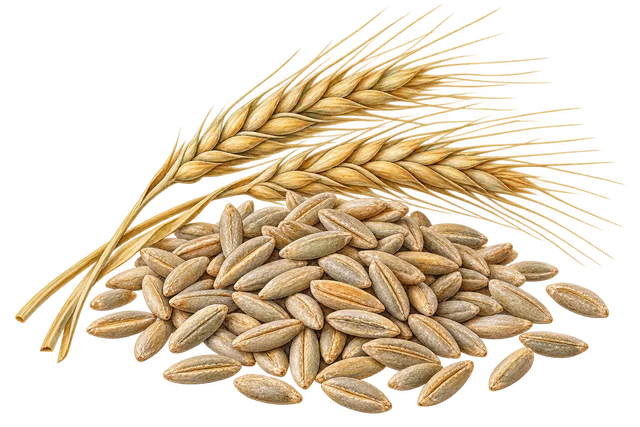
Rye grain is the edible cereal seed of Secale cereale. It is neither ryegrass nor the ancient hulled wheats sometimes labelled rye in historical English translations.
Ingredient details, preparation and research
Also known as: Secale cereale; Rye berries
Source plant or material
Secale cereale L.
Plant family / material: Poaceae
Forms and route
Cleaned food-grade whole grain, flakes and flour with different degrees of milling. Sourdough bread and fermented grain beverages are separate processed foods.
Vitamins and minerals
Whole rye contributes carbohydrate and fibre. Pale refined flour, wholemeal flour and a moist cooked grain do not share one nutrient value per equal weight.
Absorption and preparation
Milling and cooking change particle size and food structure. This affects preparation and digestion, but does not justify a universal claim that rye improves mineral absorption.
Practical preparation
Follow the package or a tested recipe for cooking whole grain or baking flour. Keep dry grain sealed; refrigerate cooked leftovers promptly and avoid tasting uncooked flour mixtures.
Combination notes
Use in grain dishes or a suitable bread formula; do not substitute rye flour one-for-one without considering the recipe’s structure.
Traditional and reported uses
- Flour for regional bread
- Whole-grain food ingredient
Contraindications and cautions
- Rye contains gluten and is unsuitable for a gluten-free diet for celiac disease.
- Use grain sold as food, not treated planting seed. Reject visibly mouldy or abnormal grain; do not attempt to salvage a suspect batch for flour.
Similar items and how they compare
- Ancient hulled wheat
Both are cereal foods.
Secale cereale is distinct from emmer or spelt despite historical translation overlap.
True rye deserves its own identity
The European bread record explicitly names rye, whereas historical cereal translations can refer to different crops. This card therefore does not overwrite or rename a hulled-wheat entry.
Food choice and gluten safety
NIDDK lists rye among gluten-containing grains. Fermentation or a rustic regional name does not by itself make rye suitable for someone who must avoid gluten.
Evidence limits
This is a food-grain profile, not a claim of weight loss or diabetes treatment. Nutrient statements remain qualitative because milling and serving form vary.
Entry sources
- European Commission: Daujėnų naminė duona PGI
- NIDDK: Eating, diet and nutrition for celiac disease
- USDA National Nutrient Database: Total dietary fiber, named food forms
Reference entry 378 · Recorded content review: 2026-10-09 · Review scope and dates