


Key cautions
- Only eat berries from a reliably identified food supply. A general regional description is not an identification guide.
- Keep fresh fruit chilled and follow frozen-product directions. Wild collection also requires attention to local access, habitat protection and contamination.
What’s inside
Water, natural sugars, organic acids, fibre, vitamin C and phenolic compounds. The edible seeds and pulp contribute differently to a whole fruit and a strained product.
Uses in brief

- Fresh fruit and desserts
- Preserves and berry products
History, folklore and reported uses
History, folklore and traditional uses
Native/wild-collected: Finland, especially northern wetland landscapes.
Native: Alaska, Canada and Greenland; circumboreal, not exclusively North American.
Traditional, historical and reported uses
- Fresh fruit and desserts
Food or household practiceWhy this label?
The linked sources document this material-specific use; no treatment outcome or universal safety is inferred.
The Finnish species account records cloudberries as a food and dessert ingredient. Their soft texture and tart-sweet flavour distinguish them from firmer cultivated berries.
- Preserves and berry products
Food or household practiceWhy this label?
The linked sources document this material-specific use; no treatment outcome or universal safety is inferred.
Regional food-source materials describe preserved berry products. Processing may add sugar or remove pulp, so whole-fruit and commercial-product claims should remain separate.
2 supported material-specific uses; practices are not proof of treatment efficacy.
Historical-use additions reviewed 2026-10-09
Regional reading paths
These sourced notes describe cultivation, trade, food traditions or material history. A regional connection does not claim exclusive origin.
Europe
Native/wild-collected: Finland, especially northern wetland landscapes.
Amber berries eaten fresh and in preserves or desserts.
North America
Native: Alaska, Canada and Greenland; circumboreal, not exclusively North American.
Ripe berries and preserves.
Identity & detailed reference
Identity
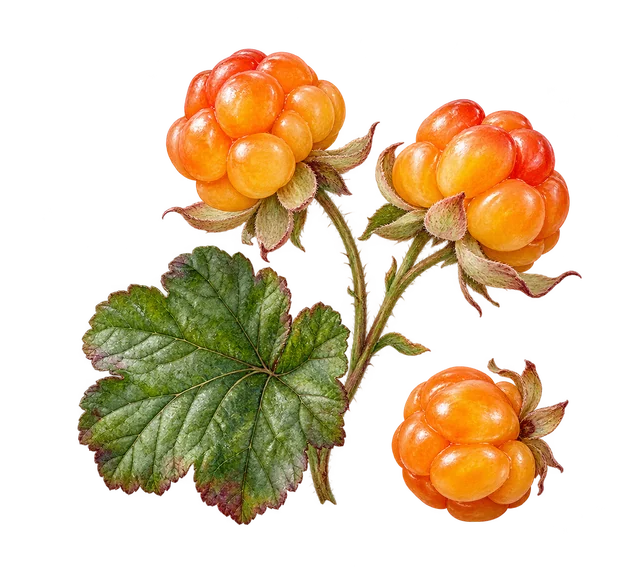
Cloudberry is the amber ripe aggregate fruit of Rubus chamaemorus, a low-growing perennial of northern wetlands. It is a distinct species from raspberry, blackberry and salmonberry.
Ingredient details, preparation and research
Also known as: Lakka; Hilla; Rubus chamaemorus
Source plant or material
Rubus chamaemorus L.
Plant family / material: Rosaceae
Forms and route
Fresh or frozen ripe berries, cooked compotes, preserves and desserts. Seed oil, extracts and liqueurs are different preparations and are not covered by whole-fruit composition.
Vitamins and minerals
Whole fruit supplies fibre and vitamin C, but storage and heating affect composition. A jam or dessert includes other ingredients and should not be assigned the nutrition of unsweetened berries.
Absorption and preparation
No medicinal absorption strategy is established. Removing seeds and pulp changes the food physically, while extracting seed oil produces an entirely different material.
Practical preparation
Treat the delicate fruit gently and refrigerate promptly. Use ordinary berry recipes or freeze according to food-handling guidance; follow a tested method for preserves rather than relying on historical storage accounts.
Combination notes
Serve in a food recipe with clearly identified ingredients; consider the sugar content of the finished dessert or preserve.
Traditional and reported uses
- Fresh fruit and desserts
- Preserves and berry products
Contraindications and cautions
- Only eat berries from a reliably identified food supply. A general regional description is not an identification guide.
- Keep fresh fruit chilled and follow frozen-product directions. Wild collection also requires attention to local access, habitat protection and contamination.
Similar items and how they compare
- Raspberries
Both are aggregate Rubus fruits.
Cloudberry is Rubus chamaemorus with a distinct northern wetland ecology.
A shared northern distribution
The US Forest Service account documents the North American species context, complementing the Finnish source. The berry is therefore regionally meaningful on both continents without claiming exclusivity.
Fruit is not seed oil
Food-industry sources distinguish berries from derived ingredients. Data about an extracted seed oil cannot be transferred to eating cloudberry jam, or vice versa.
Evidence limits
No immune, skin or anti-inflammatory treatment claim is inferred. The review concerns edible ripe fruit and documented food products, not leaves or isolated extracts.
Entry sources
- Arctic Flavours Association: Cloudberry
- US Forest Service: Rubus chamaemorus
- Arctic Flavours Association: Finnish berries and food products
- FDA: Selecting and serving produce safely
Reference entry 382 · Recorded content review: 2026-10-09 · Review scope and dates