


Key cautions
- Use identified food-grade berries and keep fresh fruit appropriately chilled.
- Do not assume naturally present acids make an improvised preserve shelf-stable. Follow tested methods and discard spoiled material.
What’s inside
Organic acids, natural sugars, fibre and polyphenols. Naturally occurring benzoic acid contributes to keeping characteristics, but its presence is not a substitute for validated food handling.
Uses in brief

- Tart sauces and preserves
- Baking and cereal accompaniments
History, folklore and reported uses
History, folklore and traditional uses
Native/wild-collected: Finland and Nordic forests.
Traditional, historical and reported uses
- Tart sauces and preserves
Food or household practiceWhy this label?
The linked sources document this material-specific use; no treatment outcome or universal safety is inferred.
Arctic Flavours records lingonberries as a Finnish food ingredient. Sauces and preserves balance the berry’s acidity with other ingredients, producing foods with their own sugar and salt content.
- Baking and cereal accompaniments
Food or household practiceWhy this label?
The linked sources document this material-specific use; no treatment outcome or universal safety is inferred.
The regional food materials document berries in baked foods and grain-based preparations. Whole berries provide a different texture and composition from strained lingonberry juice.
2 supported material-specific uses; practices are not proof of treatment efficacy.
Historical-use additions reviewed 2026-10-09
Regional reading paths
These sourced notes describe cultivation, trade, food traditions or material history. A regional connection does not claim exclusive origin.
Europe
Native/wild-collected: Finland and Nordic forests.
Tart berries used in preserves, sauces and other foods.
Identity & detailed reference
Identity
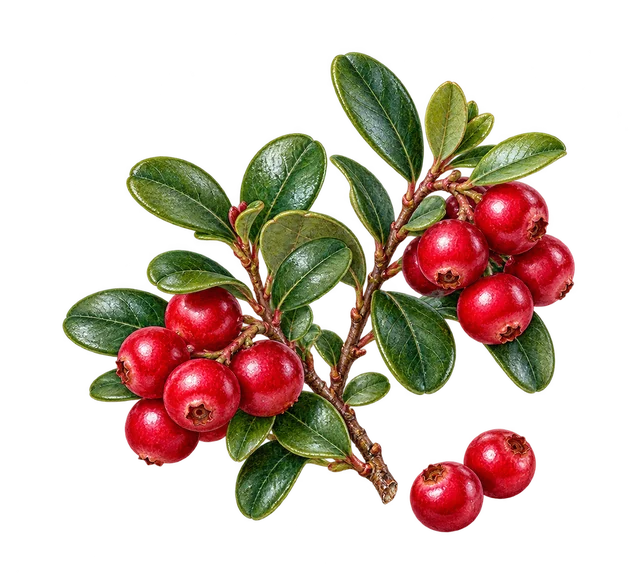
Lingonberry is the tart red fruit of Vaccinium vitis-idaea. It is not cranberry, bearberry or bilberry, even where labels use broad terms for northern wild berries.
Ingredient details, preparation and research
Also known as: Cowberry; Puolukka; Vaccinium vitis-idaea
Source plant or material
Vaccinium vitis-idaea L.
Plant family / material: Ericaceae
Forms and route
Fresh or frozen whole berries, cooked sauces, juices and preserves. Sweetened jam, leaf tea and concentrated extracts are separate materials.
Vitamins and minerals
Whole berries retain skin and fibre. Sweetened sauces and juices may have different sugar content and less intact fruit; read the actual product label.
Absorption and preparation
No special absorption pairing is established. The sour taste and presence of polyphenols do not show that eating lingonberries treats urinary or metabolic disease.
Practical preparation
Sort and handle berries as food, following package directions. For sauces or preserves, use a suitable tested recipe and its storage instructions rather than relying on tartness as a safety test.
Combination notes
Use its acidity to balance a dish; a sweetened sauce should not be counted as the same food as plain berries.
Traditional and reported uses
- Tart sauces and preserves
- Baking and cereal accompaniments
Contraindications and cautions
- Use identified food-grade berries and keep fresh fruit appropriately chilled.
- Do not assume naturally present acids make an improvised preserve shelf-stable. Follow tested methods and discard spoiled material.
- Leaf products are not covered by the fruit’s culinary history.
Similar items and how they compare
- Cranberries
Both are tart red Vaccinium fruits.
They are different species and their clinical evidence is not interchangeable.
A specific northern species
The source identifies Vaccinium vitis-idaea, allowing regional use to be linked to a particular fruit rather than any red berry encountered in woodland.
Preservation and health are separate questions
Natural benzoic acid helps explain traditional keeping properties, but does not establish a home preservation protocol or a clinical benefit. Product processing and storage controls remain necessary.
Evidence limits
No urinary-infection prevention, antimicrobial treatment or metabolic-health outcome is inferred from a food tradition or berry chemistry.
Entry sources
- Arctic Flavours Association: Lingonberry
- Arctic Flavours Association: Finnish berries and food products
- FDA: Selecting and serving produce safely
Reference entry 381 · Recorded content review: 2026-10-09 · Review scope and dates