


Key cautions
- People with celiac disease should choose appropriately gluten-free oats and discuss suitability with their care team because cross-contact and individual tolerance matter.
- Check instant mixes for added ingredients and allergens; an oat allergy is also possible.
What’s inside
Oats contain starch, protein, oils and fiber, including soluble beta-glucan. Beta-glucan is a chain of sugar units in the grain’s cell walls that can bind water and thicken a mixture. Processing changes particle size and how the grain takes up water; merely finding beta-glucan in an ingredient list does not establish its amount or effect.
Decker and colleagues, 2014: Processing of oats and nutritional effects · EFSA, 2010: Oat beta-glucan and lowering blood cholesterol
Groats, flakes, flour and bran
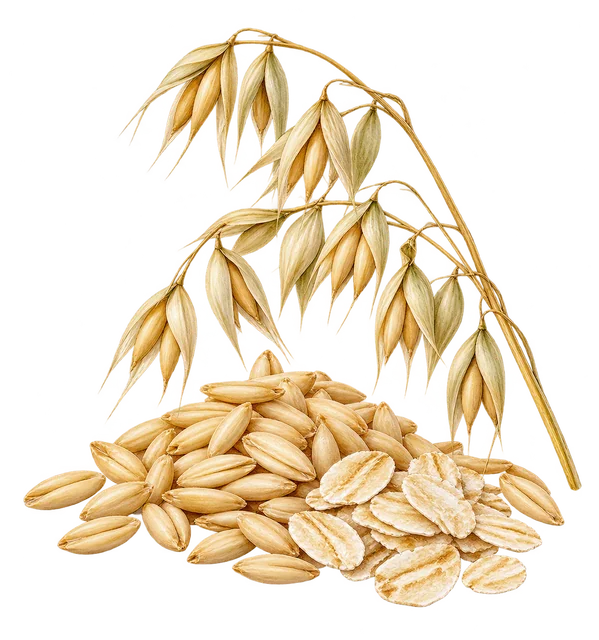
Steel-cut oats are groats cut into pieces. Rolled oats are steamed and flattened into flakes; quick oats are processed into smaller or thinner pieces for faster cooking. Grinding produces flour, while oat bran is a separated fraction richer in fiber. Sweetened instant sachets and strained or fortified oat drinks need their own labels, because their ingredients and proportions differ from plain grain.
Illinois Extension: Know your oats this Oatmeal Month · Decker and colleagues, 2014: Processing of oats and nutritional effects
Dry and cooked portions
USDA SR Legacy record 173904 describes plain regular or quick oats, unfortified and dry: a 1/3-cup portion (27 g) supplies about 102 kcal, 18.3 g carbohydrate, 3.6 g protein, 1.8 g fat, 2.7 g fiber, 37 mg magnesium and 1.1 mg iron. Record 173905 describes oats cooked with water, unenriched and without salt: 1 cup (234 g) supplies about 166 kcal, 28.1 g carbohydrate, 5.9 g protein, 3.6 g fat, 4.0 g fiber, 63 mg magnesium and 2.1 mg iron. These are separate database reference foods, not the before-and-after yield of one recipe. Water changes serving weight and energy density; milk, sugar, salt and toppings change the finished bowl.
Uses in brief

- Porridge and cereal foods
- Milled oat ingredients
History, folklore and reported uses
Cooking and choosing a form
Heat and water soften oat starch as its granules swell; water-binding fiber helps give porridge its creamy texture. Groats and steel-cut pieces generally take longer than rolled or quick oats, so follow the packet or recipe for the form used. Fruit, seeds or other toppings can be chosen for flavor. No special oil or supplement is needed to make oats an ordinary nutritious food.
Illinois Extension: Know your oats this Oatmeal Month · Decker and colleagues, 2014: Processing of oats and nutritional effects
Beyond porridge
Oat flour and bran appear in baked foods, while flakes are used in granola, snack bars and cookies. Oats can also act as a binder in savory dishes such as meatloaf. These products retain different amounts of grain and may contain other cereals, sweeteners or added fats. An oat drink is a processed beverage, not the nutritional equivalent of the oats used to make it.
Illinois Extension: Know your oats this Oatmeal Month · Decker and colleagues, 2014: Processing of oats and nutritional effects
An Irish crop
Ireland’s climate has long suited oat cultivation. Teagasc, Ireland’s agriculture and food development authority, records more than 294,000 hectares grown in 1916. The crop serves both human food and animal feed markets and remains part of Irish farming. In the kitchen, the name “Irish oats” commonly refers to steel-cut oats rather than a separate species.
Teagasc: Oats, a crop with more value than the market realises · Illinois Extension: Know your oats this Oatmeal Month
Beta-glucan and cholesterol
The European Food Safety Authority (EFSA) concluded in 2010 that oat beta-glucan can lower LDL cholesterol, the blood-cholesterol fraction associated with increased coronary heart-disease risk. Its assessed claim required foods providing at least 3 g of oat beta-glucan per day for adults seeking to lower cholesterol, as part of a balanced diet. That is a condition of the reviewed food claim, not a prescribed bowl size or supplement dose. Total dietary fiber is not the same measurement as beta-glucan, and an oat-flavored product may supply too little to meet the condition.
Oats and gluten cross-contact
Oats may pick up wheat, barley or rye during growing, processing or handling. This cross-contact can make an oat product unsuitable for someone with celiac disease, even though oats are a different grain. The U.S. National Institute of Diabetes and Digestive and Kidney Diseases reports that most people with celiac disease can tolerate moderate amounts of gluten-free oats, while individual suitability still needs discussion with their care team. An oat flour, bread or drink should be checked as its own product.
Oat-grain preparations for skin
The European Medicines Agency describes finely prepared oat-grain products, including colloidal oatmeal, used on the skin or as bath additives for minor inflammation such as sunburn and as an aid to healing minor wounds. “Colloidal” describes fine particles dispersed in a liquid. The agency’s conclusion rests on long-standing use; the clinical studies were too varied to establish firm treatment effects. This applies to specified external grain preparations, not the effects of eating porridge.
European Medicines Agency: Oat grain medicines · EMA, 2008: Avena sativa fruit monograph · UC Davis Burn Center: oatmeal bath precautions, December 2018
Storage and everyday preparation
Keep dry oats sealed in a cool, dark place and follow the package’s storage advice. Refrigerate prepared porridge promptly; overnight-oat preparations belong in the refrigerator while soaking. Check instant mixes for their added ingredients and use the appropriate cooking instructions for each form.
Women’s Health: traditions, evidence and cautions
Historical use does not establish benefit or safety. Pregnancy, breastfeeding and fertility care require particular caution: food, tea, essential oil and concentrated extract are not interchangeable. These records are not treatment, dosing or pregnancy-management instructions. Discuss supplements with a qualified clinician or pharmacist; do not delay evaluation of persistent symptoms.
Oat grain
Avena sativa L.
- Plant part / material
- Edible grain
- Preparation studied or reported
- Oatmeal and foods; not oat straw, tinctures or all-purpose oat extract.
Modern United States surveys document oats and lactation cookies as common milk-supply strategies. These sources do not establish an ancient regional tradition.
Lactation / milk-supply tradition
Contemporary practice; no demonstrated oat-only benefit
Reported or traditional useOat foods are popularly treated as milk boosters.
What the evidence supportsA blinded US trial found no benefit from mixed oat/yeast/flax/fenugreek lactation cookies over control cookies. It did not test oats alone or treat proven low supply.
Treat oats as food, not a substitute for assessment of infant intake. Trial findings do not establish safety or effectiveness of oatstraw or extracts.
- This concerns an ordinary food, not a recommendation for medicinal quantities in pregnancy or lactation. The cited studies do not establish safety of concentrated extracts.
Health topics: evidence and cautions
These notes describe a specific research context and preparation. A topic link is not a treatment recommendation.
Cardiovascular health · Risk reduction
Form and route: Plain whole-grain oats, cooked · oral
Oat beta-glucan can help lower LDL cholesterol.
Evidence: established_risk_factor_evidence
FDA recognizes oat beta-glucan soluble fiber in its coronary-heart-disease evidence review.
Limits
This concerns enough eligible fiber within a healthy diet, not every oat drink or sweet cereal.
Cautions
- Choose certified gluten-free oats when needed for celiac disease.
Diabetes and prediabetes · Support during care
Form and route: Plain cooked whole-grain oats · oral
A whole-grain option for a balanced diabetes meal plan.
Evidence: agency_dietary_guidance
NIDDK supports fiber-rich carbohydrate choices.
Limits
Oats still contain carbohydrate; portion size affects glucose.
Cautions
- Match portions to your treatment plan.
Colon and bowel health · Symptom support
Form and route: Cooked oatmeal · oral
A fiber-containing food for a bowel-friendly eating pattern.
Evidence: Agency dietary guidance
NIDDK lists this food among useful fiber sources.
Limits
No proof that this single food prevents or treats colorectal cancer.
Cautions
- Increase fiber gradually and drink suitable fluids.
Regional reading paths
These sourced notes describe cultivation, trade, food traditions or material history. A regional connection does not claim exclusive origin.
Europe
Cultivated and processed: Ireland, documented by Teagasc.
Grain for porridge, oat flakes and flour; gluten-free needs certified uncontaminated supply.
Identity & detailed reference
Identity
Oats are edible grain from Avena sativa, usually with the inedible outer hull removed. Oat bran, oat flour and oat drinks are processed fractions or products, not identical foods.
Ingredient details, preparation and research
Also known as: Oat groats; Rolled oats; Avena sativa
Source plant or material
Avena sativa L.
Plant family / material: Poaceae
Combination notes
Fruit, seeds or other ingredients may be chosen for taste; assess the whole preparation rather than labelling every oat dish equally.
Traditional and reported uses
- Porridge and cereal foods
- Milled oat ingredients
Contraindications and cautions
- People with celiac disease should choose appropriately gluten-free oats and discuss suitability with their care team because cross-contact and individual tolerance matter.
- Check instant mixes for added ingredients and allergens; an oat allergy is also possible.
Similar items and how they compare
- Barley
Both cereals contain beta-glucan.
Species, food form and gluten-related considerations differ.
Entry sources
- Teagasc: Oats, an Irish crop with more value than the market realises
- NIDDK: Eating, diet and nutrition for celiac disease
- EFSA: Oat beta-glucan evidence assessment
- USDA National Nutrient Database: Total dietary fiber, named food forms
Reference entry 379 · Recorded content review: 2026-10-09 · Review scope and dates