


Key cautions
- Do not eat clay or use an industrial material on skin. Raw deposits can contain contaminants that a common name does not disclose.
- Avoid creating or inhaling dust and follow the specific product safety data sheet. Do not assume all products called fuller’s earth share the same mineral content.
What’s inside
Hydrated aluminosilicate clay minerals with variable associated mineral impurities. Adsorption and swelling behaviour depend on composition and processing, so different deposits are not interchangeable.
Uses in brief

- Historical wool fulling
- Industrial absorbent and refining material
History, folklore and reported uses
History, folklore and traditional uses
Geological and traditional processing: southern England, including Surrey and the Bath region.
Traditional, historical and reported uses
- Historical wool fulling
Food or household practiceWhy this label?
The linked sources document this material-specific use; no treatment outcome or universal safety is inferred.
BGS explains that the name comes from degreasing woollen cloth. This is evidence of textile processing, not support for applying the same material to living tissue.
- Industrial absorbent and refining material
Food or household practiceWhy this label?
The linked sources document this material-specific use; no treatment outcome or universal safety is inferred.
The BGS dossier records oil refining and other absorbent applications. These are controlled material processes with product-specific requirements, rather than an edible-clay tradition to reproduce.
2 supported material-specific uses; practices are not proof of treatment efficacy.
Historical-use additions reviewed 2026-10-09
Regional reading paths
These sourced notes describe cultivation, trade, food traditions or material history. A regional connection does not claim exclusive origin.
Europe
Geological and traditional processing: southern England, including Surrey and the Bath region.
Historical wool degreasing and industrial absorbent uses; not an oral remedy.
Identity & detailed reference
Identity
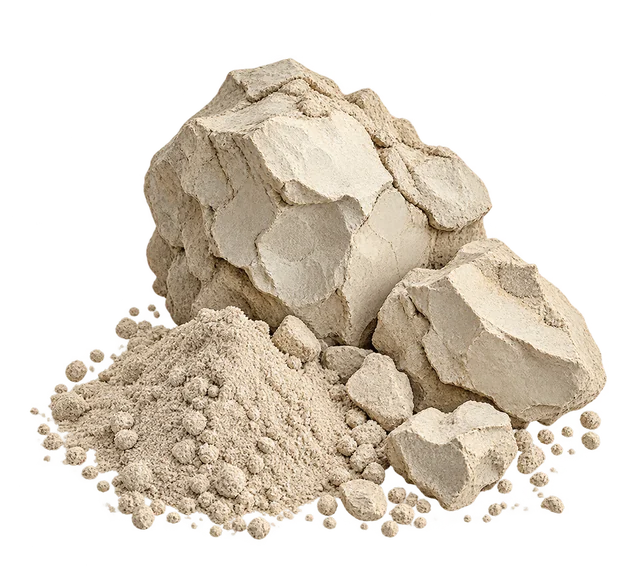
Fuller’s earth is a functional trade name for strongly adsorbent clay, not one universal mineral. The British material discussed here is commonly smectite-rich, including calcium montmorillonite.
Ingredient details, preparation and research
Also known as: Fullers earth; British smectite clay
Source plant or material
Not botanical
Plant family / material: Not applicable: mineral material
Forms and route
Documented geological deposits and processed industrial absorbents. Cosmetic-labelled formulations are separate products; raw earth or industrial powder is not a food or a ready-made skin treatment.
Vitamins and minerals
Not a dietary mineral source. The presence of elements in clay does not establish human nutritional availability or acceptable contaminant levels.
Absorption and preparation
Industrial adsorption means binding substances at surfaces. It does not demonstrate safe removal of toxins from the human body or selective binding of unwanted compounds.
Practical preparation
For any legitimate workshop or industrial use, obtain a specified product and follow its manufacturer’s handling and disposal directions. This reference gives no home skin mask or oral preparation.
Combination notes
Do not mix with food, drinks or medicines. Material substitutions require product specifications, not matching colour.
Traditional and reported uses
- Historical wool fulling
- Industrial absorbent and refining material
Contraindications and cautions
- Do not eat clay or use an industrial material on skin. Raw deposits can contain contaminants that a common name does not disclose.
- Avoid creating or inhaling dust and follow the specific product safety data sheet. Do not assume all products called fuller’s earth share the same mineral content.
Similar items and how they compare
- Kaolin clay
Both are clay materials used industrially.
Fuller’s earth is an adsorbent trade category, commonly smectite-rich, rather than kaolinite-rich clay.
Deposit-specific mineralogy
BGS regional accounts describe smectite-rich lenses in southern England. A trade name can encompass differing deposits; a documented British occurrence should not be generalised to every marketed clay.
History and present handling
Historical industrial uses establish regional importance but do not establish current cosmetic quality. Modern product specifications and occupational handling information are needed for an actual material purchase.
Evidence limits
Geological and industrial reference only. No therapeutic detoxification, clay-eating, contamination-free claim or skin-formulation guidance is supported.
Entry sources
- British Geological Survey: London and Thames Valley, fuller’s earth
- British Geological Survey: Fuller’s earth mineral dossier
- British Geological Survey: East Anglia, fuller’s earth deposits
Reference entry 376 · Recorded content review: 2026-10-09 · Review scope and dates