


Key cautions
- Choose labelled culinary spice; decorative pepper plants may not have been grown for food.
- Avoid getting dusty powder in eyes or airways. Hot varieties can irritate; a sweet-paprika label is not a guarantee of no individual sensitivity.
What’s inside
Red carotenoid pigments, aromatic compounds and variable capsaicinoids. The amount of pungency depends on cultivar and the material included during processing.
Uses in brief

- Seasoning and colour
- Smoked regional flavour
History, folklore and reported uses
History, folklore and traditional uses
Introduced/cultivated and traditional processing: Spain, especially La Vera; American-origin crop with European drying and smoking traditions.
Traditional, historical and reported uses
- Seasoning and colour
Food or household practiceWhy this label?
The linked sources document this material-specific use; no treatment outcome or universal safety is inferred.
The La Vera specification describes a ground pepper product defined by colour, flavour and local processing. It functions as an ingredient in savoury cooking rather than as a concentrated supplement.
- Smoked regional flavour
Food or household practiceWhy this label?
The linked sources document this material-specific use; no treatment outcome or universal safety is inferred.
The regional producers’ account connects wood-smoke drying with the characteristic aroma of Pimentón de la Vera. Smoked paprika changes a dish differently from unsmoked sweet paprika.
2 supported material-specific uses; practices are not proof of treatment efficacy.
Historical-use additions reviewed 2026-10-09
Regional reading paths
These sourced notes describe cultivation, trade, food traditions or material history. A regional connection does not claim exclusive origin.
Europe
Introduced/cultivated and traditional processing: Spain, especially La Vera; American-origin crop with European drying and smoking traditions.
Dried ground pepper for seasoning and colour; smoked and unsmoked forms differ.
Identity & detailed reference
Identity
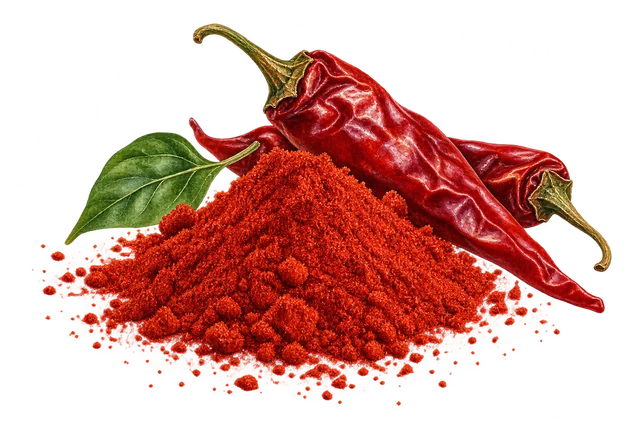
Paprika is a dried, ground Capsicum pepper spice, usually from Capsicum annuum cultivars. Sweet, hot and smoked products differ; the name does not identify one fixed heat level.
Ingredient details, preparation and research
Also known as: Pimentón; Ground paprika
Source plant or material
Capsicum annuum L.
Plant family / material: Solanaceae
Forms and route
Food-grade ground dried pepper; sweet, bittersweet, hot and smoked regional styles. Fresh bell peppers, cayenne powder and concentrated oleoresins are related but different products.
Vitamins and minerals
A small seasoning amount is not nutritionally equivalent to a serving of fresh peppers. Drying concentrates solids but does not preserve every fresh-fruit vitamin unchanged.
Absorption and preparation
Some pigments are fat-soluble; ordinary cooking with food fat disperses colour. That practical effect does not establish a special absorption remedy.
Practical preparation
Keep the powder sealed, dry and away from heat and light. Follow a recipe, use gentle heat to avoid scorching, and distinguish smoked from unsmoked before substituting.
Combination notes
Useful with vegetables, legumes and sauces when the chosen style fits the recipe.
Traditional and reported uses
- Seasoning and colour
- Smoked regional flavour
Contraindications and cautions
- Choose labelled culinary spice; decorative pepper plants may not have been grown for food.
- Avoid getting dusty powder in eyes or airways. Hot varieties can irritate; a sweet-paprika label is not a guarantee of no individual sensitivity.
Similar items and how they compare
- Bell peppers
Both can derive from Capsicum annuum.
Fresh fruit is not the same material as dried, ground or smoked paprika.
A processed food identity
NC State documents Capsicum annuum as a diverse cultivated pepper species. The spice card is justified by drying, grinding and sometimes smoking, not by inventing a new botanical species.
Origin and production are different
Capsicum crops have American origins, while La Vera’s recognised European connection is cultivation and processing. A regional specification supports provenance and product characteristics, not medicinal superiority.
Evidence limits
No antioxidant, circulation or vitamin-treatment claim is inferred from pepper pigments. Capsaicin studies on extracts do not describe ordinary paprika seasoning.
Entry sources
- EUR-Lex: Pimentón de la Vera product specification
- NC State Extension: Capsicum annuum
- Pimentón de la Vera regulatory council: Product and regional production
Reference entry 369 · Recorded content review: 2026-10-09 · Review scope and dates